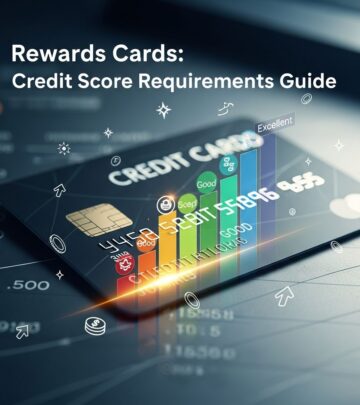
Credit Score Requirements for Credit Cards
Discover the credit scores needed to qualify for various credit cards and learn strategies to improve your score for better financial opportunities.

Your credit score serves as a critical benchmark for financial institutions evaluating credit card applications. It influences not only approval chances but also the quality of terms offered, such as interest rates and rewards. Understanding these requirements empowers you to select suitable options and take steps toward improvement.
Understanding Credit Scoring Systems
Two primary models dominate credit scoring: FICO and VantageScore. Each assesses risk through factors like payment history and debt levels, but they use distinct ranges and weights.
The FICO model categorizes scores as follows:
- Poor: 300-579
- Fair: 580-669
- Good: 670-739
- Very Good: 740-799
- Exceptional: 800-850
VantageScore, developed collaboratively by credit bureaus, features these tiers:
- Very Poor: 300-499
- Poor: 500-600
- Fair: 601-660
- Good: 661-780
- Excellent: 781-850
Payment history (35% in FICO) weighs heaviest, followed by credit utilization (30%), length of history (15%), new credit (10%), and mix (10%).
Credit Score Thresholds for Card Approvals
No universal minimum score exists for credit cards, yet higher scores unlock superior options. Issuers tailor products to score bands, balancing risk with rewards.
| Credit Score Range | FICO Tier | Typical Card Types | Key Features |
|---|---|---|---|
| 300-579 | Poor | Secured cards | Deposit required; high APRs; credit-building focus |
| 580-669 | Fair | Basic unsecured | Higher fees; limited rewards |
| 670-739 | Good | Standard rewards | Cash back; moderate APRs |
| 740-799 | Very Good | Premium rewards | Travel perks; lower rates |
| 800-850 | Exceptional | Elite cards | Top bonuses; luxury benefits |
Scores around 700 often suffice for many rewarding cards, while sub-600 typically limits choices to secured variants.
Options for Lower Credit Scores
Individuals with poor or no credit face hurdles but have pathways forward. Secured cards demand a refundable deposit matching the limit, mitigating issuer risk while fostering habits like timely payments.
These cards report activity to bureaus, aiding score growth. Programs allowing deposit refunds after milestones offer progression to unsecured cards. High-fee subprime cards exist but demand caution due to costs.
For fair scores (580-669), basic unsecured cards emerge, often sans annual fees yet with elevated APRs. Full monthly payoffs sidestep interest, paving the way for upgrades.
Unlocking Premium Cards with Strong Scores
Good to exceptional scores (670+) grant access to cash-back, travel, and points cards. These boast competitive APRs, signup bonuses, and perks like lounge access or travel insurance.
Exceptional profiles (800+) secure elite offerings, sometimes with high fees offset by value. Lenders favor long histories alongside high scores for optimal terms.
Strategies to Elevate Your Credit Score
Enhancing your score demands consistent actions across scoring factors. Prioritize on-time payments, the dominant element. Set autopay and alerts to avoid lapses.
Maintain utilization below 30%, ideally under 10%, by paying balances frequently. Diversify credit types judiciously, avoiding unnecessary applications that trigger inquiries.
Retain old accounts for history length. Dispute bureau errors promptly. Tools like credit-builder loans supplement card efforts.
Navigating the Application Process
Pre-qualification checks reveal odds sans hard pulls. Multiple apps risk inquiry dings; space them 6+ months apart.
Review issuer criteria beyond scores, including income and debt. Approval boosts utilization temporarily; manage accordingly.
Common Pitfalls and Myths
Myth: All cards demand excellent credit. Reality: Tiered products serve all ranges.
Avoid maxing limits or ignoring fees. Closing old cards shortens history, harming scores. Patience yields compounding gains.
Frequently Asked Questions
Can I get a credit card with a 500 score?
Yes, secured cards are viable. Focus on responsible use to rebuild.
Is 600 enough for an unsecured card?
Often yes for basic options, though APRs may be higher.
What score qualifies for rewards cards?
Typically 670+, with 700+ ideal for premiums.
How long to build from poor to good?
6-12 months with disciplined habits; longer if starting from zero.
Does applying hurt my score?
Hard inquiries ding temporarily (5-10 points); limit frequency.
Long-Term Financial Planning
View credit cards as tools for goals like homeownership. Strong scores lower borrowing costs across loans. Track progress via free bureau reports.
Combine cards with savings for holistic finance. Educate on fraud protection and disputes to safeguard gains.
References
- What’s the Minimum Credit Score Needed for a Credit Card? — SoFi. 2024. https://www.sofi.com/learn/content/minimum-credit-score-for-credit-card/
- The Credit Score You Need For Different Credit Cards in 2024 — GHS FCU. 2024. https://www.ghsfcu.com/all-blogs/finance-articles/credit-score-credit-card
- What Credit Score Do You Need for a Credit Card — Chase. 2024. https://www.chase.com/personal/credit-cards/education/build-credit/what-credit-score-is-needed-for-a-credit-card
- What Credit Score Do You Need for a Credit Card? — American Express. 2024. https://www.americanexpress.com/en-us/credit-cards/credit-intel/credit-score-for-a-credit-card/
- What Credit Score Do You Need For A Credit Card? — Bankrate. 2024. https://www.bankrate.com/credit-cards/advice/what-credit-score-for-credit-card/
- Credit Scores — FTC Consumer Advice. 2024. https://consumer.ftc.gov/credit-scores
Similar Articles








Read full bio of medha deb