Credit Score Refresh Cycles: How Often Scores Update And Why
Discover the timing behind credit score updates and how lender reports shape your financial profile every month.
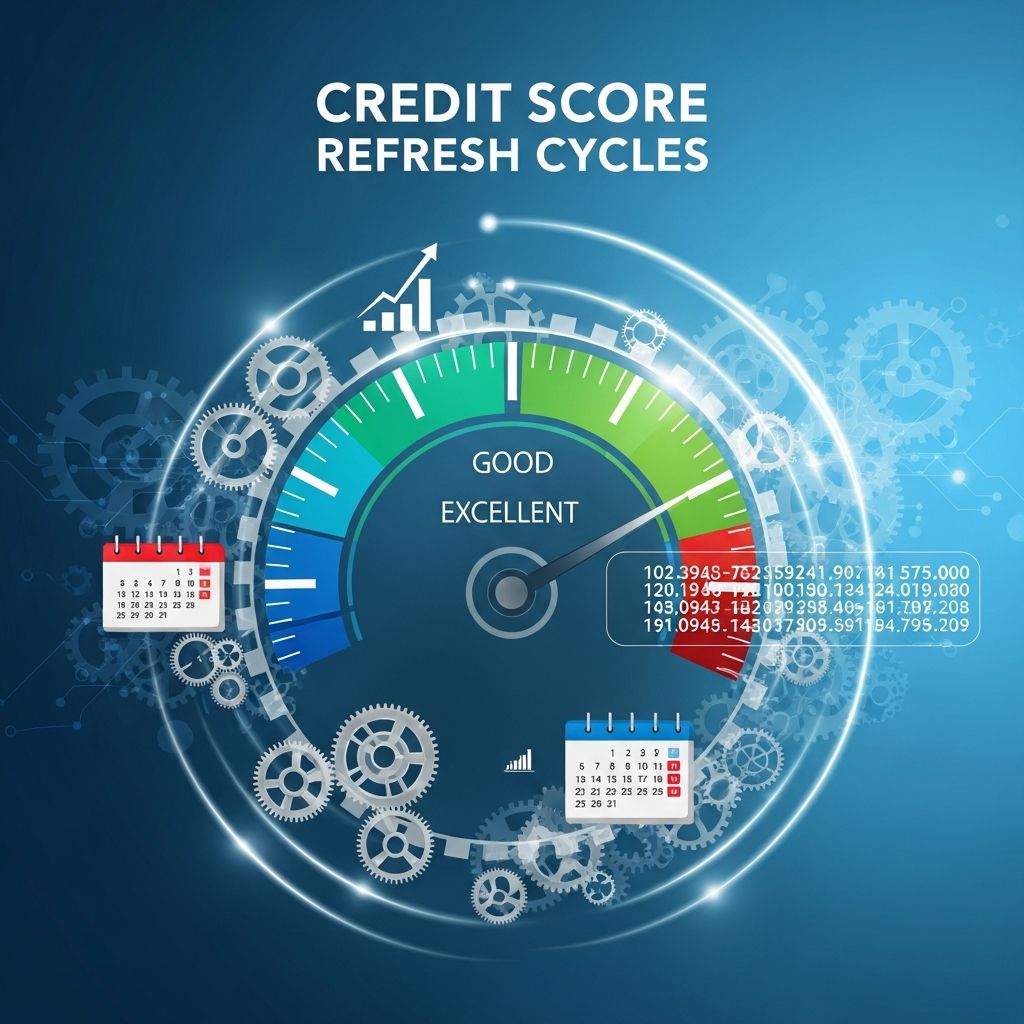
Credit scores recalculate whenever new data reaches the major credit bureaus, generally at least monthly but potentially more frequently depending on creditor activity. This dynamic process reflects ongoing changes in your financial behavior, from payments to new accounts.
The Mechanics of Credit Data Flow
Credit bureaus like Equifax, Experian, and TransUnion aggregate information from lenders, who submit updates on their own schedules. These reports include payment histories, balances, and inquiries, triggering score recalculations each time fresh data arrives. Unlike a static number, your score evolves as bureaus process these inputs, often daily if multiple creditors report.
Lenders typically batch reports around billing cycles, but exact timing varies. A credit card issuer might send data mid-month, while a mortgage servicer reports early. This staggered approach means scores at different bureaus can diverge temporarily.
- Payment status: On-time vs. late.
- Outstanding balances: Utilization ratios.
- New accounts or inquiries: Recent activity flags.
- Public records: Bankruptcies or collections.
Typical Update Frequency Across Bureaus
Most individuals see score refreshes at least once monthly, aligned with lender reporting cycles. However, active credit users with multiple accounts experience more frequent shifts, sometimes weekly. Experian notes scores update on every pull, incorporating the latest report data.
| Bureau | Average Update Cycle | Key Influences |
|---|---|---|
| Equifax | Monthly, varies by lender | Billing statements, loan payments |
| Experian | On request or new data | Boost features, daily potentials |
| TransUnion | Monthly batches | Multiple creditor schedules |
With varied reporting days—say, one lender on the 1st and another on the 15th—your Equifax score might update thrice monthly, while Experian sees four changes.
Factors Accelerating or Delaying Updates
High activity amplifies refresh rates. Opening a new card or paying down debt prompts quicker bureau notifications. Conversely, inactive profiles update slower, only when creditors submit routine data. Not all lenders report monthly; some bimonthly delay reflections by 30-60 days.
Bureau-specific models like FICO or VantageScore process data uniquely. VantageScore 3.0, for instance, recalculates on Equifax pulls. Utilization drops post-statement closing can boost scores instantly if reported promptly.
- Positive triggers: Large payments, low balances.
- Negative triggers: Missed payments, hard inquiries.
- Neutral: Account age milestones.
Why Scores Differ Between Bureaus and Models
Discrepancies arise from incomplete data sharing. Lenders may report to one or two bureaus, leaving gaps. FICO 8 emphasizes payment history (35%), while VantageScore weights utilization similarly but handles thin files differently.
Check all three via AnnualCreditReport.com for weekly pulls (post-2020 changes). Services like Experian Boost add utility payments for real-time lifts.
Practical Strategies for Monitoring Changes
Track proactively: Free weekly reports reveal underlying shifts before score pulls. Credit monitoring apps alert on updates, ideal pre-major applications like mortgages.
- Review monthly statements before close to predict utilization impacts.
- Dispute errors promptly via bureau portals.
- Use score simulators to forecast behaviors.
Avoid over-checking if it generates inquiries; soft pulls suffice for personal views.
Common Myths About Score Stability
Myth: Scores update on fixed days. Reality: Lender-driven, unpredictable. Myth: Daily checks show all changes. Reality: Pulls reflect bureau snapshots; request anew for updates.
Impact of Major Life Events on Timing
Payoffs or new debt reflect within 30-45 days typically. Bankruptcies linger: Chapter 7 for 10 years, Chapter 13 for 7. Inquiries fade after 2 years but dent short-term.
Frequently Asked Questions
How long after a payment does my score update?
Usually next reporting cycle, 30 days max, but varies.
Can I force a score refresh?
Request via monitoring service; bureaus recalculate on new data.
Why did my score drop suddenly?
New inquiry, utilization spike, or late report.
Do all lenders report to all bureaus?
No, some selective, causing variances.
Is a 60-day no-update normal?
Check report; dispute if expected changes missing.
Optimizing Your Credit Profile Proactively
Maintain low utilization under 30%, pay on time, limit inquiries. Tools like Equifax Core Credit offer free VantageScores. Consistent habits stabilize scores despite refresh volatility.
Understanding these cycles empowers better financial navigation, turning unpredictable updates into strategic advantages.
References
- How Often Is a Credit Report Updated? — Experian. 2023-10-15. https://www.experian.com/blogs/ask-experian/credit-information-is-updated-continuously/
- How Often Does Your Credit Score Update? — OneMain Financial. 2024-05-20. https://www.onemainfinancial.com/resources/credit/how-often-does-your-credit-score-update
- How Often Does Your Credit Score Update? — Equifax. 2024-08-12. https://www.equifax.com/personal/education/credit/score/articles/-/learn/how-often-does-your-credit-score-update/
- How Often Is My Credit Score Updated? — Experian. 2023-11-05. https://www.experian.com/blogs/ask-experian/how-often-is-my-credit-score-updated/
- When Do Credit Scores Update? — Chase. 2024-02-28. https://www.chase.com/personal/credit-cards/education/credit-score/when-credit-scores-update
- How Often Does Your Credit Score Update? — Rocket Money. 2024-07-10. https://www.rocketmoney.com/learn/debt-and-credit/how-often-does-your-credit-score-update
- How Often Do Credit Scores Change? — Nav. 2023-09-18. https://www.nav.com/resource/how-often-credit-scores-change/
Similar Articles








Read full bio of medha deb