Credit Score Needed to Buy a House
Discover the minimum credit scores required for home loans in 2026 and how to boost your rating for better mortgage terms.

Securing a mortgage to buy a house hinges on several factors, but your credit score stands out as one of the most critical. Lenders use it to gauge your reliability in repaying debt. In 2026, minimum requirements vary by loan type, with conventional loans typically demanding at least 620, while government-backed options like FHA allow scores as low as 500 under certain conditions. Understanding these benchmarks helps prospective buyers target the right programs and strengthen their applications.
Why Your Credit Score Matters in Homebuying
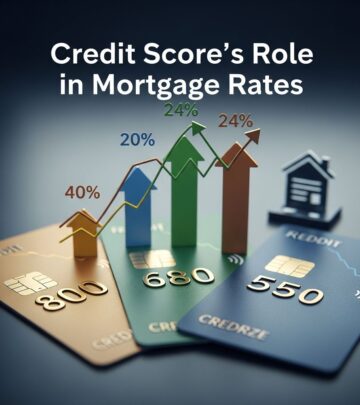
Your credit score reflects your financial history, influencing not just approval but also interest rates and loan terms. A higher score unlocks lower rates, reducing lifetime costs on a mortgage. For instance, scores above 740 often qualify for the best conventional loan rates, while lower ones may trigger higher premiums or denials. Lenders pull scores from major bureaus—Equifax, Experian, and TransUnion—often using a tri-merge report for a comprehensive view.
Beyond approval, scores impact down payment needs and insurance fees. Excellent credit (780+) minimizes private mortgage insurance (PMI) costs on conventional loans, which range from 0.58% to 1.86% annually. Poor scores increase these expenses, making homeownership costlier.
Minimum Credit Scores by Mortgage Type
Different loans cater to varied financial profiles. Here’s a breakdown of 2026 requirements:
| Loan Type | Minimum Credit Score | Down Payment | Key Notes |
|---|---|---|---|
| Conventional | 620 (740+ optimal) | 3% fixed-rate; 5% ARM | No strict Fannie Mae/Freddie Mac minimum since 2025; lenders set 620 floor. Best rates at 780+. |
| FHA | 580 (3.5% down); 500 (10% down) | 3.5% or 10% | Most lenders prefer 620+; requires MIP (1.75% upfront, 0.15%-0.75% annual). |
| VA | No minimum (620 standard) | 0% | Funding fee 2.15%-3.30%; flexible for veterans. |
| USDA | No minimum (640 standard) | 0% | Guarantee fee 1% upfront, 0.35% annual; rural areas only. |
Conventional loans suit those with strong credit, offering flexibility like gifts for down payments. FHA provides the lowest barriers for first-timers, though MIP adds ongoing costs.
Navigating Conventional Loan Credit Standards
Fixed-rate conventional loans require a 620 score minimum, but 740+ yields superior terms. Recent changes allow averaging scores across borrowers, helping couples where one has a weaker profile meet thresholds. Conforming limits rose to $832,750 in 2026, boosting borrowing power by over $26,000.
- Down payment sources: Personal funds or gifts permitted.
- DTI ratio: Typically under 45%, now more flexible post-CFPB updates.
- Reserves: Six months for multifamily properties.
For multifamily homes (2-4 units), expect 5% down, 680-700 scores, aiding rental income generation.
FHA Loans: Gateway for Lower Scores
FHA loans shine for scores 500-579 with 10% down or 580+ with 3.5%. Loan limits hit $541,287 generally, up to $1,249,125 in high-cost areas. Compensating factors like steady income or reserves can sway approvals even at 580.
Requirements include primary residence use, DTI under 43%, and no delinquent federal debts via CAIVRS check. MIP is mandatory, but low entry points make it ideal for first-time buyers.
Government-Backed Options: VA and USDA
VA loans waive minimum scores (lenders favor 620), down payments, and offer employment flexibility with two-year history verification. Funding fees apply but are often rollable.
USDA targets rural buyers with no down payment, standard 640 scores, and household employment proof. Self-employed need two-year records plus profit analysis.
Strategies to Elevate Your Credit Score
Improving your score takes time but pays off. Aim for 3-6 months pre-application.
- Review reports: Dispute errors from all bureaus.
- Reduce utilization: Keep below 30% of limits.
- Pay timely: Payment history is 35% of FICO.
- Limit inquiries: Shop rates within 45 days.
- Build positive history: Use secured cards if needed.
VantageScore 4.0 incorporation in 2026 may reward rent/utilities payments.
Beyond Credit: Holistic Qualification Factors
Credit is key, but lenders assess DTI (now pricing-based, no 43% cap), stable income, reserves, and property type. First-timers benefit from 3% down programs at 620+.
| Factor | Ideal Range | Impact |
|---|---|---|
| DTI | <36% front-end; <45% back-end | Approval odds, rates |
| Reserves | 2-6 months | Risk buffer |
| Employment | 2 years stable | Income reliability |
First-Time Buyer Programs and Updates
RefiNow offers no score minimums for incomes up to area median, 65% DTI. First-timers with 620+ access low-down options. 2026 limit hikes enhance accessibility.
FAQs
What is the lowest credit score for a mortgage?
FHA allows 500 with 10% down; conventional starts at 620.
Does a 600 score qualify for a home loan?
Possible with FHA (10% down) or compensating factors; conventional unlikely.
How much does credit score affect mortgage rates?
740+ gets prime rates; below 620 hikes them significantly.
Can I buy a house with bad credit in 2026?
Yes, via FHA/VA/USDA; improve score for better terms.
What if my spouse has low credit?
Average median scores may help conventional approval.
References
- Minimum Mortgage Requirements for 2026 — LendingTree. 2026. https://www.lendingtree.com/home/mortgage/minimum-mortgage-requirements/
- What Credit Score Do You Need to Buy a Home in 2026? — Altitude Home Loans. 2026. https://altitudehomeloans.com/what-credit-score-do-you-need-to-buy-a-home/
- Conventional Loan Requirements for 2026 — NerdWallet. 2026. https://www.nerdwallet.com/mortgages/learn/conventional-loan-requirements-guidelines
- Complete Guide to Mortgage Qualification Requirements in 2026 — Amerisave. 2026. https://www.amerisave.com/learn/complete-guide-to-mortgage-qualification-requirements-in-what-you-really-need-to-get-approved
- FHA Loan Requirements in 2026 — FHA.com. 2026. https://www.fha.com/fha_loan_requirements
Similar Articles








Read full bio of medha deb