Credit Score Impact On Mortgage Rates: 8 Score Tiers
Understand how your credit profile determines your mortgage costs and borrowing options.

When you apply for a mortgage, lenders scrutinize numerous factors to determine whether you qualify and what interest rate you’ll receive. Among these considerations, your credit score stands as one of the most influential metrics. This three-digit number—ranging from 300 to 850—serves as a financial report card that lenders rely on to gauge your reliability as a borrower. The relationship between your credit profile and the cost of your home loan is direct and substantial, potentially affecting how much you’ll pay over the life of your loan.
The Mechanics Behind Credit Assessment in Mortgage Lending
Mortgage lenders use credit scores as a primary tool to evaluate borrower risk. When you submit a mortgage application, lenders pull your credit reports and calculate your score based on your financial history. This history encompasses how you’ve managed debt, met payment obligations, and utilized available credit. A higher score demonstrates a pattern of responsible financial behavior, which signals to lenders that you’re likely to make timely mortgage payments. Conversely, a lower score suggests past financial difficulties or inconsistent payment patterns, raising concerns about your ability to meet long-term mortgage obligations.
The assessment process goes beyond simple number crunching. Lenders interpret your credit score within the context of current market conditions and their individual risk tolerance. However, industry-wide patterns remain consistent: borrowers with stronger credit profiles receive preferential treatment in terms of interest rate offerings.
How Score Ranges Translate to Mortgage Pricing Tiers
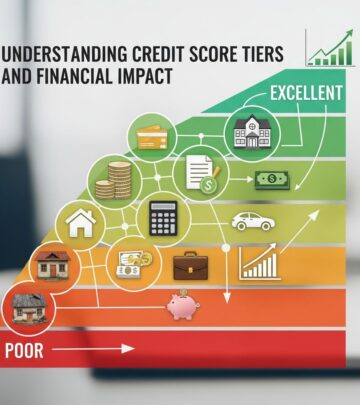
The mortgage industry uses credit score ranges to establish pricing tiers, creating a structured approach to rate determination. Understanding where your score falls within these ranges helps you anticipate what terms you might receive:
- 740 and above: Represents the elite tier where lenders offer their most competitive rates. Borrowers in this range benefit from lower interest rates and more flexible loan terms.
- 720–739: Still qualifies for favorable rates, though slightly higher than the premium tier. This range indicates solid creditworthiness with minimal payment history issues.
- 700–719: Falls into the good credit category where borrowers can access reasonable rates, though not the absolute lowest available in the market.
- 680–699: Represents fair credit where rates begin to increase noticeably. Borrowers may face rate increases of several tenths of a percent compared to top-tier scores.
- 660–679: Marks the beginning of subprime lending territory where rates increase substantially. Lenders may require larger down payments or impose stricter terms.
- 640–659: Indicates poor credit with significantly elevated rates. Loan approval becomes less certain, and terms become considerably less favorable.
- 620–639: Represents borderline credit where many conventional lenders become hesitant to approve applications. Those who qualify face the highest available rates.
- Below 620: Falls outside conventional lending parameters for most lenders. Borrowers may need specialized loan programs or face denial.
The Financial Impact: Quantifying Rate Differences
The practical consequences of credit score variations become apparent when you examine actual numbers. Consider a borrower seeking a $402,873 mortgage—the average loan amount for new single-family home purchases. The difference between the best-tier borrower and the lowest-tier borrower translates to approximately $165 per month in payment differences. Over the life of a 30-year mortgage, this compounds to roughly $59,274 in additional interest costs for the lower-scoring borrower.
These figures underscore why investing effort in credit improvement before applying for a mortgage makes financial sense. Even modest score improvements can shift you into a more favorable tier, resulting in meaningful savings. A 100-point increase in your credit score could potentially lower your interest rate by half a percent or more, depending on market conditions and lender policies.
Credit Score’s Role in Mortgage Approval and Qualification
Beyond influencing rates, your credit score directly affects whether lenders approve your mortgage application. Most conventional mortgage programs establish minimum credit score requirements, with 620 representing a common baseline threshold. However, some specialized loan programs may work with lower scores, though rates and terms become substantially less favorable.
When your credit score exceeds minimum requirements, you unlock additional benefits beyond lower interest rates. Lenders may approve higher loan amounts, reducing your need to save an enormous down payment. Additionally, a strong credit profile can lead to lower fees, smaller down payment requirements, and more flexibility regarding your debt-to-income ratio—the percentage of monthly income that goes toward debt obligations.
The approval process differs from rate determination. Even if you qualify for approval with a lower score, the rates offered will reflect the elevated risk lenders perceive. This creates an incentive structure where credit improvement pays tangible dividends.
Refinancing and Your Credit Score
Your credit score remains equally important when you consider refinancing an existing mortgage. Refinance rates follow similar patterns to purchase mortgage rates, with higher credit scores generating lower rate offers. However, refinance rates typically run slightly lower than comparable purchase rates because lenders perceive less risk—you’ve already demonstrated your ability to manage a mortgage by making regular payments.
This distinction makes refinancing an attractive option for borrowers whose credit has improved since their original purchase. If you’ve paid down debt, resolved past delinquencies, and strengthened your credit profile, refinancing can capture substantial savings. The break-even analysis—calculating when monthly savings exceed refinancing costs—becomes favorable more quickly when your improved credit score qualifies you for lower rates.
Market Influences and Rate Fluctuations
While your credit score remains a critical determinant of your personal mortgage rate, broader market forces also influence the absolute level of mortgage rates available. The Federal Reserve’s decisions regarding the federal funds rate—the interest rate banks charge each other for overnight loans—create ripple effects throughout mortgage markets. When the Federal Reserve raises rates, mortgage rates generally increase, making all borrowers face higher costs regardless of credit scores. Conversely, when the Federal Reserve lowers rates, mortgage rates often decline, benefiting borrowers across all credit tiers.
This means your credit score determines your position relative to other borrowers, but market conditions determine the baseline from which all rates are calculated. A borrower with excellent credit might receive a rate of 5.5% in a high-rate environment, while the same borrower might receive 3.5% when rates have declined—both reflect their credit advantage, but applied to different market baselines.
Adjustable-Rate Mortgages and Credit Considerations
Borrowers evaluating adjustable-rate mortgages (ARMs) should consider how credit scores interact with these products. ARMs typically offer initial rates lower than fixed-rate mortgages, which can benefit borrowers with good credit scores by providing immediate savings. However, for borrowers with lower credit scores, ARMs present additional risk. These borrowers already face elevated rates, and the potential for rates to increase substantially when adjustment periods arrive compounds their financial exposure.
This dynamic means credit score considerations extend beyond initial rate offers to encompass the full spectrum of loan product features and their interaction with your financial profile.
Strategies for Improving Your Credit Before Applying
Since credit scores wield such substantial influence over mortgage terms, investing in improvement efforts before applying makes financial sense. Several practical strategies can enhance your score:
- Pay down existing debts, particularly credit card balances, to lower your credit utilization ratio—the percentage of available credit you’re using.
- Establish a pattern of on-time payments by setting up automatic payments for all obligations.
- Review credit reports for errors and dispute inaccuracies that may be artificially depressing your score.
- Avoid opening new credit accounts in the months before applying, as this can temporarily reduce your score.
- Keep older credit accounts open to maintain a longer average account age, which positively influences scores.
- Address collections accounts or charge-offs by negotiating settlements or payment plans, which can eventually improve your score.
Even modest improvements can shift you into a better pricing tier. The financial return on these improvement efforts, measured against potential rate savings, often far exceeds any costs incurred.
Leveraging Your Credit Score in Rate Shopping
A strong credit score provides leverage during the mortgage shopping process. When multiple lenders compete for your business, your creditworthiness makes you an attractive borrower. This competitive environment allows you to negotiate better rates and terms. Lenders may be willing to reduce fees, waive certain charges, or offer rate concessions to win your business when your credit profile suggests you’ll be a reliable borrower.
Conversely, a lower credit score reduces your negotiating leverage. Lenders view you as higher-risk, and fewer institutions may be willing to compete aggressively for your loan. This reinforces the value of improving your credit before shopping for rates.
The Long-Term Financial Consequences
The impact of credit score differences compounds dramatically over the life of a mortgage. A borrower with excellent credit might secure a 30-year mortgage at 3.8%, while a borrower with fair credit might receive 4.8% for the same loan amount. Over 360 monthly payments, this 1% difference accumulates to tens of thousands of dollars in additional interest—money that could have been invested, saved, or spent on other financial priorities.
This reality demonstrates why your credit score represents one of the most valuable financial assets you can develop and maintain. Unlike some factors affecting mortgage rates—such as market conditions—your credit score remains within your direct control.
Frequently Asked Questions
What credit score do I need to get a mortgage?
Most conventional mortgage programs require a minimum credit score of 620, though some lenders may work with lower scores through specialized programs. However, higher scores result in significantly better rates and terms.
How much can my credit score affect my mortgage rate?
A 100-point drop in your credit score could result in a rate increase of half a percent or more. For a typical mortgage, this translates to substantial monthly payment differences and tens of thousands in total interest costs.
Does my credit score affect my refinance rate?
Yes, credit scores impact refinance rates similarly to purchase mortgage rates. However, refinance rates typically run slightly lower because lenders perceive less risk after you’ve demonstrated your ability to manage a mortgage.
Can I improve my credit score before applying for a mortgage?
Absolutely. Paying down debt, maintaining on-time payments, correcting credit report errors, and avoiding new credit applications can all improve your score. Even modest improvements can move you into a better pricing tier.
What factors influence mortgage rates besides my credit score?
Federal Reserve policy, loan type, down payment amount, loan term, and broader market conditions all influence mortgage rates. Your credit score determines your position relative to other borrowers, but these other factors establish the baseline rates available.
Taking Control of Your Mortgage Future
Your credit score represents one of the most controllable variables in the mortgage process. While you cannot influence Federal Reserve decisions or overall market conditions, you can directly work to improve your creditworthiness. Understanding how lenders use your credit score to determine rates, approval odds, and loan terms empowers you to make strategic financial decisions. Whether you’re years away from purchasing your first home or considering refinancing an existing mortgage, prioritizing credit improvement delivers measurable financial benefits that extend across decades of payments. By viewing your credit score not merely as a number but as a financial asset with tangible monetary value, you align your financial behavior with your long-term homeownership goals.
References
- Mortgage Rates by Credit Score — The Mortgage Reports. February 2026. https://themortgagereports.com/87625/mortgage-rates-by-credit-score
- How Your Credit Score Impacts Your Home Buying Journey — North Carolina Housing Finance Agency. https://www.nchfa.com/news/home-matters-blog/how-your-credit-score-impacts-your-home-buying-journey
- How Credit Scores Affect Your Mortgage Rate — Bank of America Better Money Habits. https://bettermoneyhabits.bankofamerica.com/en/home-ownership/how-credit-affects-mortgage-rate
- Does Credit Score Affect Mortgage Rate? — Rocket Mortgage. October 2025. https://www.rocketmortgage.com/learn/how-credit-score-affects-mortgage-rate
- Credit Score Will Impact Your Home Loan — Peoples State Bank. https://www.bankpeoples.com/learn/your-credit-score-will-impact-your-home-loan
- Average Mortgage Rates by Credit Score — Experian. https://www.experian.com/blogs/ask-experian/average-mortgage-rates-by-credit-score/
- How Credit Score Affects Mortgage Rates — Chase Bank. December 2025. https://www.chase.com/personal/mortgage/education/financing-a-home/how-credit-score-affects-mortgage-rates
- Seven Factors That Determine Your Mortgage Interest Rate — Consumer Finance Protection Bureau. https://www.consumerfinance.gov/about-us/blog/7-factors-determine-your-mortgage-interest-rate/
Similar Articles








Read full bio of Sneha Tete