Credit Score Requirements for Mortgage Approval
Understanding how lenders evaluate your creditworthiness for home loans

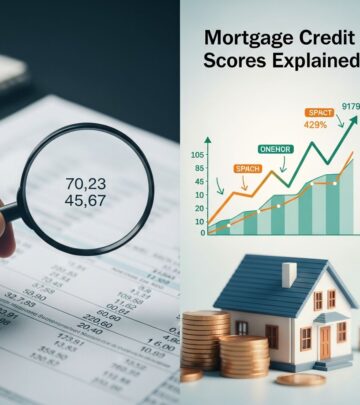
When applying for a mortgage, your credit score serves as one of the primary indicators lenders use to assess your financial responsibility and ability to repay borrowed funds. The credit score evaluation process has evolved significantly, and modern mortgage lending involves sophisticated assessment methods that go beyond a single numerical value. Understanding what lenders look for and how they evaluate creditworthiness can help you prepare for the home buying process and potentially improve your approval odds.
The Role of Credit Scores in Mortgage Lending Decisions
Your credit score represents a numerical summary of your borrowing history, ranging from 300 to 850, and reflects how responsibly you have managed credit accounts over time. Mortgage lenders examine credit scores to determine the level of risk associated with lending you money for a home purchase. A higher credit score generally indicates that you have demonstrated consistent financial responsibility, making lenders more confident in your ability to make timely monthly mortgage payments.
However, it is important to recognize that lenders do not rely solely on credit scores when making lending decisions. Your credit score is one component of a comprehensive evaluation that includes your down payment amount, debt-to-income ratio, employment history, and other financial factors. Different loan programs weight these elements differently, which is why two borrowers with identical credit scores may receive different approval decisions or interest rate offers.
Minimum Credit Score Thresholds Across Loan Types
The minimum credit score required varies significantly depending on the type of mortgage product you are seeking. Each lending program has established its own criteria, reflecting the risk profile and guidelines of that specific loan category.
| Loan Type | Minimum Credit Score | Key Characteristics |
|---|---|---|
| Conventional Loans | 620 | Standard mortgage products backed by Fannie Mae or Freddie Mac guidelines |
| FHA Loans | 580 (3.5% down); 500 (10% down) | Government-insured loans designed for borrowers with lower credit scores |
| VA Loans | No official minimum; 580 standard | Available to military members and veterans; individual lenders set minimums |
| Jumbo Loans | 700 | Non-conforming loans exceeding standard lending limits; stricter requirements |
Conventional loans, which represent the most common mortgage type, typically require a minimum credit score of 620. This threshold has remained relatively stable over time, though individual lenders may set higher standards based on their risk tolerance and underwriting policies.
Government-backed FHA loans offer more flexibility for borrowers with lower credit scores. Applicants with a score of 580 or higher can access the program’s primary advantage: a down payment as low as 3.5%. Those with scores between 500 and 579 may still qualify but are required to make a 10% down payment instead. This flexibility has made FHA loans an important option for first-time homebuyers and those working to rebuild credit.
VA loans, available exclusively to military members and eligible spouses, do not have a government-mandated minimum credit score. However, individual VA lenders typically establish their own thresholds, most commonly around 580. This flexibility recognizes the unique characteristics and employment stability often associated with military service members.
Jumbo loans, which finance properties beyond conforming loan limits, operate under stricter credit requirements. Most lenders require a minimum credit score of 700 for jumbo loan approval, reflecting the larger loan amounts and perceived increased risk associated with these mortgage products.
How Credit Scores Influence Mortgage Interest Rates
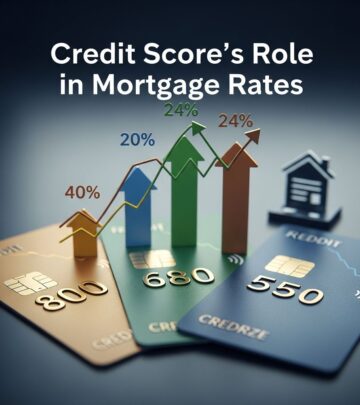
Beyond determining whether you qualify for a mortgage, your credit score directly influences the interest rate you will receive on your loan. This relationship between credit score and interest rate can have profound financial implications over the life of a 15-year or 30-year mortgage.
Lenders view borrowers with higher credit scores as lower-risk clients who are more likely to make payments on time. To incentivize lending to higher-credit borrowers and compensate for the perceived risk of lower-credit borrowers, lenders offer more favorable interest rates to those with excellent credit scores. The difference in rates may seem modest—perhaps 0.5% to 1%—but compounds significantly over the loan term.
Consider a concrete example of how credit scores affect long-term mortgage costs: For a $300,000 loan on a 30-year fixed-rate mortgage, a borrower with a 760 credit score might qualify for a 6.25% interest rate, resulting in a monthly payment of approximately $1,847. The same loan amount at a 640 credit score might come with a 7.25% interest rate, raising the monthly payment to around $2,047. This represents a difference of $200 per month, or $2,400 annually. Over the 30-year loan term, the higher-credit borrower saves approximately $71,775 in interest payments.
This dramatic difference underscores the financial value of maintaining or improving your credit score before applying for a mortgage. Even modest improvements can translate into substantial savings.
Understanding Credit Score Ranges and Lender Preferences
While 620 represents the minimum threshold for conventional loans, lenders often prefer working with borrowers whose scores fall within higher ranges. These preferences reflect both the likelihood of loan approval and the interest rates available to the borrower.
- Excellent (740-850+): Borrowers in this range typically qualify for the most competitive interest rates and favorable loan terms, with minimal additional documentation requirements
- Good (670-739): This range provides solid approval prospects and competitive rate options, representing many successful mortgage applicants
- Fair (580-669): Borrowers may qualify for loans, particularly government-backed products, but should expect higher interest rates and potentially stricter requirements
- Poor (Below 580): Limited lending options exist, though some FHA lenders may approve applications with significant down payments or compensating factors
Lenders increasingly prefer borrowers with scores of 670 or higher, as this threshold tends to correlate with better approval rates and more favorable terms. However, the lending landscape includes options for those with lower scores, particularly through government-backed programs.
Beyond Single Credit Scores: The Tri-Merge Report
Modern mortgage lenders do not evaluate a single credit score from one bureau but rather examine information from all three major credit reporting agencies. Lenders typically order what is known as a Tri-Merge Credit Report, which consolidates credit information from Equifax, Experian, and TransUnion into a single document.
This tri-merge approach provides a more comprehensive picture of your credit behavior, as different lenders and creditors report to different agencies. By reviewing all three reports, mortgage underwriters can identify patterns and inconsistencies that might not be visible from a single bureau’s report. When evaluating your application, lenders typically use the middle score from the three bureaus, which helps standardize the evaluation process.
Recent Changes in Credit Score Evaluation
The mortgage industry has witnessed significant changes in how credit scores are evaluated, particularly regarding flexibility in assessment methods. Beginning in November 2025, Fannie Mae’s Desktop Underwriter (DU) system no longer requires a minimum credit score for loan evaluation. Instead of relying on a hard 620-point threshold, the system now evaluates risk using a combination of factors beyond just the numerical credit score.
Additionally, mortgage lenders now have authorization to consider newer credit scoring models, such as VantageScore 4.0, alongside traditional FICO scores. These alternative models may incorporate additional data points, such as rent payments, utility bills, and telecommunications payments, providing a more holistic view of borrowers’ financial behavior. This evolution reflects the industry’s ongoing effort to make homeownership more accessible while maintaining appropriate risk management standards.
The Impact of Down Payment and Credit Score Together
Credit scores do not operate in isolation within the mortgage approval process. Your down payment amount works in conjunction with your credit score to influence both approval odds and loan terms. A larger down payment can sometimes compensate for a lower credit score, as it reduces the lender’s financial risk by representing more of your own capital in the property.
For conventional loans, a borrower with a 620 credit score might face more stringent requirements but could strengthen their application with a substantial down payment. Conversely, a borrower with an excellent credit score might qualify for favorable terms with a smaller down payment. FHA loans explicitly recognize this relationship: a 580 score allows for a 3.5% down payment, while scores between 500-579 require a 10% down payment, using the down payment amount to adjust for credit risk.
Frequently Asked Questions
Do all mortgage lenders use the same credit score requirements?
No. While government-backed loan programs (FHA, VA) establish minimum requirements, conventional lenders have discretion to set their own credit score thresholds. Individual lenders may require scores higher than the stated minimums based on their risk appetite and underwriting guidelines.
Can two applicants with identical credit scores receive different interest rates?
Yes. Mortgage pricing depends on multiple factors beyond credit score, including down payment percentage, loan-to-value ratio, property type, loan term, and market conditions. Two borrowers with the same 700 score might receive different rates based on these other variables.
What happens if I have a credit score below 580?
Options become limited but not impossible. Some FHA lenders may approve applications with scores as low as 550 for certain situations, though this typically requires a larger down payment (10%) and compensating financial factors. Building your credit score before applying may open more favorable options.
Does checking my credit score hurt my ability to get a mortgage?
Checking your own credit score is a soft inquiry and does not affect your score or mortgage application prospects. Hard inquiries from lenders do have minimal impact, typically 5-10 points, though the effect diminishes quickly.
How far back do lenders examine my credit history?
Lenders review your entire credit history but place emphasis on recent activity. Late payments from seven years ago carry less weight than recent missed payments. Most negative information stays on your credit report for seven years, though exceptions exist for more serious issues.
Conclusion: Preparing for Mortgage Credit Evaluation
Your credit score remains a critical component of mortgage lending decisions, though modern evaluation practices have become increasingly sophisticated. Understanding the specific credit score requirements for your desired loan type, recognizing how your score influences interest rates, and knowing the broader context of how lenders evaluate creditworthiness can help you approach the home buying process with confidence. Whether your credit score exceeds 750 or falls closer to minimum thresholds, understanding the landscape enables you to make informed decisions and potentially save thousands in interest costs over your mortgage term.
References
- What Credit Score Is Needed To Buy A Home in 2026? — AmeriSave. 2026. https://www.amerisave.com/learn/what-credit-score-is-needed-to-buy-a-home
- Minimum Mortgage Requirements for 2026 — LendingTree. 2026. https://www.lendingtree.com/home/mortgage/minimum-mortgage-requirements/
- What Credit Score Do Home Buyers Need to Buy a House in 2026? — Leader Bank. 2026. https://www.leaderbank.com/blog/what-credit-score-do-home-buyers-need-buy-house-2026
- FHA Loan Credit Score Requirements 2026 — Freedom Mortgage. 2026. https://www.freedommortgage.com/learning-center/articles/fha-loan-credit-score-requirements
- Buying a Home Without a Credit Score? New Rules Make It Possible — Luminate Bank. 2025. https://www.luminate.bank/buying-home-without-credit-score
- FHA Loan Requirements in 2026 — FHA.com. 2026. https://www.fha.com/fha_loan_requirements
- Your 2026 Credit Score Playbook: The Biggest Changes and What They Mean for You — Mid Coast Federal Credit Union. 2026. https://mcfcu.org/financialwellness/your-2026-credit-score-playbook-the-biggest-changes-and-what-they-mean-for-you/
Similar Articles








Read full bio of medha deb