Understanding Credit Score Models and Their Impact
Explore how FICO and VantageScore shape your borrowing power

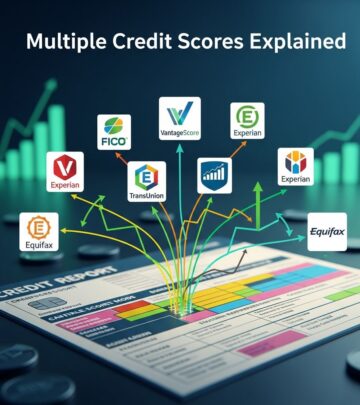
Your credit score serves as a financial fingerprint that creditors examine when deciding whether to lend you money and at what terms. This three-digit number, typically ranging from 300 to 850, represents your creditworthiness and payment reliability. However, the reality of credit scoring is far more complex than a single number. Multiple scoring models exist, each using different methodologies and data to calculate your score, which is why you may see significant variations depending on who pulls your credit information.
The Two Primary Credit Scoring Ecosystems
The credit scoring landscape is dominated by two major players: FICO and VantageScore. These companies operate distinct scoring systems that, while both designed to predict lending risk, use different algorithms and weighting systems. Understanding the differences between these models helps explain why your credit score might differ across various lenders and credit monitoring services.
FICO scores represent the most widely adopted credit scoring model in the lending industry. Banks, credit card companies, auto lenders, and mortgage companies predominantly rely on FICO scores when making lending decisions. The prevalence of FICO scores means that improving your FICO score often yields the most immediate and practical benefits for borrowers seeking new credit.
VantageScore emerged as an alternative scoring model developed by the three major credit bureaus: Equifax, Experian, and TransUnion. While less universally adopted than FICO, VantageScore has gained traction with certain lenders and alternative financial services. The model distinguishes itself through slightly different scoring ranges and calculation methodologies compared to FICO.
Decoding FICO Score Ranges and What They Mean
FICO scores operate on a scale from 300 to 850, with distinct category breakdowns that lenders use to assess borrowing risk. Each range communicates different levels of creditworthiness and affects your ability to obtain credit at favorable terms.
| FICO Score Range | Classification | Lending Implications |
|---|---|---|
| 300-579 | Poor | Difficulty obtaining credit; higher interest rates if approved |
| 580-669 | Fair | May qualify for some credit; likely higher interest rates |
| 670-739 | Good | Generally acceptable to lenders; reasonable interest rates |
| 740-799 | Very Good | Strong approval odds; competitive interest rates |
| 800-850 | Exceptional | Highest approval likelihood; best available rates |
The poor credit category, spanning from 300 to 579, represents the most challenging position for borrowers. Individuals with scores in this range often face significant obstacles when seeking traditional credit products. Many mainstream lenders decline applications from this category, or if they do approve, they impose substantially higher interest rates to compensate for perceived risk. These borrowers may need to explore alternative lending options or work systematically to rebuild their credit before pursuing major loans.
Fair credit, ranging from 580 to 669, represents a transitional zone where borrowers begin to have more viable options. Those in the upper portion of this range, particularly above 620, often qualify for credit products from willing lenders, though terms remain less favorable than those extended to higher-scoring borrowers. This range particularly matters for mortgage lending, where 620 frequently serves as a minimum threshold for conventional loans.
The good credit range of 670 to 739 marks a significant threshold where borrowers enter the territory of “acceptable” risk in most lenders’ eyes. Individuals with scores in this band typically qualify for a wider variety of credit products and benefit from interest rates substantially better than those available to fair credit borrowers. This range represents the goal for many consumers rebuilding their credit.
Very good credit, from 740 to 799, demonstrates a consistent history of responsible credit management. Borrowers at this level generally receive approvals from most lenders and can access competitive interest rates. Reaching this range provides access to premium credit products and shows lenders that the borrower presents minimal risk.
Exceptional credit, from 800 to 850, represents the pinnacle of creditworthiness. Borrowers in this elite category receive the most favorable terms, lowest interest rates, and highest credit limits. While improvement from 800 to 850 may seem minor numerically, the practical benefits of maintaining a very good score often outweigh marginal additional gains at the highest levels.
VantageScore’s Alternative Framework
VantageScore’s scoring structure, while operating on the same 300-850 scale as FICO, employs different categorical labels that reflect its distinct methodology.
| VantageScore Range | Classification | Risk Assessment |
|---|---|---|
| 300-499 | Very Poor | Extremely high risk |
| 500-600 | Poor | High risk |
| 601-660 | Fair | Moderate risk |
| 661-780 | Good | Low risk |
| 781-850 | Excellent | Minimal risk |
VantageScore’s categorization system uses terminology like “superprime” (781-850) and “prime” (661-780) to denote creditworthiness levels. The prime classification, spanning 661 to 780, encompasses a broader range than FICO’s “good” and “very good” categories combined, indicating different emphasis in how VantageScore segments the borrowing population.
The distinction between VantageScore’s “near prime” (601-660) and FICO’s “good” (670-739) reveals how the same numerical score can carry different implications depending on which model a lender uses. A score of 665, for instance, places a borrower in VantageScore’s fair category but below FICO’s good threshold, potentially affecting lending decisions when different creditors use different scoring models.
Industry-Specific Scoring Models
Beyond general-purpose FICO and VantageScore models, FICO produces specialized versions optimized for particular lending sectors. These industry-specific scores incorporate data and risk factors particularly relevant to their target markets.
FICO Auto Scores, used by auto lenders, fine-tune the traditional FICO algorithm to weight factors most predictive of auto loan performance. Similarly, FICO Bankcard Scores emphasize factors most relevant to credit card lending, such as credit utilization and revolving account management. These specialized versions operate on an expanded range of 250 to 900, rather than the standard 300 to 850.
The mortgage lending sector traditionally relied on FICO Scores 2, 4, and 5, which the three credit bureaus produced using their proprietary data. These scores specifically address the longer-term payment patterns and risk factors unique to mortgage lending. In recent years, lenders have begun transitioning toward more modern FICO Score versions while maintaining their focus on mortgage-specific risk assessment.
Many large financial institutions develop custom scoring models tailored to their specific lending criteria and customer base. These proprietary systems may combine elements of FICO and VantageScore methodologies with the lender’s own proprietary data and risk models, creating hybrid approaches optimized for their particular risk appetites.
Why Your Score Varies Across Credit Bureaus and Models
Consumers frequently discover that their credit scores differ significantly depending on which bureaus and scoring models lenders consult. This variation stems from several fundamental factors about how credit information flows and gets processed.
The three major credit bureaus—Equifax, Experian, and TransUnion—maintain independent credit files that don’t always contain identical information. Lenders may report account activity to all three bureaus, to just one or two, or in some cases, to different bureaus at different times. This reporting inconsistency means that even when calculated by the same scoring model, scores derived from different bureau reports will differ.
Different scoring models analyzing the identical credit report will produce different scores because they weight various factors differently and use different algorithms. FICO places primary emphasis on payment history (35%), followed by total debt (30%), while VantageScore uses more balanced weighting across multiple factors. These methodological differences mean that a perfect FICO score might translate into a lower VantageScore using the same underlying data.
Score version updates further complicate the comparison landscape. FICO regularly releases new score versions (FICO 8, FICO 9, FICO 10, FICO 10T) that refine the algorithm based on updated lending data and consumer behavior patterns. A lender using FICO 8 may assess risk differently than one using FICO 10, even when evaluating the same applicant’s credit profile.
The Components That Build Your Score
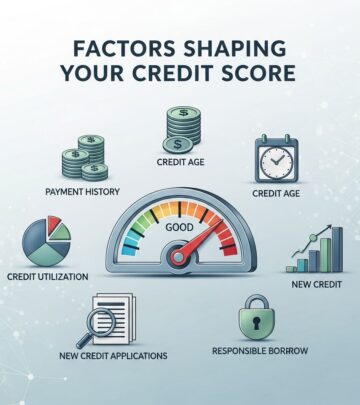
Understanding what comprises your score helps explain why different models produce different results. FICO’s weighting system emphasizes payment history above all other factors:
- Payment History (35%): Your track record of making payments on time forms the largest component of your FICO score. Late payments, collections, and charge-offs significantly damage this category.
- Total Debt (30%): The amount of debt you carry relative to available credit limits (credit utilization) ranks as the second most important factor. Lower utilization ratios boost your score.
- Length of Credit History (15%): The age of your oldest account and average age of all accounts influences this component. Longer credit histories generally support higher scores.
- Credit Mix (10%): Demonstrating responsible management of different credit types—installment loans, credit cards, mortgage accounts—provides a modest score boost.
- New Credit (10%): Recent credit inquiries and newly opened accounts can temporarily reduce your score as lenders assess new credit risk.
VantageScore uses a different weighting structure that distributes importance more evenly across factors. This alternative approach means that factors like available credit and recent credit activity carry more weight in VantageScore calculations than in FICO scores.
Specialized Credit Scores for Niche Markets
Beyond FICO and VantageScore, various specialized scoring systems serve specific financial sectors. Some of these alternative scores exist to complement traditional scoring models or address specific lending use cases that general scores don’t adequately capture.
Experian’s Intelliscore Plus, for example, operates on a 0-to-100 scale rather than the traditional 300-to-850 range, with scores of 76 and above indicating low risk. This alternative approach reflects different methodologies and may appeal to specific lenders seeking alternative risk assessments.
FICO’s Small Business Scoring Service uses a 0-to-300 scale to assess business creditworthiness separate from personal credit scores. Small business owners may find themselves subject to entirely different scoring paradigms when seeking business credit versus personal credit products.
Equifax and other bureaus offer additional business credit scores designed to assess commercial lending risk. These models incorporate business-specific data like business payment history, legal judgments, and commercial account information distinct from personal credit scoring.
How Lenders Choose Which Scores to Use
Individual lenders retain discretion over which credit scores they use during their underwriting process. No single score type is universally mandated across all lending industries, meaning your experience applying for credit depends partly on which lender you approach and their internal scoring preferences.
Large mortgage lenders typically use FICO scores, often averaging scores from the three bureaus to reach their final credit assessment. Auto lenders similarly gravitate toward FICO Auto Scores for their auto lending decisions. Credit card companies may use FICO Bankcard Scores to assess revolving credit risk.
Smaller financial institutions and alternative lenders may employ different scoring models entirely. Online lenders, in particular, might use proprietary scoring systems or VantageScore models rather than traditional FICO approaches.
This lender variation means that shopping for credit involves potential score fluctuations. A mortgage application may use FICO scores while a credit card application uses VantageScore, resulting in different approval decisions even when using the same lender’s product categories.
Frequently Asked Questions About Credit Scores
What is considered a good credit score?
A good credit score falls between 670 and 739 on the FICO scale. This range indicates that lenders generally view the borrower as an acceptable risk and qualify them for reasonable interest rates and favorable terms. However, a “good” score doesn’t necessarily mean “excellent”—scores above 740 provide increasingly better lending terms.
Why do I have so many different credit scores?
Multiple factors create score variation: different scoring models (FICO vs. VantageScore), different versions within the same model (FICO 8 vs. FICO 10), data from different credit bureaus with non-identical information, and different calculation methodologies across models.
Which credit score do lenders care about most?
FICO scores remain the most widely used by mainstream lenders across all lending categories. If you must prioritize improving one score, focus on your FICO scores, as these most directly impact approval odds and interest rate offers from traditional financial institutions.
Can I improve my score quickly?
Significant score improvements require time, as payment history and established credit patterns carry substantial weight. However, reducing credit utilization (paying down revolving balances) can provide quicker improvements than rebuilding payment history from scratch.
Do hard inquiries permanently hurt my score?
Hard inquiries cause temporary score dips, typically 5-10 points, but their impact diminishes over time. Multiple inquiries within a short window (typically 45 days for rate shopping) often count as a single inquiry, minimizing damage.
References
- What Are the Different Credit Score Ranges? — Experian. 2024. https://www.experian.com/blogs/ask-experian/infographic-what-are-the-different-scoring-ranges/
- What Are the Different Types of Credit Scores? — LendingTree. 2024. https://www.lendingtree.com/credit-repair/what-are-the-different-types-of-credit-scores/
- What are the Different Ranges of Credit Scores? — Equifax. 2024. https://www.equifax.com/personal/education/credit/score/articles/-/learn/credit-score-ranges/
- Credit Scores Explained: What is a Good Score? — City National Bank. 2024. https://www.cnb.com/personal-banking/insights/credit-scores-explained.html
- VantageScore vs. FICO: Types of Credit Scores — Capital One. 2024. https://www.capitalone.com/learn-grow/money-management/understanding-types-of-credit-scores/
- FICO Score Types: Why Multiple Versions Matter for You — myFICO. 2024. https://www.myfico.com/credit-education/credit-scores/fico-score-versions
- Credit Scores — Federal Trade Commission. 2024. https://consumer.ftc.gov/credit-scores
- Credit Scores — MyCreditUnion.gov. 2024. https://mycreditunion.gov/manage-your-money/credit/credit-scores
- The FICO score, the most commonly used credit score, ranges from 300 to 850 — MyCreditUnion.gov. 2024. https://mycreditunion.gov/manage-your-money/credit/credit-scores
Similar Articles








Read full bio of Sneha Tete