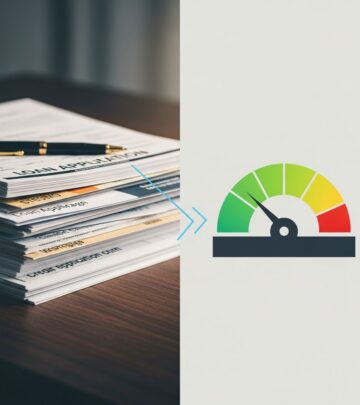
Credit Score Inquiries: Impact on Your Financial Profile
Learn how checking your credit score affects your financial standing

One of the most common misconceptions about personal finance involves the relationship between credit score monitoring and score decline. Many individuals hesitate to check their credit scores out of concern that the act of reviewing their financial information might negatively impact their creditworthiness. This article examines the critical distinction between different types of credit inquiries and clarifies how various monitoring activities affect your credit profile.
Understanding the Two Categories of Credit Inquiries
Credit inquiries fall into two distinct categories, each with different implications for your credit score. Recognizing this fundamental distinction is essential for managing your credit effectively and making informed decisions about credit monitoring.
Soft Inquiries and Credit Monitoring
A soft inquiry occurs when you check your own credit score or when certain entities review your credit for non-lending purposes. These inquiries do not appear on your credit report and have zero impact on your credit score. Common examples of soft inquiries include:
- Personally checking your credit score through credit monitoring services
- Reviewing your credit report from the three major credit bureaus
- Credit checks by employers during background investigations
- Inquiries from insurance companies
- Pre-qualification offers from credit card companies
- Account reviews by your existing lenders
The critical takeaway is that you can monitor your credit score as frequently as you wish without experiencing any negative consequences. Whether you check your score daily, weekly, or monthly, these personal inquiries leave no trace on your credit report and do not factor into score calculations.
Hard Inquiries and Credit Applications
In contrast, hard inquiries occur when you formally apply for new credit, such as a mortgage, auto loan, credit card, or personal loan. These inquiries appear on your credit report and can have a temporary negative effect on your credit score. Hard inquiries indicate that you are actively seeking new credit, which lenders view as a potential risk factor.
Unlike soft inquiries, hard inquiries are initiated by creditors or lenders when you consent to a credit application. Multiple hard inquiries within a short timeframe can compound their negative impact, signaling to lenders that you are desperately seeking credit, which may be perceived as financial distress.
The Timeline and Duration of Score Impact
Understanding how long hard inquiries affect your credit score helps you plan credit applications strategically. Hard inquiries typically impact your score for a limited period, not permanently. Most credit scoring models consider inquiries made within the past 12 months, though their influence diminishes over time. Generally, a single hard inquiry might reduce your score by a small amount—often between 5 and 10 points, though this varies based on individual circumstances and scoring models.
The positive news is that hard inquiries become less influential as they age. After approximately three to six months, their impact on your score becomes minimal. By the time a year has passed, they no longer factor into most credit scoring calculations at all.
How Your Credit Score Updates Work
To fully understand the impact of credit inquiries, it is important to grasp how and when your credit scores update. Your credit score is not a static number; rather, it recalculates whenever it is requested. This means your score can change multiple times throughout the month as new information enters your credit report.
The Frequency of Credit Score Updates
Credit scores typically update at least once per month, though the exact frequency depends on your individual financial situation. If you have multiple creditors, you may experience updates even more frequently since different lenders report to credit bureaus on different schedules. Some creditors report monthly, while others may report multiple times per month or process information in batches throughout the month.
The three major credit bureaus—Equifax, Experian, and TransUnion—receive new information from creditors on varying schedules. When these agencies receive updated data about your payment history or credit utilization, they recalculate your score accordingly.
Why Scores Fluctuate
Your credit score can fluctuate for various reasons, and understanding these drivers helps you recognize which changes matter and which are temporary. Common factors that cause score fluctuations include:
- Changes in credit card balances and credit utilization rates
- New credit applications (hard inquiries)
- Opening or closing credit accounts
- On-time or late payment activity
- Changes in the age of your oldest credit accounts
- Paying down existing debt
When you make a significant payment toward a high-interest credit card or loan, your credit utilization rate decreases, which typically improves your score. However, this improvement may not be visible immediately; it can take up to 45 days for the creditor to report the payment and for the change to reflect in your score.
The Bottom Line on Monitoring Your Credit
You should feel confident and encouraged to monitor your credit score regularly. Checking your own credit score is a soft inquiry that does nothing to harm your creditworthiness. In fact, regular monitoring offers substantial benefits for your financial health.
Benefits of Regular Credit Monitoring
- Early detection of inaccuracies or fraudulent activity on your report
- Understanding how your financial behaviors affect your score
- Identifying which factors have the strongest impact on your creditworthiness
- Catching identity theft before it severely damages your credit
- Tracking progress toward credit improvement goals
- Making informed decisions about credit applications
Many financial experts recommend checking your credit score at least every six months, though monthly monitoring is increasingly common and equally beneficial.
Strategic Approaches to Credit Applications
While checking your score has no negative impact, applying for new credit does. Understanding how to manage hard inquiries strategically can minimize their effect on your score.
Rate Shopping and Hard Inquiries
Credit scoring models recognize that consumers often shop around for the best rates when seeking new credit. The models allow for multiple inquiries within a short timeframe—typically 14 to 45 days depending on the scoring model—to count as a single inquiry for scoring purposes. This means you can apply for multiple mortgages, auto loans, or other similar credit types without compounding damage to your score, provided you do so within the allowed window.
Timing Your Credit Applications
If you are planning multiple credit applications, consider spacing them strategically. Applying for all necessary credit within your rate-shopping window minimizes total impact, while spacing applications weeks or months apart allows your score to recover between applications. Before applying for credit, assess whether you truly need the new account or whether you should wait.
Practical Strategies for Credit Health
Beyond understanding inquiries, maintaining strong credit requires consistent positive financial behaviors. These strategies support long-term credit score improvement regardless of inquiry activity:
- Pay bills on time: Payment history is the largest component of your credit score and remains the most influential factor in lender decisions.
- Keep balances low: Maintaining a credit utilization ratio below 30% supports score improvement and demonstrates responsible borrowing.
- Maintain account diversity: Having multiple types of credit accounts—credit cards, installment loans, and mortgages—positively influences your score.
- Avoid closing old accounts: The age of your accounts matters, and closing older accounts reduces your average account age, which can lower your score.
- Monitor regularly: Check your score and report frequently to catch errors and unauthorized activity quickly.
Common Questions About Credit Inquiries
Can creditors see when I check my own credit score?
No. When you check your own credit score, this soft inquiry is visible only to you. Lenders and creditors cannot see personal credit checks you have made.
Do employer background checks hurt my credit?
Employment-related credit checks are soft inquiries and do not affect your credit score. Your permission is typically required for these checks, but they have no impact on your creditworthiness.
How many hard inquiries is too many?
There is no absolute threshold for hard inquiries, though multiple inquiries within a short period can indicate financial desperation to lenders. Rate shopping within the designated window does not accumulate negative impact the way spacing inquiries apart would.
If I check my score multiple times will it hurt my credit?
No. Checking your own credit score as many times as you wish has no negative effect. These are soft inquiries that do not appear on your credit report or factor into your score.
How long does a hard inquiry stay on my report?
Hard inquiries typically remain visible on your credit report for approximately two years, though their impact on your score diminishes significantly after six months to one year.
Moving Forward With Confidence
The distinction between soft and hard inquiries is fundamental to understanding your credit. You can and should monitor your credit score regularly without worry. This knowledge empowers you to make strategic decisions about credit applications while understanding that the monitoring itself poses no risk to your financial standing. Focus your energy on the behaviors that truly matter—paying bills on time, keeping balances low, and maintaining a diverse credit portfolio. These actions will support sustained credit score improvement far more effectively than any concern about checking your score.
References
- Understanding the Frequency of Your FICO Credit Score Updates — Oreate AI. https://www.oreateai.com/blog/understanding-the-frequency-of-your-fico-credit-score-updates/
- How Often Does Your Credit Score Update? — Equifax. https://www.equifax.com/personal/education/credit/score/articles/-/learn/how-often-does-your-credit-score-update/
- How Often Do Credit Scores Change? — Best Egg. https://www.bestegg.com/blog/how-often-do-credit-scores-change/
- How Often is Your Credit Score Updated? — Chase Bank. https://www.chase.com/personal/credit-cards/education/credit-score/how-often-is-credit-score-updated
- How Often Is My Credit Score Updated? — Experian. https://www.experian.com/blogs/ask-experian/how-often-is-my-credit-score-updated/
- How Often Does Your Credit Score Update? — Chime. https://www.chime.com/blog/how-often-does-credit-score-update/
- How Many Hard Inquiries Is Too Many? — Experian. https://www.experian.com/blogs/ask-experian/how-many-hard-inquiries-is-too-many/
Similar Articles








Read full bio of medha deb