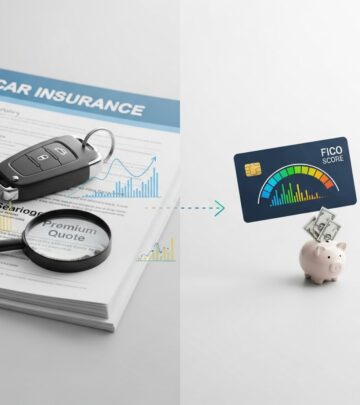
Credit Score Impact on Car Insurance Premiums
Discover how your credit history directly influences what you pay for auto coverage

When most people think about factors that influence car insurance premiums, they typically consider driving history, age, vehicle type, and location. However, one critical element often catches drivers by surprise: their credit score. Insurance companies across the United States regularly use credit-based insurance scores as a determining factor when calculating monthly or annual premiums. This practice has created a significant financial divide among drivers, with those maintaining excellent credit paying substantially less for the same coverage than those with poor credit histories.
Understanding Credit-Based Insurance Scores
A credit-based insurance score differs from the traditional credit score used by lenders when evaluating loan applications. While both assessments draw from similar financial information, insurers apply this data differently to predict claim likelihood rather than repayment ability. Insurance companies utilize credit-based insurance scores to estimate the probability that a policyholder will file an insurance claim during their coverage period.
According to research from the National Association of Insurance Commissioners (NAIC), credit-based insurance scores represent an effective tool for predicting insurance loss potential. Statistical analysis demonstrates that individuals with lower insurance scores exhibit higher claim filing rates compared to those with superior scores.
Components of Credit-Based Insurance Scores
Insurance companies evaluate several key elements when calculating your credit-based insurance score:
- Payment History: Your track record of making on-time payments on debts and bills represents the most significant component of your insurance score assessment
- Outstanding Debt: The total amount of debt you currently carry influences how insurers perceive your financial responsibility
- Credit History Length: The duration for which you have maintained open lines of credit demonstrates your experience managing credit obligations
- Credit Mix: Your variety of credit types—including auto loans, mortgages, and credit cards—shows your ability to manage different financial responsibilities
- Recent Credit Inquiries: New credit applications and inquiries may impact your score temporarily
The Financial Impact of Credit Scores on Insurance Premiums
The relationship between credit scores and insurance costs reveals a dramatic financial disparity for American drivers. Research analyzing millions of insurance quotes demonstrates that drivers with poor credit ratings pay significantly more for identical coverage compared to those with excellent credit histories.
Premium Differences Across Credit Tiers
Drivers with poor credit—defined as scores below 580—pay approximately $2,729 annually for car insurance coverage. In contrast, drivers with exceptional credit ratings of 800 or higher pay around $1,308 per year. This represents a difference of $1,421 annually, or roughly 109 percent more for drivers with poor credit. Moving up just one credit tier can reduce your insurance premium by an average of 17 percent, translating to approximately $355 in annual savings.
| Credit Rating Category | Estimated Annual Premium | Difference from Exceptional Credit |
|---|---|---|
| Poor (Below 580) | $2,729 | +$1,421 (109%) |
| Fair (580-669) | $2,200 | +$892 (68%) |
| Good (670-739) | $1,625 | +$317 (24%) |
| Very Good (740-799) | $1,450 | +$142 (11%) |
| Exceptional (800+) | $1,308 | Baseline |
Why Insurance Companies Use Credit Information
Insurance companies employ credit-based insurance scores for reasons grounded in actuarial science and risk assessment. The Federal Trade Commission (FTC) conducted independent research examining the relationship between credit history and insurance risk, confirming findings from numerous industry studies.
The Statistical Connection
Research consistently demonstrates that individuals with lower credit-based insurance scores file claims at higher rates than those with superior scores. Drivers with better credit scores experience fewer accidents and cost insurance companies significantly less than their lower-scoring counterparts. By implementing credit-based scoring systems, insurers can price risk more accurately and maintain balanced rate structures across their customer base.
From an insurer’s perspective, creditworthiness serves as a proxy for overall responsibility and risk management. Individuals who demonstrate financial discipline through consistent, on-time payments, manageable debt levels, and prudent credit use statistically exhibit similar behavioral patterns when operating vehicles and managing insurance policies.
State Regulations and Credit Score Usage
While credit-based insurance scores influence rates in most U.S. states, three notable exceptions exist where insurance companies cannot legally use credit information in rate calculations. California, Hawaii, and Massachusetts prohibit the use of credit-based insurance scores when determining car insurance premiums.
In all other states where credit-based insurance scores are permitted, approximately 95 percent of auto insurers incorporate this metric into their pricing models. This widespread adoption means that credit scores affect insurance costs for the vast majority of American drivers, yet consumer awareness remains surprisingly low.
Consumer Awareness Gap
Despite the substantial financial impact of credit scores on insurance premiums, most drivers remain unaware of this connection. Research indicates that only 41 percent of drivers surveyed understood that credit ratings could influence their car insurance costs. Even among older drivers aged 55 and above—typically the most informed demographic—less than half recognized this relationship.
Additional Factors Beyond Credit Scores
While credit-based insurance scores play a significant role in rate calculations, insurance companies consider numerous other variables when determining your final premium. Understanding these additional factors helps explain why two drivers with identical credit scores might receive different rate quotes.
Key Rating Factors
- Driving History: Your accident record, traffic violations, and claims history represent critical rating components that may outweigh credit considerations
- Age and Experience: Younger drivers typically face higher premiums due to inexperience, while age-related risk profiles change throughout adulthood
- Vehicle Type: The make, model, year, and safety ratings of your vehicle significantly influence insurance costs
- Geographic Location: Urban areas with higher accident rates and theft risks generally experience elevated insurance premiums
- Annual Mileage: The distance you drive annually affects exposure to accident risk
- Coverage Level Selection: The specific coverage limits and deductibles you choose directly impact premium calculations
Strategies for Lowering Insurance Costs Through Credit Improvement
Since credit-based insurance scores substantially influence car insurance rates, improving your creditworthiness offers a practical pathway to reducing insurance expenses. Even modest credit improvements can generate meaningful savings over time.
Practical Steps to Enhance Your Credit Profile
- Establish Consistent Payment History: Make all debt payments on time, as payment history represents the most heavily weighted factor in credit calculations
- Reduce Outstanding Debt: Pay down existing credit card balances and loans to lower your overall debt utilization ratio
- Maintain Long-Standing Accounts: Keep older credit accounts open to demonstrate an extended credit history, even if rarely used
- Diversify Credit Types: Maintain a healthy mix of installment loans and revolving credit to show responsible management of different account types
- Limit New Credit Applications: Avoid unnecessary credit inquiries, as multiple applications within short timeframes can temporarily lower your score
- Monitor Your Credit Report: Obtain free annual credit reports and dispute any errors that might be artificially depressing your score
The Long-Term Financial Benefit of Credit Awareness
Understanding the connection between credit scores and insurance premiums empowers drivers to make informed financial decisions. A driver who improves their credit score from poor to excellent could save over $1,400 annually on car insurance—a figure that compounds dramatically over multiple years of policy renewal.
Improving your credit by just one tier yields an average reduction of $355 per year in insurance costs. Over a five-year period, this translates to $1,775 in cumulative savings. For drivers committed to multi-year credit improvement from poor to exceptional credit status, potential savings could exceed $7,000 or more.
Frequently Asked Questions
Does insurance score differ from credit score?
Yes, insurance scores and credit scores, while based on similar information, serve different purposes. Credit scores predict loan repayment likelihood, while insurance scores estimate claim filing probability. Insurance companies cannot consider personal factors like income, marital status, or age when calculating insurance scores.
Which states prohibit credit-based insurance scores?
California, Hawaii, and Massachusetts prohibit insurance companies from using credit-based insurance scores in rate calculations. All other U.S. states permit this practice.
How much can improving credit save on insurance?
Improving your credit by one tier can save approximately $355 annually, or 17 percent of your premium. Drivers who move from poor to exceptional credit can save over $1,400 per year.
Can I dispute errors in my insurance score?
If you believe errors in your credit report are affecting your insurance score, contact the credit bureau to dispute inaccuracies. Insurance companies must recalculate your rate if errors are corrected.
Are there other ways to lower car insurance rates?
Yes, beyond credit improvement, you can reduce premiums through higher deductibles, bundling policies, maintaining safe driving records, completing defensive driving courses, and shopping among multiple insurers.
Conclusion
Your credit score represents a powerful yet often underappreciated factor in determining car insurance costs. With drivers paying up to 109 percent more for identical coverage based solely on creditworthiness, understanding this relationship offers clear financial incentives for maintaining healthy credit. By recognizing the importance of credit-based insurance scores and implementing strategies to enhance your credit profile, you can achieve substantial savings on insurance premiums while simultaneously improving your overall financial health. The connection between credit and insurance costs underscores the importance of financial discipline across all areas of personal money management.
References
- Does your credit score affect your car insurance rate? — Allstate. 2025. https://www.allstate.com/resources/car-insurance/does-credit-score-affect-car-insurance
- Drivers With Poor Credit Pay Twice as Much for Car Insurance — The Zebra. 2025. https://www.thezebra.com/resources/research/credit-impact-car-insurance-by-state/
- Does my credit score affect my car insurance rate? — Liberty Mutual. 2025. https://www.libertymutual.com/insurance-resources/auto/does-credit-score-affect-car-insurance-rate
- Car Insurance Rates by Credit Score — Bankrate. 2025. https://www.bankrate.com/insurance/car/rates-by-credit-score/
- Credit-Based Insurance Scores Aren’t the Same as a Credit Score — National Association of Insurance Commissioners (NAIC). 2025. https://content.naic.org/article/consumer-insight-credit-based-insurance-scores-arent-same-credit-score-understand-how-credit-and-other-factors
- Does Credit Score Affect Car Insurance? — GEICO. 2025. https://www.geico.com/information/aboutinsurance/auto/does-credit-score-affect-car-insurance/
- How your credit score can affect your insurance rates — Texas Department of Insurance (TDI). 2025. https://www.tdi.texas.gov/tips/credit-score.html
Similar Articles








Read full bio of medha deb