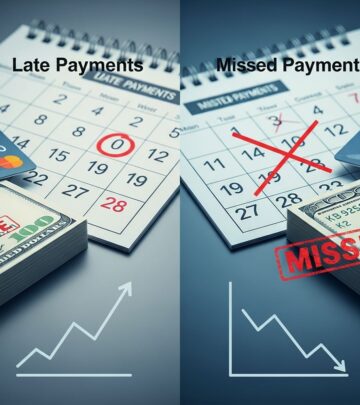
Understanding Credit Report Timing for Delinquent Accounts
Learn when payment delays appear on credit reports and their lasting impact

Missing a payment deadline can feel like a financial mistake with lingering consequences. One of the most pressing questions borrowers face is understanding exactly when that missed payment will damage their credit profile and for how long the negative mark will persist. The answer involves understanding credit reporting timelines, the mechanics of how lenders communicate with credit bureaus, and the broader impact on your financial future.
The 30-Day Reporting Threshold
The most critical timeline in credit reporting centers on the 30-day mark. When you miss a payment, your creditor won’t immediately rush to report the delinquency to the three major credit bureaus—Equifax, Experian, and TransUnion. Instead, lenders typically allow a grace period before formal reporting occurs.
A payment is officially considered late for credit reporting purposes once it reaches 30 days past the due date. However, your creditor may charge a late fee the day after your payment is due. This distinction is crucial: you could face immediate financial penalties without yet experiencing credit report damage. The difference between a few days late and 30 days late represents the boundary between manageable and serious delinquency.
This 30-day threshold exists because lenders and credit bureaus recognize that occasional payment delays happen. Life circumstances—a forgotten due date, processing delays, temporary cash flow problems—can cause innocent oversights. The 30-day window provides an opportunity to catch up without devastating your credit profile.
What Happens Before Your Credit Report Is Affected
Understanding the period before a late payment reaches your credit report helps you act strategically. During the first 29 days after missing a payment, your account status may change, but the negative mark won’t appear on your official credit reports.
During this crucial window:
- Late fees accumulate – Your creditor may charge a late fee immediately or after a short grace period
- Interest rates may increase – Credit card issuers can apply a penalty annual percentage rate (APR), sometimes as high as 29.99%
- Promotional rates may be forfeited – If you have an introductory 0% APR offer, a late payment could cause you to lose this benefit
- Your account status updates internally – Your lender tracks the delinquency, but this isn’t yet visible to other creditors
Some loan types, including mortgages and auto loans, may offer grace periods extending up to 15 days before charging late fees. This variation highlights the importance of reviewing your specific loan or credit card agreement to understand your creditor’s exact policies.
The Permanent Mark: Seven-Year Credit Report Duration
Once a payment reaches 30 days late, the reporting clock begins. Your lender will report the delinquency to the credit bureaus, and this negative mark becomes part of your permanent credit history. The most striking aspect of this consequence is its longevity.
A single late payment that reaches credit bureau reporting will remain on your credit reports for seven years from the original delinquency date. This seven-year timeline applies whether the late payment is eventually paid in full or continues to deteriorate into a charge-off.
This extended timeline reflects how seriously credit bureaus and lenders view payment reliability. Seven years represents a substantial period during which potential creditors can see evidence of your past payment struggles. Even after significant time has passed and you’ve built positive payment history, that late payment remains visible to lenders reviewing your application.
Progressive Delinquency Categories
Credit reporting doesn’t treat all late payments identically. Lenders categorize delinquency based on how many days past due an account becomes:
| Delinquency Stage | Days Past Due | Credit Impact |
|---|---|---|
| Initial Late Payment | 30 days | First credit bureau report; immediate score impact |
| Escalated Delinquency | 60 days | More severe notation; compounded credit damage |
| Severe Delinquency | 90 days | Potential collections agency involvement |
| Extended Default | 120+ days | Account may be sent to collections |
| Charge-off | 180+ days (typically) | Creditor writes off debt as loss; severe damage |
If your payment becomes 60, 90, or 120 days late, the entire sequence of delinquency reports drops off your credit report together, seven years after the original missed payment date. This means that even though the delinquency status escalates, the removal timeline doesn’t restart with each stage.
How Delinquency Damages Your Credit Score
The mechanics of credit score damage from late payments connect directly to how credit scoring models weigh different factors. Payment history represents the single most influential component of both major credit scoring models:
- FICO Score 8: Payment history accounts for 35% of your score
- VantageScore 3.0: Payment history represents 40% of your score
Because payment history is so heavily weighted, a single late payment can produce dramatic score drops. The exact impact depends on multiple factors including your current credit score, how late the payment is, and your overall credit history.
Someone with excellent credit and a clean payment record typically experiences a larger point drop from a single late payment than someone who already has multiple blemishes on their report. This counterintuitive reality occurs because credit models view the first violation of an otherwise perfect record as particularly significant. Your excellent payment history actually makes the disruption more noticeable in numerical terms.
However, someone with excellent credit starting from, say, a 780 score might drop to 720 but remain in the “good” credit range. Someone starting with a 650 score might drop to 600, crossing into problematic territory. The same point decrease has different practical implications depending on your starting position.
The Recovery Process and Diminishing Impact
While a late payment remains on your credit report for seven years, its impact on your credit score gradually diminishes over time. This recognition of gradual recovery is built into credit scoring models, which view recent payment problems as more predictive of future risk than old ones.
Recent late payments carry significantly more weight in credit decisions than late payments from several years ago. This means that if you missed a payment three years ago but have maintained perfect payment behavior since then, that old delinquency matters less in current lending decisions than it did immediately after it occurred.
Building positive payment history after a late payment helps counteract the damage. Each on-time payment you make going forward adds to your record of reliability, which credit bureaus and lenders observe alongside the historical late payment. The negative mark remains visible, but your current behavior demonstrates improved financial habits.
Additional Consequences Beyond Credit Reports
While credit report damage is the most obvious consequence of late payments, several other financial repercussions deserve attention. Understanding these secondary effects helps illustrate the full cost of delinquency.
Increased borrowing costs: Late payments trigger penalty APRs on credit cards, potentially raising your interest rate to 29.99% or higher. This elevated rate applies to both your existing balance and new purchases, making debt significantly more expensive to carry.
Loss of promotional benefits: Many credit cards offer introductory 0% APR periods as incentives. A single late payment can cause you to forfeit these promotional rates entirely, jumping to standard or penalty interest rates immediately.
Collections agency involvement: If your account remains unpaid beyond 120 days, creditors may sell your debt to collections agencies. This creates additional negative marks on your credit report and introduces a separate creditor pursuing the debt.
Default classification: Extended non-payment can result in your account being classified as in default, leading to further credit damage and potential legal action to recover the debt.
Strategic Actions to Minimize Damage
If you recognize that you’ve missed a payment, immediate action during that crucial 30-day window can prevent credit report damage. Paying the full amount past due before the 30-day threshold eliminates credit bureau reporting. This doesn’t erase the late fee you may have incurred, but it prevents the permanent mark on your credit profile.
If you’re facing financial hardship, contacting your creditor proactively before missing payments provides options. Many lenders offer hardship programs, payment deferrals, or modified arrangements that can help you avoid delinquency. Creditors understand that proactive communication is more productive than managing defaults after the fact.
For accounts already reported to credit bureaus, the focus shifts to damage control and future prevention. Establishing automatic payment systems reduces the risk of accidental late payments going forward. Setting reminder alerts before due dates provides a secondary safety net.
Frequently Asked Questions
How much does a late payment lower your credit score?
The exact point drop varies based on your current score, how late the payment is (30, 60, 90+ days), and your credit history. Someone with an excellent score and clean history may see a larger drop than someone with existing credit problems, though the practical impact depends on whether the drop crosses into a different credit tier.
Can a payment that’s only a few days late affect your credit?
No. Payments that are only a few days late won’t appear on your credit reports and won’t affect your credit scores. However, you may still incur a late fee, depending on your creditor’s policies. The credit reporting threshold is specifically 30 days past due.
What if I pay the late payment before 30 days have passed?
If you pay the delinquent amount before your account reaches 30 days late, the late payment won’t be reported to the credit bureaus. This is why that 30-day window represents a critical opportunity to prevent credit damage. You may still have paid a late fee, but your credit profile remains unaffected.
Do all creditors report late payments at exactly 30 days?
No. Each lender has its own rules for when it reports a late payment to the credit bureaus. However, the legal standard for credit reporting purposes defines a payment as late once it reaches 30 days past due. Some creditors may report slightly earlier, but 30 days is the standard threshold.
Can I get a late payment removed from my credit report?
Once reported to credit bureaus, a late payment generally cannot be removed before the seven-year mark, unless there’s an error in the reporting. Some creditors may agree to remove a late payment as part of a settlement, but this requires negotiation and isn’t guaranteed. Disputing inaccurate information with the credit bureaus is your recourse if the reported late payment is incorrect.
Long-Term Planning and Credit Recovery
Understanding the timeline of late payment reporting empowers you to make strategic decisions. The seven-year duration isn’t permanent, though it can feel that way when you’re in the midst of credit recovery. With consistent, on-time payments and responsible credit behavior, your credit score will improve significantly even while the late payment remains on your report.
The most valuable takeaway is recognizing the importance of that 30-day window. Acting during this period—whether by catching up on payments before reporting occurs, contacting your creditor about hardship options, or simply understanding your situation—determines whether a payment miss becomes a temporary cash flow problem or a permanent credit blemish.
References
- How Late Payments Affect Your Credit — Upstart Support. 2026. https://upstarthelp.upstart.com/late-missed-payments
- How do late payments affect credit scores? — Intuit Credit Karma. 2026. https://www.creditkarma.com/credit/i/late-payments-affect-credit-score
- Can One 30-Day Late Payment Hurt Your Credit? — Experian. 2026. https://www.experian.com/blogs/ask-experian/can-one-30-day-late-payment-hurt-your-credit-score/
- When Does a Late Credit Card Payment Show Up on Credit Reports? — Equifax. 2026. https://www.equifax.com/personal/education/credit-cards/articles/-/learn/when-late-credit-card-payments-post
- How Does a Late Payment Affect Your Credit? — NerdWallet. 2026. https://www.nerdwallet.com/finance/learn/late-bill-payment-reported
- How Long Do Late Payments Stay on Your Credit Report? — Citi. 2026. https://www.citi.com/credit-cards/money-management/how-long-do-late-payments-stay-on-credit-report
- Does a Late Payment Affect Credit Score? — myFICO. 2026. https://www.myfico.com/credit-education/faq/negative-reasons/late-payments
Similar Articles








Read full bio of medha deb