Credit Options When Cards Are Out of Reach
Discover practical alternatives to traditional credit cards for building credit with bad or no history, from secured options to innovative fintech solutions.
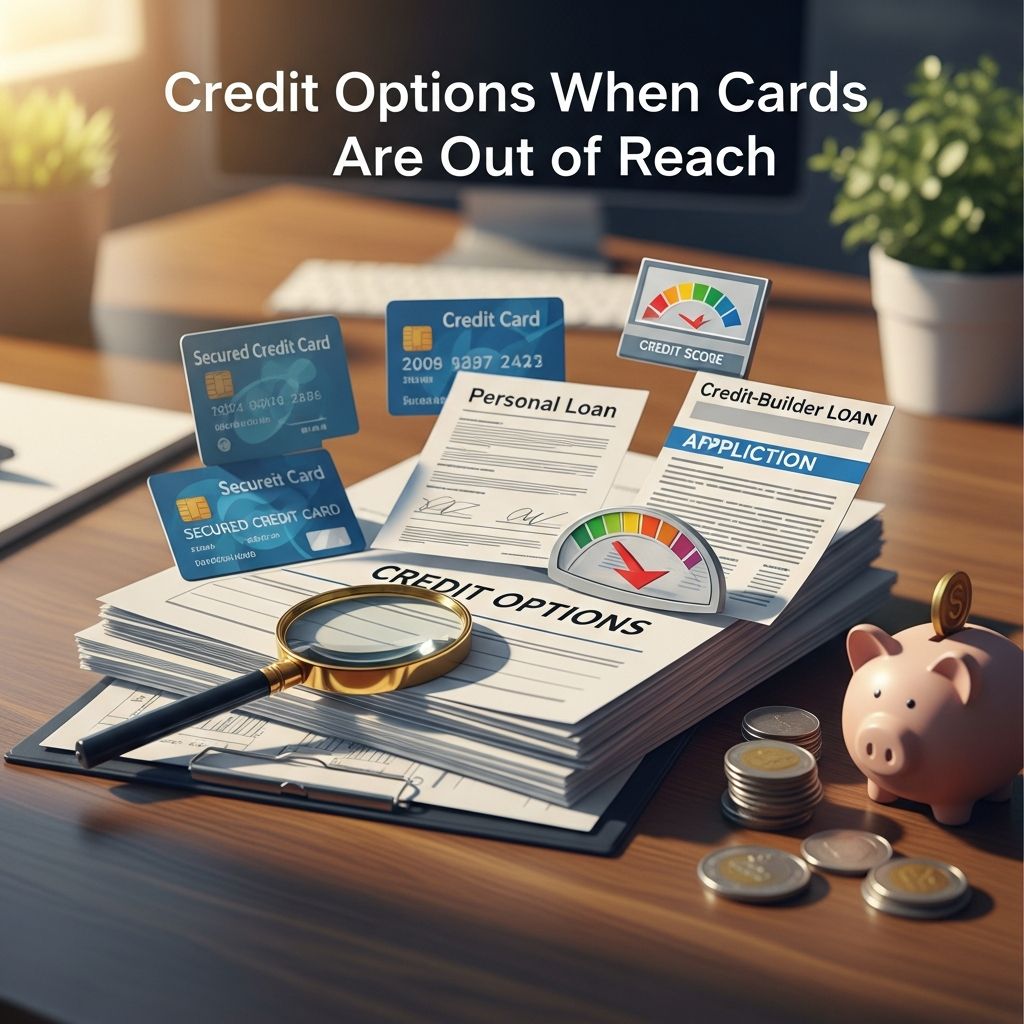
Many individuals face denials for traditional credit cards due to poor, limited, or nonexistent credit histories. Fortunately, several viable alternatives exist to help access credit, build payment history, and improve financial standing over time. These options range from deposit-backed cards to innovative digital tools that report activity to major credit bureaus without requiring perfect credit.
Understanding Barriers to Credit Card Approval
Credit card issuers evaluate applicants based on factors like FICO scores, income, debt levels, and payment history. Those with scores below 629 often encounter rejections, as subprime borrowers pose higher risk. However, responsible use of alternatives can demonstrate reliability, potentially leading to better opportunities. Key benefits include reporting to Experian, Equifax, and TransUnion, which form 35% of FICO scores through payment history alone.
Secured Credit Cards: A Reliable Starting Point
Secured cards require a refundable deposit that sets your spending limit, typically from $200 to $2,500. This deposit mitigates issuer risk, allowing approval despite bad credit. Unlike unsecured cards, they often feature lower APRs and paths to upgrades.
- Discover it Secured: Matches deposits from $200, offers 2% cash back at gas stations and restaurants (up to $1,000 quarterly), and 1% elsewhere. No annual fee; automatic reviews for unsecured upgrade after 7 months.
- OpenSky Secured Visa: No credit check needed; deposit $200-$3,000 via money order. $35 annual fee; up to 10% back on select purchases; reports to all bureaus.
- Varo Believe Secured: Ties to Varo bank account; no annual fee; potential cash back with direct deposit.
These cards build credit through on-time payments. After consistent use, many issuers return deposits upon upgrade to unsecured versions, freeing up funds.
Unsecured Alternatives for No-Deposit Access
For those avoiding tied-up deposits, unsecured cards target subprime profiles using alternative data like income and banking history instead of hard credit pulls.
| Card Name | Annual Fee | Key Features | Best For |
|---|---|---|---|
| Tilt Motion Visa | $0 | 1%-10% cash back at merchants; limit increases via milestones; 28.74%-33.74% APR; reports to all bureaus | No deposit; rewards |
| Grow Credit Mastercard | $0 (basic) | Pays subscriptions (Netflix, etc.); no credit check; small line based on bank data | Controlled spending |
| Chime Credit Builder | $0 | Uses checking balance as limit; auto-pays; 1.5% rotating cash back with direct deposit | Automatic payments |
| Mission Lane Green Line Visa | Varies | Low limits; potential upgrades; reports activity | Bad credit rebuilding |
Tilt Motion stands out for deposit-free rewards and growth paths. Grow Credit limits use to subscriptions, ensuring predictability without interest. Chime’s model auto-deducts payments, preventing debt accumulation.
Credit-Builder Accounts and Fintech Innovations
Beyond cards, fintechs offer card-like tools. These virtual or hybrid products report payments without traditional lending risks.
- Current Build Card: No fees or deposit; uses banking data for eligibility; builds credit via secured account linked to debit.
- Arro Card: $60 annual membership (possibly discounted); no deposit/check; income-based approval.
- Zolve Classic: Targets immigrants/newcomers; no SSN needed initially; builds via app activity.
These leverage open banking for underwriting, approving based on cash flow rather than scores. SpotMe features on some, like Chime, provide overdraft buffers without fees for qualifiers.
Becoming an Authorized User on Family Cards
Added to a trusted person’s card, authorized users gain a credit line without liability for payments. Positive history from the primary user boosts the added profile if the issuer reports it.
Choose accounts with low utilization (<30%) and long history. Not all issuers report authorized users—confirm with the primary cardholder. This passive method suits those avoiding new accounts but requires family trust.
Retail and Store Cards for Targeted Use
Store cards from retailers like department stores approve easier for in-store purchases. They report to bureaus but carry high APRs (25%+), suiting occasional buyers.
- Pros: Easier approval; rewards on purchases.
- Cons: Limited acceptance; temptation for overspending.
Use for planned buys, pay off immediately to avoid interest.
Subprime and Rebuilder Cards from Major Networks
Visa and Mastercard offer subprime lines for scores under 600. Examples include Indigo Mastercard ($75-$99 fees, 35.90% APR), Premier Bankcard Mastercard, and Fortiva Rewards.
These unsecured cards have high costs but report activity, aiding rebuilding. Path to better products emerges with improved scores.
Strategies to Maximize Credit Building Success
Regardless of product:
- Pay on time—35% of FICO.
- Keep utilization under 30%.
- Start small, request increases after 6 months.
- Monitor via free weekly reports from AnnualCreditReport.com (official U.S. government site).
- Avoid multiple applications to prevent inquiries dinging scores.
Combine with budgeting apps for tracking. Expect 3-6 months for score lifts with consistent use.
Comparing Costs and Benefits
| Type | Deposit | Fees | Rewards | Upgrade Potential |
|---|---|---|---|---|
| Secured | Yes | Low/none | Cash back possible | High |
| Unsecured Subprime | No | High annual | Limited | Medium |
| Fintech Builders | No | Low/none | Subscription cash back | Activity-based |
Secured options balance accessibility and low cost; fintechs excel in fee avoidance.
Frequently Asked Questions
Do these alternatives report to all credit bureaus?
Most do, including Tilt, Discover, OpenSky, Chime, and Grow—confirm before applying.
How long to see credit score improvement?
1-3 months for new accounts; 6+ for significant gains with perfect payments.
Can I get rewards with bad credit?
Yes, via cash back on Tilt (1-10%), Discover (2%), OpenSky (10%).
Are there no-fee options?
Tilt Motion, Grow basic, Chime, Discover secured—all $0 annual.
What if I have no bank account?
OpenSky accepts money orders; others like Chime require checking.
Long-Term Path to Unsecured Credit
After 12-24 months of positive history, graduates often qualify for prime cards. Track progress via VantageScore or FICO tools. Diversify with one card/account to avoid overextension.
These tools empower financial recovery, turning denials into stepping stones. Select based on needs—rewards, fees, or simplicity—and commit to habits for lasting gains.
References
- 7 Best Second-Chance Credit Cards for Bad Credit in 2025 — Tilt. 2025. https://tilt.com/blog/second-chance-credit-cards-bad-credit-2025/
- Can’t Get a Credit Card? Try These Alternative Options — NerdWallet. 2025. https://www.nerdwallet.com/credit-cards/learn/best-alternative-credit-cards-for-no-credit
- Best Credit Cards for Bad Credit for March 2026 — Intuit Credit Karma. 2026-03. https://www.creditkarma.com/credit-cards/bad-credit
- 6 Alternatives if You Can’t Get a Credit Card — Experian. 2025. https://www.experian.com/blogs/ask-experian/alternatives-if-you-cant-get-credit-card/
- Credit Cards for Rebuilding Credit — Mastercard. 2025. https://www.mastercard.com/us/en/personal/find-a-card/credit-card/credit-type/bad-credit.html
Similar Articles








Read full bio of Sneha Tete