Credit Invisibility Explained
Discover what credit invisibility means, who it impacts most, and proven strategies to build visible credit history for better financial access.
Millions of Americans face significant barriers to financial products because they lack a credit history, a condition known as credit invisibility. This status prevents the generation of a credit score, making it challenging to secure loans, rentals, or even employment in some cases. Understanding this issue is crucial for those affected and for broader efforts toward financial inclusion.
Defining Credit Invisibility and Unscorability
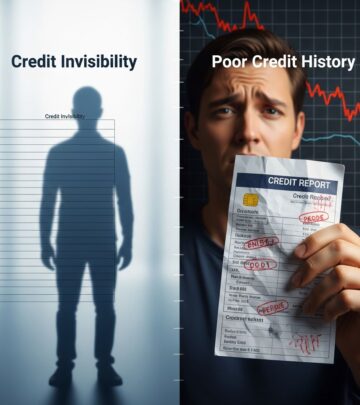
Credit invisibility occurs when an individual has no credit file at the major credit bureaus: Experian, TransUnion, and Equifax. Without a file, no credit score can be calculated, as scores rely on historical data like payment records and account ages. The Consumer Financial Protection Bureau (CFPB) distinguishes this from unscorability, where a credit file exists but lacks sufficient recent activity—such as at least six months for FICO scores—to produce a score.
These distinctions matter because both groups struggle with automated lending decisions, often forcing reliance on manual reviews or high-cost alternatives. Recent estimates indicate about 26 million U.S. adults are credit invisible, representing roughly one in ten, with another 21 million unscorable.
Who Faces Credit Invisibility?
Credit invisibility does not affect everyone equally. Demographic data reveals stark disparities:
- Black and Hispanic consumers are 1.8 times more likely to be invisible or unscorable than White or Asian consumers, with rates of 28% and 26% respectively versus 16%.
- Low-income neighborhoods show higher prevalence, linked to systemic barriers like redlining and distrust in financial institutions.
- Young adults new to credit, recent immigrants, and seniors whose accounts have aged off reports are also common victims.
| Group | Credit Invisible Rate | Source |
|---|---|---|
| Black Consumers | 28% | |
| Hispanic Consumers | 26% | |
| White/Asian Consumers | 16% | |
| Overall U.S. Adults | ~10-19% |
These patterns stem from structural issues rather than personal choices alone, including limited access to traditional banking and historical discrimination.
Root Causes of Lacking Credit History
Several factors contribute to credit invisibility, often intersecting with life circumstances:
- Newcomers to Credit: Young people or immigrants without U.S. credit experience start from zero.
- Cash-Based Lifestyles: Those relying on debit or cash avoid credit products entirely.
- Seniors and Inactivity: Older individuals may stop using credit, causing files to thin out over time.
- Fear of Debt: Past negative experiences or advice to shun credit lead to deliberate avoidance.
- Employment Gaps: Limited job history increases perceived risk, blocking credit access.
Systemic elements exacerbate this: high lending costs make banks selective, favoring those with established profiles, while communities of color face ongoing distrust from predatory practices.
Real-Life Impacts on Daily Finances
The absence of credit visibility ripples through essential life areas:
- Loan Denials: No score means manual underwriting, higher rates, or outright rejections for mortgages, auto loans, or cards.
- Housing Hurdles: Landlords often check credit, leading to denials or demands for larger deposits.
- Insurance Premiums: Some providers use credit-based insurance scores, resulting in costlier policies.
- Emergency Funding: Limited options push toward payday loans with exorbitant fees.
- Job Barriers: Employers in finance or security roles may require credit checks.
During economic shocks like the pandemic, credit invisibles paradoxically fared better initially—no delinquencies to report—but struggled with recovery aid requiring scores.
Steps to Become Credit Visible
Building credit from invisibility is achievable with deliberate actions. Start small and consistent:
- Check Your Status: Use AnnualCreditReport.com for free weekly reports from all bureaus to confirm invisibility.
- Get a Secured Card: Deposit-based cards report payments, establishing history quickly. Look for no-annual-fee options convertible to unsecured.
- Become an Authorized User: Join a trusted family member’s card with good history; ensure the issuer reports to all bureaus.
- Report Alternative Payments: Services like Piñata add rent/utilities to reports, aiding thin files.
- Credit-Builder Loans: Small loans where payments are held and reported, ideal for beginners.
- Retail or Gas Cards: Easier approvals for starters, but use cautiously to avoid high interest.
Track progress: Aim for six months of activity for a FICO score. Pay on time, keep utilization under 30%, and diversify accounts.
Advanced Strategies and Tools
Beyond basics, leverage innovations:
- Rent Reporting Apps: Platforms submit on-time rent to bureaus, potentially boosting scores without new debt.
- AI-Driven Lending: Emerging tech assesses bank data or cash flow, reducing reliance on traditional scores.
- Community Programs: Banks partner with groups to offer credit-building workshops and products.
Timeline for visibility: 3-6 months for a file, 6-12 for a score. Monitor via free tools from bureaus.
Policy Efforts for Greater Inclusion
Government and industry push changes: CFPB studies highlight disparities, advocating alternative data inclusion. Proposals include mandatory rent/utility reporting, though delinquency risks exist. States explore ‘credit invisible’ protections for rentals and jobs.
Frequently Asked Questions (FAQs)
What if I have a thin file but not invisible?
Focus on recent activity; add positive tradelines via secured products to become scorable.
Does paying rent build credit automatically?
No, unless reported by your landlord or a service; opt into reporting programs.
Can immigrants build U.S. credit quickly?
Yes, via secured cards or international tradeline services accepted by bureaus.
Is credit invisibility permanent?
No, proactive steps create history in months; consistency is key.
How does invisibility affect mortgages?
Lenders use manual reviews, often requiring larger down payments or cosigners.
References
- What is credit invisibility? — Business Insider. 2023. https://www.businessinsider.com/personal-finance/credit-score/what-is-credit-invisibility
- What does it mean to be credit invisible & how do you fix it? — Nav. 2023. https://www.nav.com/blog/what-does-it-mean-to-be-credit-invisible-and-how-to-fix-it-3578046/
- What Does It Mean to Be Credit Invisible? — Experian. 2023. https://www.experian.com/blogs/ask-experian/what-does-being-credit-invisible-mean/
- The Credit Score Pandemic Paradox and Credit Invisibility — National Consumer Law Center. 2022-10-01. https://www.nclc.org/wp-content/uploads/2022/10/IB_Pandemic_Paradox_Credit_Invisibility.pdf
- What Is Credit Invisible? — LendingTree. 2023. https://www.lendingtree.com/credit-repair/what-does-it-mean-to-be-credit-invisible/
- The Invisible Credit Crisis: How AI Can Fix Credit Invisibility — Blend360. 2023. https://www.blend360.com/thought-leadership/the-invisible-credit-crisis
- Banks Serve Communities with Invisible Credit — Wisconsin Bankers Association. 2023. https://www.wisbank.com/banks-serve-communities-with-invisible-credit-in-an-effort-to-develop-financially-capable-consumers/
Similar Articles








Read full bio of medha deb