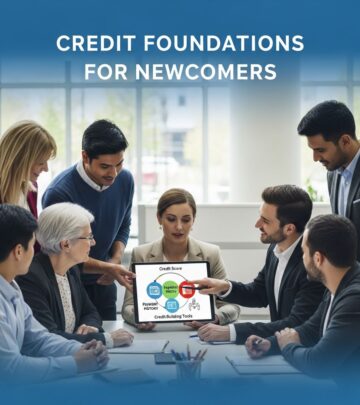
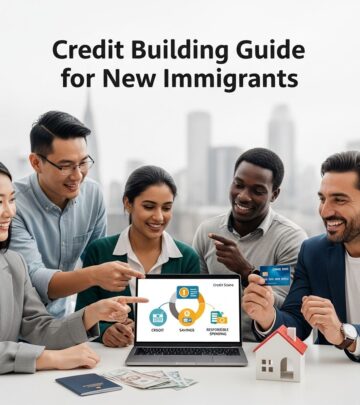
Credit Foundations for Newcomers
Discover proven strategies for immigrants to establish a solid U.S. credit history from scratch and unlock financial opportunities.

Arriving in the United States often means starting with a clean financial slate, which can feel daunting without a credit history. A strong credit profile opens doors to affordable housing, vehicle financing, job opportunities, and essential services. This guide outlines practical, accessible steps tailored for newcomers to develop credit effectively, drawing from established financial practices.
Understanding the U.S. Credit System
The U.S. credit system relies on scores ranging from 300 to 850, primarily calculated by agencies like Equifax, Experian, and TransUnion. These scores reflect payment reliability, debt levels, and credit length. New arrivals typically have no score, making them ‘credit invisible’ rather than having poor credit.
Key factors influencing scores include payment history (35%), amounts owed (30%), credit age (15%), new credit (10%), and mix (10%). Immigrants can leverage tools like secured cards and loans to address these quickly.
Essential First Steps: ID and Banking Basics
Begin by securing identification for financial products. If eligible, obtain a Social Security Number (SSN) through the Social Security Administration, especially on work visas. Those ineligible can apply for an Individual Taxpayer Identification Number (ITIN) from the IRS, accepted by many lenders for account opening.
- Visit a Social Security office with immigration documents for SSN eligibility.
- File Form W-7 with tax returns for ITIN, which supports credit applications.
Next, open a checking or savings account at a bank or credit union. This establishes a U.S. financial footprint without affecting credit scores and may not require an SSN. Maintain positive balances to build lender relationships.
Secured Credit Cards: Your Entry Point
Secured credit cards are ideal starters, requiring a refundable deposit that sets your spending limit, often $200-$500. Use for everyday purchases like gas or groceries, paying in full monthly to demonstrate responsibility.
Benefits include:
- Reporting to all three bureaus, building payment history rapidly.
- Potential upgrades to unsecured cards after 6-12 months of good use.
- Lower approval barriers for those without history.
| Card Feature | Pros | Cons |
|---|---|---|
| Deposit Required | Sets limit, refundable | Ties up funds initially |
| Approval Odds | High for newcomers | May have fees |
| Building Impact | Fast score generation | Requires discipline |
Keep utilization under 30%—ideally 10%—by paying twice monthly if possible.
Credit-Builder Loans: Structured Progress
Credit-builder loans hold borrowed funds in savings while you make fixed payments, reported to bureaus. Terms are short (6-24 months), with low monthly amounts like $10-$50, and you receive principal plus interest at end.
- Perfect for payment history without spending temptation.
- Available via credit unions or online platforms, often without SSN.
- Boosts ‘credit mix’ for score diversity.
After completion, pair with cards for balanced profiles.
Leveraging Relationships: Authorized Users and Co-Signers
Join as an authorized user on a trusted family member’s card with good history. Their positive activity may boost your score if reported. Discuss usage clearly to avoid issues.
For loans, a co-signer with established credit guarantees payments, enabling access while building your record. Use sparingly to preserve relationships.
Reporting Everyday Payments
Rent, utilities, and phone bills aren’t auto-reported but can via services like Experian Boost or rental platforms. Enroll to add positive history instantly, potentially raising scores 10-20 points.
- Verify provider participation.
- Free options exist; paid ones charge small fees.
Best Practices for Credit Growth
Consistency drives success:
- Pay on time: Automate to avoid 35% score weight penalty.
- Low utilization: Under 30% per CFPB guidelines.
- Limit inquiries: Space applications 6+ months.
- Monitor free: AnnualCreditReport.com weekly.
After 6 months, request limit increases; after 12, apply for unsecured products. Diversify with installment loans.
Timeline for Milestones
| Months | Actions | Expected Outcome |
|---|---|---|
| 0-3 | SSN/ITIN, bank account, secured card | First score appears (600+ possible) |
| 4-6 | Builder loan, report bills | Score 650+, history builds |
| 7-12 | Authorized user, limit requests | 700+ score, unsecured options |
| 12+ | Diversify loans, optimize | Excellent credit for major purchases |
Common Challenges and Solutions
Newcomers face hurdles like language barriers or distrust. Solution: Use community banks familiar with immigrants. Avoid subprime offers with high fees.
Disputes: Review reports yearly; correct errors promptly.
Long-Term Financial Empowerment
Beyond credit, save in high-yield accounts and budget via apps. Strong credit reduces insurance premiums and job rejections. Aim for 750+ for prime rates.
Frequently Asked Questions
Can I build credit without an SSN?
Yes, ITINs work for many secured cards and loans.
How long until I see a score?
1-6 months with active accounts.
Is a secured card safe?
Yes, deposit protects issuer; yours is refundable.
What if I miss a payment?
One late hit drops score 100+ points; recover in months with consistency.
Do utilities help?
Only if reported via services.
References
- How Can Immigrants Build Credit? — Capital One. 2023. https://www.capitalone.com/learn-grow/money-management/how-can-immigrants-build-credit/
- How to build credit as an immigrant — Firstcard. 2023. https://www.firstcard.app/learn/blog/how-to-build-credit-as-an-immigrant-in-the-us-a955b
- 5 Ways U.S. Immigrants Can Build Credit — NC Bar Communities. 2020-09-21. https://communities.ncbar.org/blogs/ben-rivas1/2020/09/21/5-ways-us-immigrants-can-build-credit
- Building Credit from Zero: How Immigrants Establish Financial Identity — OpenSphere. 2023. https://opensphere.ai/immigration-resources/building-credit-from-zero-how-immigrants-establish-financial-identity-in-the-u.s.
- Building US Credit as a New Immigrant — Elgon Financial Advisors. 2023. https://elgonfa.com/blog/how-to-build-us-credit-new-immigrant/
- Building a Strong Credit History in the U.S. — New Omni Bank. 2023. https://newomnibank.com/build-credit-history-us-immigrants/
- GETTING ACCESS TO FINANCIAL CAPITAL — Immigrants Rising (PDF). 2023. https://immigrantsrising.org/wp-content/uploads/Immigrants-Rising_Credit-and-Financial-Capital-Guide.pdf
Similar Articles








Read full bio of Sneha Tete