Credit Default Swaps: Pros, Cons, Crises, and Examples
Understanding CDS instruments: Benefits, risks, real-world applications, and financial crisis impact.
Understanding Credit Default Swaps
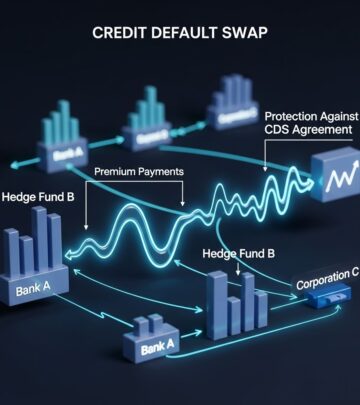
A credit default swap (CDS) is a financial derivative contract that functions as insurance against credit risk. In its essence, a CDS is an agreement between two parties where the buyer makes periodic payments to the seller in exchange for protection against the default of a specific debt instrument. The seller of the CDS agrees to compensate the buyer if the underlying borrower—known as the reference entity—fails to meet its debt obligations or experiences a credit event.
The CDS market emerged as a mechanism to transfer credit risk among market participants, allowing investors and financial institutions to manage exposure to default risk more efficiently. These contracts are privately negotiated bilateral agreements that specify several key components: the reference obligation (the debt being protected), the notional amount (the value being insured), the premium or spread (the periodic payments), and the maturity (the duration of protection).
How Credit Default Swaps Work
The mechanics of a CDS involve a straightforward exchange of risk and compensation. The protection buyer makes regular periodic payments—typically quarterly—to the protection seller throughout the contract’s life. These payments are expressed as a percentage of the notional value and are commonly called the CDS spread or premium. In exchange, the seller commits to compensate the buyer if a credit event occurs before the contract’s maturity date.
A credit event can take several forms. The most common trigger is a failure to pay, where the reference entity misses a scheduled payment of principal or interest. Other credit events include restructuring (when the borrower modifies the terms of its debt obligations adversely to creditors), bankruptcy, acceleration of debt obligations, and for sovereign debt, repudiation or moratorium. For corporate CDS contracts, typical maturities range from one to ten years, with five-year contracts being the market standard.
When a credit event occurs, settlement of the CDS can happen through two mechanisms. In physical settlement, the protection seller pays the buyer par value in exchange for delivery of the defaulted debt obligation. In cash settlement, the seller pays the difference between par value and the market price of the debt instrument. For example, if a company’s senior bonds trade at 25 cents on the dollar after default, the protection seller would pay 75% of the notional value to the buyer.
Advantages of Credit Default Swaps
Credit default swaps offer several significant benefits to market participants, contributing to their widespread adoption in global financial markets.
Risk Management and Hedging
The primary advantage of CDS is their role in risk management. Banks and financial institutions use CDS to hedge against the risk that borrowers may default on loans. When a bank originates a loan but wants to transfer the default risk, it can purchase CDS protection. If the borrower subsequently defaults, the CDS payoff offsets the loan loss. This hedging capability allows banks to reduce their concentration of credit risk and manage their exposure more effectively.
Price Discovery and Market Efficiency
CDS spreads provide real-time market information about the perceived default risk of the reference entity. The CDS premium reflects market participants’ collective assessment of credit quality, with wider spreads indicating higher perceived default risk. This price discovery mechanism enhances overall market efficiency by making credit risk pricing more transparent and accessible.
Credit Risk Transfer
CDS enable efficient transfer of credit risk from those who want to reduce exposure to those willing to assume it. Banks can sell their loan portfolios’ risk without selling the loans themselves, maintaining client relationships while managing risk. This flexibility has made CDS an essential tool for portfolio management and capital optimization.
Market Liquidity
The CDS market provides liquidity for credit exposure that might otherwise be illiquid. Investors can take positions on credit risk through CDS without necessarily purchasing the underlying bond or loan, improving overall market liquidity and accessibility to credit market participation.
Disadvantages and Risks of Credit Default Swaps
Despite their benefits, credit default swaps present significant risks and disadvantages that regulators and market participants must carefully manage.
Counterparty Risk
A critical vulnerability of CDS is counterparty risk—the risk that the protection seller may default on its obligations. If the buyer relies on a CDS from a seller who subsequently fails, the buyer loses its protection at precisely the moment when it is needed most. This risk was dramatically illustrated during the 2008 financial crisis when AIG, a major CDS seller, required government bailout. The risk becomes compounded in scenarios where the protection seller and the reference entity experience simultaneous financial distress, known as “double default” risk.
Moral Hazard and Speculation
A problematic feature of CDS is that anyone can purchase protection on debt they do not own, called “naked” CDS. This creates moral hazard, where investors may have incentives to take actions that increase the probability of default by the reference entity. Additionally, naked CDS positions essentially allow speculation on credit events without underlying economic justification, amplifying market volatility.
Basis Risk
The CDS protection may not perfectly align with the underlying exposure. Factors such as differences in seniority, currency, or terms between the CDS contract and the actual debt position create basis risk. The CDS payoff may not fully compensate for actual losses experienced.
Systemic Risk
The interconnected nature of CDS contracts across financial institutions creates systemic risk. Large exposures concentrated among a few major dealers create potential for contagion, where the default of one institution triggers cascading failures throughout the financial system. The opacity of bilateral CDS contracts made it difficult for regulators to assess systemic risks until after the 2008 crisis.
Settlement and Auction Risk
Credit event determination and settlement can be contentious and complex. Disputes over whether a credit event has occurred have delayed payments and created uncertainty. The introduction of credit event auctions to determine recovery values added another layer of complexity and potential for market manipulation.
Credit Default Swaps and Financial Crises
The role of CDS in financial crises, particularly the 2008 crisis, revealed both the benefits and dangers of these instruments.
The 2008 Financial Crisis
CDS played a central role in the 2008 financial crisis. As mortgage-backed securities deteriorated, CDS protection on these assets became critical to numerous financial institutions. However, the scale of CDS exposure far exceeded the underlying credit market. Large banks and investment firms held massive amounts of protection on residential mortgage-backed securities through CDS written by AIG Financial Products.
When housing prices collapsed and defaults surged, AIG faced massive CDS claims it could not pay. The Federal Reserve and Treasury Department deemed AIG’s failure too systemically dangerous and provided a government bailout exceeding $180 billion. This crisis revealed that CDS had created hidden leverage and interconnected risk that threatened the entire financial system. Major investment banks, including Lehman Brothers, carried enormous CDS positions that became worthless, accelerating their collapse.
The Greek Debt Crisis
During the 2012 Greek government-debt crisis, CDS on Greek sovereign debt became a contentious issue. A key question emerged: whether the restructuring of Greek debt would trigger CDS payments. The International Swaps and Derivatives Association (ISDA) eventually determined that Greece’s restructuring was not a “credit event” under standard CDS definitions, disappointing holders of protection. This ambiguity highlighted the need for clearer contract standards and revealed political dimensions to CDS settlement decisions.
Regulatory Changes and Market Evolution
Following the 2008 crisis, regulators implemented significant reforms to address CDS risks. The Dodd-Frank Act in the United States mandated central clearing of standardized CDS contracts, requiring them to be traded on exchanges rather than over-the-counter. The European Market Infrastructure Regulation (EMIR) imposed similar requirements in Europe.
These reforms aimed to reduce counterparty risk by centralizing clearing through central counterparties (CCPs), increase transparency through trade reporting, and reduce systemic risk through higher capital requirements. The CDS market has since evolved with improved disclosure, standardized contracts, and more robust risk management practices. However, the market remains substantial, with significant concentrations among major dealers continuing to pose systemic risks.
Real-World Examples
Several practical examples illustrate how CDS function in various contexts. Consider a bank that originates a $50 million corporate loan to a manufacturing company. Concerned about the company’s credit quality, the bank purchases CDS protection on the loan. If the company defaults, the CDS seller compensates the bank for its loss. Without the CDS, the bank would bear the full loss from the default.
Another example involves a hedge fund investor holding a significant position in corporate bonds issued by an energy company. Anticipating industry headwinds, the fund purchases CDS protection on the bonds at a cost of 150 basis points annually (1.5% of the notional value). If the company defaults, the fund receives compensation; if it survives the contract period, the fund loses the premium paid but retains the bond value.
A third scenario demonstrates naked CDS: an investor believing a particular financial institution is at risk of failure purchases CDS protection on its debt despite not owning any of its bonds. This investor benefits from any credit deterioration affecting the institution and has no offsetting economic interest in the institution’s success.
CDS Market Structure and Pricing
The CDS market is dominated by major investment and commercial banks acting as dealers. These dealers maintain inventories of CDS positions and facilitate trades between end-users. Market pricing depends on multiple factors: the reference entity’s credit rating, its industry sector, general economic conditions, and market sentiment. Investment-grade CDS typically trade with spreads of less than 1% annually, while speculative-grade or distressed issuers command premiums exceeding 10% or higher.
The notional amount outstanding in the global CDS market represents trillions of dollars, though much of this represents offsetting positions rather than net exposure. The complexity of calculating true net exposures was a significant problem that emerged during the 2008 crisis and has only partially been resolved through post-crisis reforms.
Frequently Asked Questions
Q: What is the difference between CDS and traditional insurance?
A: While both transfer risk, CDS are bilateral derivatives contracts with standardized terms, traded and settled through dealers. Traditional insurance involves a regulated insurer, regulatory oversight, and different legal frameworks. CDS buyers need not have insurable interest in the underlying reference entity, unlike traditional insurance.
Q: How much does CDS protection typically cost?
A: CDS premiums vary widely based on credit quality. Investment-grade entities typically cost less than 1% annually, while speculative-grade borrowers may cost 5-20% or more annually. Distressed entities can trade at even higher premiums or become unavailable.
Q: Can CDS be used for speculation?
A: Yes, CDS can be purchased by investors without underlying debt exposure, enabling pure credit speculation. This naked CDS use has been controversial since it can incentivize betting against specific companies or sovereigns.
Q: What happens if the CDS seller defaults?
A: The protection buyer loses its protection and may face significant losses. This counterparty risk is why CDS are typically purchased from highly-rated financial institutions. Central clearing has reduced but not eliminated this risk.
Q: How are CDS settled when a default occurs?
A: CDS can be settled physically (with delivery of the defaulted obligation) or in cash (with payment of par minus recovery value). The settlement method is specified in the contract at inception.
References
- Credit Default Swaps — Federal Reserve Board. 2022. https://www.federalreserve.gov/econres/feds/files/2022023pap.pdf
- Credit Default Swap — Legal Information Institute, Cornell Law School. https://www.law.cornell.edu/wex/credit_default_swap
- Credit Default Swap – Definition, How it Works, Risk — Corporate Finance Institute. https://corporatefinanceinstitute.com/resources/derivatives/credit-default-swap-cds/
- Credit Default Swap — Wikipedia. https://en.wikipedia.org/wiki/Credit_default_swap
- What are Credit Default Swaps? — CQF Blog. https://www.cqf.com/blog/quant-finance-101/what-are-credit-default-swaps
Similar Articles








Read full bio of Sneha Tete