Understanding Credit Challenges: No Credit vs Bad Credit
Learn how absent credit history differs from damaged credit and which presents fewer obstacles.
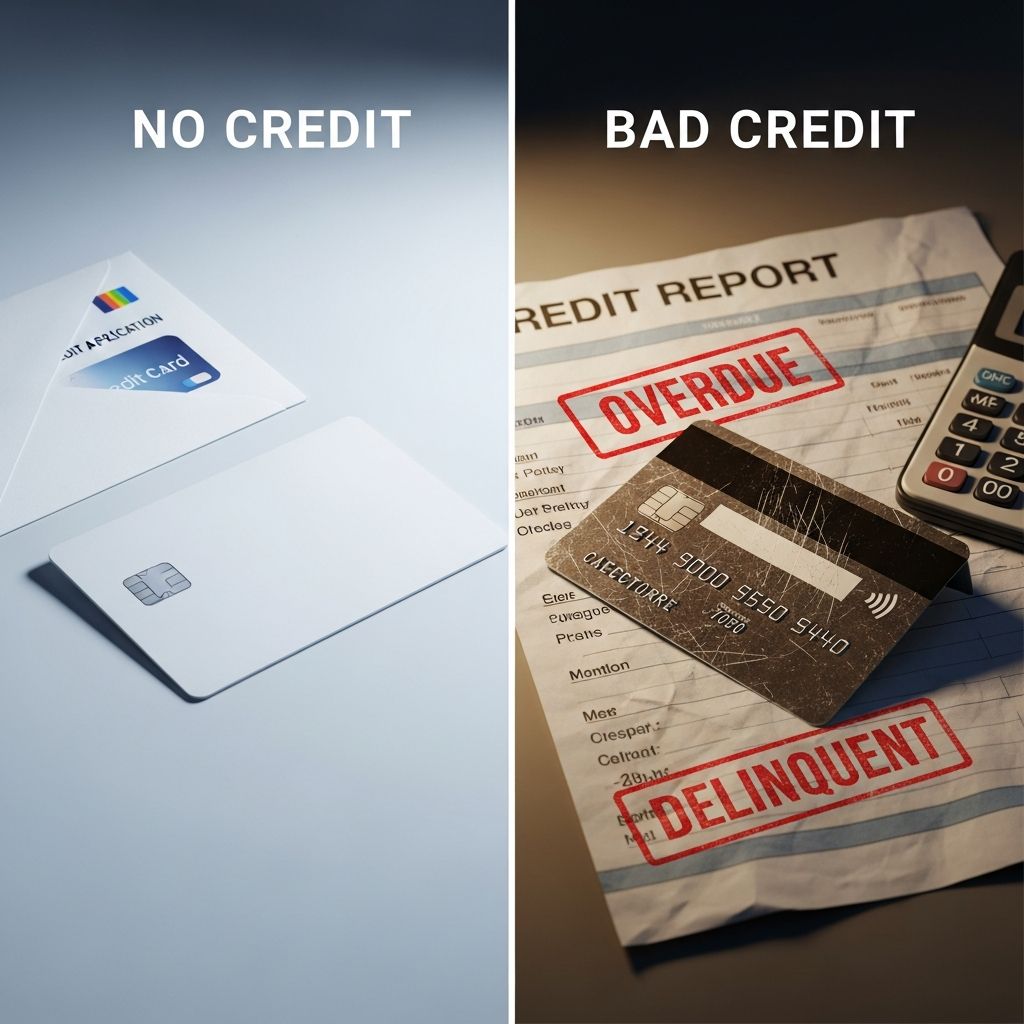
When it comes to personal finance, few things matter as much as your credit standing. Whether you’re applying for a mortgage, seeking a credit card, or trying to rent an apartment, your credit profile plays a crucial role in determining whether you’ll be approved and what interest rates you’ll receive. However, not all credit challenges are created equal. Two of the most common credit struggles people face are having no credit history and having bad credit. While both situations present obstacles, they differ significantly in their causes, consequences, and solutions.
Defining Your Starting Point: What Separates No Credit from Bad Credit
To understand which credit situation presents greater challenges, it’s essential to grasp what each term means. These concepts, while sometimes confused, represent fundamentally different financial circumstances that require distinct approaches to resolution.
The Absence of Credit History
Lacking credit history means that major credit reporting agencies have no financial record about you. This absence occurs because you’ve never borrowed money through traditional credit channels. Individuals without credit history have never applied for credit cards, loans, mortgages, or other lines of credit. They may also never have served as authorized users on someone else’s credit account. The Consumer Financial Protection Bureau refers to these individuals as “credit invisible,” and research suggests approximately 26 million Americans fall into this category.
Without a credit history, credit bureaus cannot generate a credit score for you. This is distinct from having a score of zero—you simply don’t have a measurable credit score at all. Recent immigrants, young adults just entering the financial system, and individuals who have consciously avoided debt sometimes find themselves in this position.
The Reality of Damaged Credit
Bad credit, by contrast, indicates that you have an established credit history, but that history contains negative marks. These negative items reveal financial mismanagement or unforeseen difficulties in meeting your obligations. Common reasons for bad credit include late or missed loan payments, defaulted loans, credit card debt exceeding 30% of available limits, accounts sent to collections, and bankruptcy. When credit bureaus calculate your score, these negative marks substantially reduce your number, typically resulting in scores below 580 on the FICO scale or below 600 on the VantageScore scale.
The critical distinction is that bad credit represents a history of actual behavior, while no credit simply represents the absence of any recordable history. This difference significantly impacts both the challenges you’ll face and your pathway to improvement.
Comparative Analysis: Which Situation Creates More Obstacles
Both no credit and bad credit present genuine barriers to financial progress, but the severity and duration of these obstacles differ considerably. Understanding these differences helps explain why financial experts generally view no credit as the less problematic situation.
Immediate Access Challenges
Both situations restrict your ability to access credit products easily. If you have no credit, lenders view you as an unknown quantity—they cannot predict whether you’ll repay borrowed money because you have no track record. If you have bad credit, lenders perceive you as a proven risk based on your demonstrated inability or unwillingness to meet past obligations. In practical terms, both scenarios result in similar immediate consequences:
- Difficulty qualifying for standard credit cards and loans
- Potential rejection from landlords when applying for housing
- Higher security deposits required for utilities, cable, and internet services
- Limited financing options for major purchases like automobiles
- Potential employer or housing application screening complications
Cost of Borrowing Differences
When you do manage to access credit with either situation, the financial costs diverge. Those without credit history might qualify for credit products specifically designed for building credit, such as secured credit cards backed by deposits, though interest rates may still be elevated due to perceived risk. Individuals with bad credit face systematically higher interest rates across nearly all borrowing products because their history suggests they present genuine repayment risk.
The Timeline Advantage: Speed of Credit Improvement
The most significant practical difference between these two situations emerges when considering repair timelines. This is where no credit becomes demonstrably advantageous compared to bad credit.
Building from Scratch
If you lack credit history, you can begin establishing it relatively quickly. Research indicates that approximately six months of positive credit activity recorded by the major bureaus (Experian, TransUnion, and Equifax) can enable credit scoring systems to generate your first credit score. During these six months, activities like timely payments on a secured credit card, installment loan, or credit-builder loan create the payment history necessary for scoring. Once you achieve this six-month milestone with consistent on-time payments, you position yourself for credit score improvement.
Rebuilding from Damage
Recovering from bad credit involves a substantially longer timeline. Negative marks on your credit report persist for years—typically seven years for late payments, missed payments, and collections accounts, and ten years for bankruptcy. While the impact of these negative items diminishes over time, their mere presence on your report continuously drags down your score throughout these extended periods. Even if you make perfect payments for years, the historical negative marks continue affecting your creditworthiness until they age off your report completely.
Strategic Pathways: How to Address Each Situation
The solutions for these two credit challenges vary significantly, reflecting their different underlying causes.
Building Credit from Zero
For those without established credit history, several effective strategies exist:
- Secured Credit Cards: These products require a security deposit that becomes your credit limit. On-time payments are reported to credit bureaus, establishing positive payment history.
- Credit-Builder Loans: These specialized loans work differently than traditional loans. You make monthly payments into a locked account, and upon completion, you receive the funds plus a record of on-time payments reported to credit bureaus. This approach simultaneously builds credit and creates emergency savings.
- Student Credit Cards: Individuals new to credit with student status can often qualify for cards specifically designed for building credit with minimal income requirements.
- Authorized User Status: Becoming an authorized user on someone else’s established credit account with positive history can accelerate credit building, though the effect varies by scoring model.
- Co-Signer Arrangements: While risky for the co-signer, having someone with good credit co-sign your loan can facilitate access to credit, though this arrangement requires careful consideration of the relationship and financial implications.
Repairing Damaged Credit
Those with bad credit face a more complex recovery process requiring attention to multiple factors. Beyond simply making on-time payments, strategies include:
- Paying down existing debt to reduce credit utilization ratios below the 30% threshold that damages scores
- Addressing any accounts in collections or late status immediately
- Avoiding additional negative marks by maintaining perfect payment patterns going forward
- Monitoring credit reports for errors and disputing inaccuracies with bureaus
- Maintaining older accounts to preserve credit history length, even if unused
Practical Implications Across Life Domains
The credit situation you face affects multiple aspects of your life beyond simple borrowing:
| Life Area | No Credit Impact | Bad Credit Impact |
|---|---|---|
| Housing Applications | May request alternative verification or higher deposit | Likely rejection or significantly higher security deposit |
| Employment Screening | Minimal impact; some employers view as neutral | Potential negative factor in hiring decisions |
| Insurance Rates | Standard rates applied | Substantially higher premiums in many states |
| Loan Approval Speed | May require manual review but possible approval | Typically requires specialized lenders; slower approval |
| Interest Rates Offered | Elevated but improving quickly | High and improving slowly over years |
The Verdict: Which Situation Is Genuinely Worse
Financial experts and credit bureaus consistently conclude that no credit is less problematic than bad credit. Several factors support this assessment:
First, the recovery timeline heavily favors those without credit history. Six months to a year of responsible financial behavior can substantially change your credit prospects if you’re starting from zero. In contrast, bad credit requires years of perfect behavior before negative marks age off your report and your score returns to acceptable ranges.
Second, lenders view no credit differently than bad credit. No credit represents unknown risk—a borrower whose reliability simply hasn’t been tested. Bad credit represents proven risk—a borrower whose history demonstrates difficulty or unwillingness to meet obligations. The psychological difference in how lenders approach these situations favors the credit-invisible borrower.
Third, the path forward differs in clarity and achievability. Those building from nothing benefit from straightforward solutions specifically designed to establish credit. Those rebuilding from bad credit face a more complex situation where multiple factors require simultaneous attention, and progress depends partly on time passing for negative marks to age.
Getting Started: Your First Steps
Regardless of which situation you face, taking action immediately positions you for improvement. For those without credit, begin researching secured credit cards or credit-builder loans from reputable financial institutions. For those with bad credit, start by obtaining your credit reports from all three bureaus to understand exactly what’s damaging your score, then prioritize addressing the most recent negative items and reducing existing debt.
In both cases, establishing a foundation of on-time payments—even for small amounts—begins the process of demonstrating creditworthiness. The specific products and strategies matter less than starting the journey toward better financial standing.
References
- Is No Credit Better Than Bad Credit? — NerdWallet. 2024. https://www.nerdwallet.com/finance/learn/no-credit-vs-bad-credit-difference
- No Credit vs. Bad Credit: They’re Not the Same! — MPOWER Financing. 2024. https://www.mpowerfinancing.com/blog/no-credit-vs-bad-credit
- Is No Credit Better than Bad Credit? — Experian. 2024. https://www.experian.com/blogs/ask-experian/is-no-credit-better-than-bad-credit/
- Is no credit better than bad credit? — First Citizens Bank. 2024. https://www.firstcitizens.com/personal/insights/credit/is-no-credit-better-than-bad-credit
- Consumer Financial Protection Bureau (CFPB) — U.S. Government Agency. 2024. https://www.consumerfinance.gov/
Similar Articles








Read full bio of medha deb