Credit Cards And ZIP Codes: What To Know To Boost Approval
Discover how your ZIP code influences credit card approvals, rates, and offers in this comprehensive guide to location-based lending practices.

Your postal code, or ZIP code in the U.S., is more than just a delivery address—it’s a key factor in the world of credit cards. Lenders use this geographic data to evaluate risk, customize offers, and verify identities, directly impacting whether you get approved and on what terms. Understanding this connection empowers you to navigate applications strategically and protect your financial profile.
Why Location Data Matters in Credit Decisions
Financial institutions rely on ZIP codes as a proxy for economic conditions, crime rates, and consumer behavior patterns. Areas with higher median incomes or stable employment might signal lower default risks, leading to better approval odds and lower interest rates. Conversely, regions facing economic challenges could trigger stricter scrutiny.
This practice stems from data aggregation models where lenders analyze historical performance by postal boundaries. For instance, if a ZIP code shows elevated fraud incidents or unemployment, issuers may adjust their algorithms accordingly. While not the sole determinant—credit score, income, and debt-to-income ratio weigh heavily—your address provides critical context.
- Economic Indicators: Lenders cross-reference ZIP data with census stats on income, home values, and job markets.
- Risk Profiling: High-risk zones may face higher denial rates or elevated APRs.
- Market Segmentation: Premium cards target affluent postal areas with tailored rewards.
The Application Process: Entering Your ZIP Code
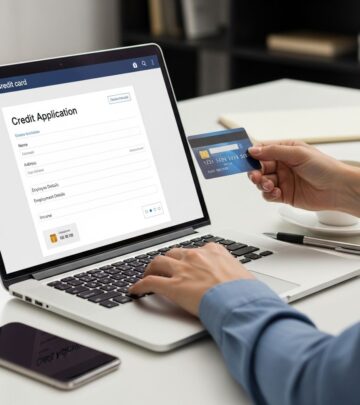
When applying for a credit card online or in-branch, the ZIP code field is mandatory. It’s the first step in address verification, ensuring the provided details match public records and credit reports. Mismatches here can halt the process immediately.
Issuers like major banks integrate real-time checks against U.S. Postal Service databases and credit bureaus (Equifax, Experian, TransUnion). A valid five-digit ZIP confirms legitimacy, while errors prompt corrections. Beyond verification, it feeds into underwriting models that predict repayment likelihood.
| Step in Application | ZIP Code Role | Potential Outcome |
|---|---|---|
| Initial Entry | Basic validation | Proceed or error flag |
| Credit Pull | Risk assessment | Approval/denial decision |
| Offer Customization | Geo-targeted perks | Personalized rates/rewards |
Risk Assessment Powered by Postal Insights
ZIP codes enable granular risk modeling without invasive personal data. Lenders purchase anonymized datasets linking postal areas to metrics like average FICO scores, bankruptcy filings, and delinquency rates. A 2023 Federal Reserve study highlighted how urban vs. rural ZIPs exhibit distinct default patterns, influencing lending strategies.
For example, coastal high-income ZIPs (e.g., 90210 in Beverly Hills) often qualify for elite cards with 0% intro APRs, while inner-city codes with higher poverty might see caps on credit limits. This isn’t discrimination but actuarial science, balancing portfolio health with fair lending laws enforced by the Consumer Financial Protection Bureau (CFPB).
Personalized Offers Based on Your Area
Marketers segment by ZIP to push relevant products. Residents in travel-heavy zones get airline co-branded cards, while suburban families see grocery cash-back options. Data from the CFPB shows geo-targeting boosts conversion rates by 20-30%.
- Urban Dwellers: Rewards for dining, rideshares, and transit.
- Suburban Households: Gas, groceries, and home improvement bonuses.
- Rural Users: Flat-rate cash back or low-fee basics.
Pre-approved offers mailed to your address leverage this, using public records to prescreen based on likely qualifiers in your code.
Address Verification: Preventing Fraud
Fraudsters often use fake addresses, making ZIP validation a frontline defense. Issuers employ Address Verification Service (AVS), matching the billing ZIP against the card’s issuing record. Mismatches block transactions, especially online.
During applications, discrepancies between stated ZIP and credit file trigger manual reviews or denials. Tip: Always use your primary residence ZIP from your credit report to avoid flags.
Interest Rates and Fees Tied to Geography
While federal caps exist, base APRs vary by perceived regional risk. A 2024 FDIC report noted APR spreads of 5-10% across ZIP clusters, with higher rates in volatile economies. Annual fees, foreign transaction charges, and balance transfer costs follow suit.
Shoppers in stable ZIPs snag lower promo rates (e.g., 0% for 18 months), easing debt consolidation.
Improving Your Odds with ZIP Awareness
Relocating to a favorable ZIP can indirectly boost approvals, but focus on controllables:
- Verify address accuracy across bureaus.
- Build history in your current area via secured cards.
- Compare offers from multiple issuers.
Tools like AnnualCreditReport.com reveal your reported ZIP, allowing pre-application fixes.
Common Pitfalls with Postal Data
Apartment complexes sharing ZIPs can skew perceptions if neighbors default en masse. PO Boxes often disqualify applications, as lenders prefer physical addresses. Military personnel use special APO/FPO codes with adjusted rules.
Regulatory Safeguards and Your Rights
The Fair Credit Reporting Act (FCRA) mandates transparency—if denied due to location-linked data, you’ll receive adverse action notices citing sources. ECOA prohibits overt discrimination, with CFPB oversight.
Report suspicions via consumerfinance.gov.
Future Trends: Beyond Traditional ZIPs
Geofencing and IP geolocation supplement ZIPs, pinpointing applicants precisely. AI models promise fairer assessments by weighing individual merits over aggregates.
Frequently Asked Questions
Does changing my ZIP code affect my credit score?
No, directly. Scores hinge on payment history (35%), utilization (30%), etc. But frequent address changes signal instability, indirectly impacting lender views.
Can I use a business ZIP for personal cards?
Generally no—personal cards require residential addresses. Mismatches flag fraud.
Why was my application denied despite good credit?
Your ZIP’s risk profile might override. Review the denial letter for bureau details.
Are ZIP-based decisions legal?
Yes, if non-discriminatory and data-driven, per FCRA/ECOA.
How often should I update my card issuer’s ZIP?
Immediately upon move, to maintain AVS and statements.
References
- Credit Cards 101: Learning the Basics — Wells Fargo. 2025-01-15. https://creditcards.wellsfargo.com/credit-card-basics/
- Credit Cards 101 — NerdWallet. 2025-02-01. https://www.nerdwallet.com/credit-cards/learn/credit-cards-101
- A Beginner’s Guide to Credit Cards — Commerce Bank. 2025-01-10. https://www.commercebank.com/personal/ideas-and-tips/2025/a-beginners-guide-to-credit-cards
- Understanding Credit Cards — Yale Financial Literacy. 2024-11-20. https://finlit.yale.edu/planning/understanding-credit-cards
- Understanding Credit — UC Berkeley Financial Aid. 2025-01-05. https://financialaid.berkeley.edu/center-for-financial-wellness/financial-literacy-hub/understanding-credit/
- Credit Card Basics Video Transcript — YouTube Educational Channel. 2024-12-12. https://www.youtube.com/watch?v=FUCv8sixLFc
Similar Articles








Read full bio of Sneha Tete