Credit Card vs. Loan Debt: Payoff Priority Guide
Discover smart strategies to tackle credit card and loan debts effectively, saving money on interest and boosting your financial health.
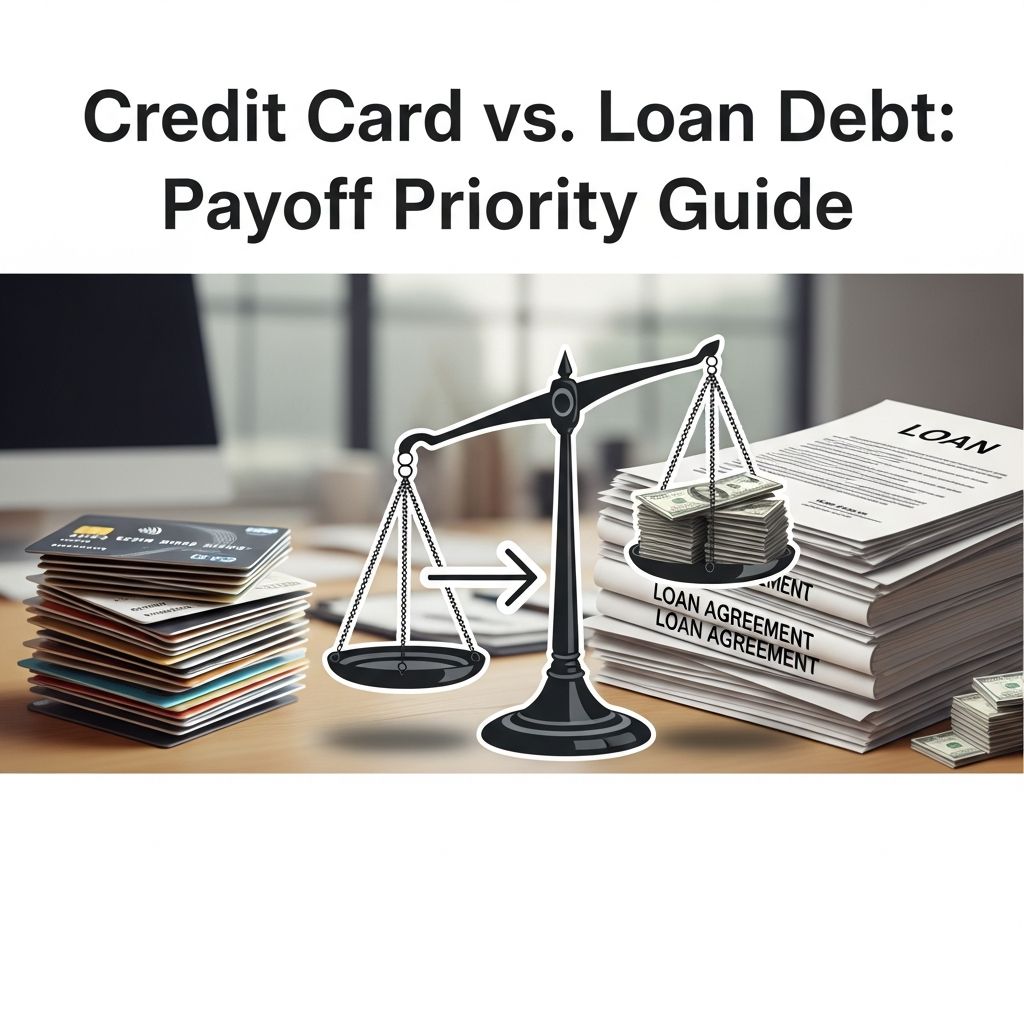
Navigating multiple debts requires a clear strategy to minimize interest costs and accelerate financial freedom.
Credit card debt typically demands priority
due to its higher interest rates compared to most loans, allowing faster savings and credit improvement.Understanding Debt Types and Their Costs
Credit cards and loans serve different purposes but share the burden of repayment with interest. Credit card debt is revolving, meaning you can borrow up to a limit repeatedly, while loans are installment debts with a fixed amount repaid over time.
Average credit card APRs hover around 20-21%, far exceeding personal loan rates of 11-12% for qualified borrowers. This gap means unchecked credit card balances grow rapidly, often outpacing loan accruals.
| Debt Type | Average APR | Repayment Style | Best Use Case |
|---|---|---|---|
| Credit Card | 20.97% | Revolving, minimum payments | Short-term, flexible spending |
| Personal Loan | 11.65% | Installment, fixed payments | One-time large expenses |
Why Target Credit Cards First
High interest rates on credit cards compound the debt quickly. For instance, a $10,000 balance at 21% APR with minimum payments could take over 8 years to clear, accruing thousands in interest. Loans, with fixed lower rates, accrue less over their terms.
- Interest Savings: Paying off high-APR debt first via the avalanche method reduces total costs significantly.
- Credit Utilization Boost: Reducing card balances lowers utilization ratios, impacting 30% of FICO scores positively.
- Psychological Wins: Eliminating cards frees mental space for loan focus.
Exceptional Scenarios: Loans Before Cards
Not always does credit card debt win priority. If a loan has a higher rate—possible with poor credit—or offers tax benefits like certain student loans, address it first. Secured loans with collateral risk also warrant urgency to avoid asset loss.
Compare your specific rates: Use online calculators to project total interest under different payoff orders.
Effective Debt Repayment Strategies
The Debt Avalanche Method
Rank debts by interest rate highest to lowest. Allocate extra funds to the top while maintaining minimums elsewhere. This mathematically optimal approach saves the most money.
The Debt Snowball Method
Order debts by balance size, smallest first. Momentum from quick wins motivates continued progress, though it may cost more in interest.
| Method | Priority | Pros | Cons |
|---|---|---|---|
| Avalanche | Highest APR | Minimizes interest | Slower initial wins |
| Snowball | Smallest balance | Builds motivation | Potentially higher costs |
Debt Consolidation: A Game-Changer
Combining debts into one lower-rate loan or 0% balance transfer simplifies payments and cuts interest. Personal loans suit this well, offering fixed rates and terms of 12-84 months.
Success hinges on discipline: Avoid new charges on freed-up cards. For $10,000 at 27% vs. 13% loan, payoff drops from 104 to 60 months, saving over $12,000 in interest.
- Qualify with good credit for best rates.
- Watch origination fees (1-8%).
- Ensure new rate beats current averages.
Credit Score Impacts of Payoff Choices
Paying cards first lowers utilization, a major score factor. Closing paid cards cautiously preserves available credit. Loans affect payment history and mix positively when managed well.
Mixed debt portfolio (revolving + installment) diversifies positively, but delinquencies harm universally.
Practical Steps to Get Started
- List all debts with balances, rates, minimums.
- Calculate extra monthly funds available.
- Choose avalanche or snowball.
- Explore consolidation if rates qualify.
- Track progress monthly.
Budgeting for Accelerated Payoff
Trim expenses: Reduce dining out, subscriptions. Boost income via side gigs. Automate payments to avoid fees. Tools like apps track spending, projecting payoff dates.
Common Pitfalls to Avoid
- Minimum Payments Trap: Cards’ mins prolong debt.
- New Debt During Consolidation: Rack up balances again.
- Overlooking Fees: Loans’ origination can offset savings.
FAQs
Should I always pay credit card debt before loans?
Usually yes, due to higher APRs, but compare your rates.
Can a personal loan help with credit card debt?
Yes, if lower rate and you avoid new charges.
How does paying debt affect my credit score?
Positively via utilization drop and on-time payments.
What’s better for emergencies: cards or loans?
Cards for small/flexible; loans for large/predictable.
Are balance transfers viable?
Yes, for 0% intro periods, but pay off before end.
Long-Term Financial Wellness
Beyond payoff, build emergency funds (3-6 months expenses), max retirement contributions, maintain credit health. Debt freedom enables wealth building via investments.
References
- Personal loan vs. credit card debt: Which is better? — Achieve. 2026. https://www.achieve.com/learn/personal-loans/personal-loan-vs-credit-card-debt
- Personal Loans vs. Credit Cards: How to Choose the Right Option — ENT Credit Union. 2026. https://www.ent.com/education-center/using-credit-wisely/personal-loan-or-credit-card-how-to-decide-which-borrowing-option-makes-sense/
- Personal Loan Vs. Credit Card: Which Should You Use? — Bankrate. 2026. https://www.bankrate.com/loans/personal-loans/personal-loan-versus-a-credit-card/
- Personal Loan vs. Credit Card: What’s the Difference? — NerdWallet. 2026. https://www.nerdwallet.com/personal-loans/learn/personal-loan-vs-credit-card
- What Is the Difference Between Personal Loan vs Credit Card Debt? — SoFi. 2026. https://www.sofi.com/learn/content/personal-loan-vs-credit-card-debt/
- Should I Pay Off Credit Card or Loan Debt First? — Experian. 2023-02. https://www.experian.com/blogs/ask-experian/should-i-pay-off-credit-card-or-loan-debt-first/
Similar Articles








Read full bio of Sneha Tete