Credit Card Vs Debit Card: Key Differences For 2025
Understand the key differences between credit cards and debit cards to make smarter spending decisions and manage your finances effectively.
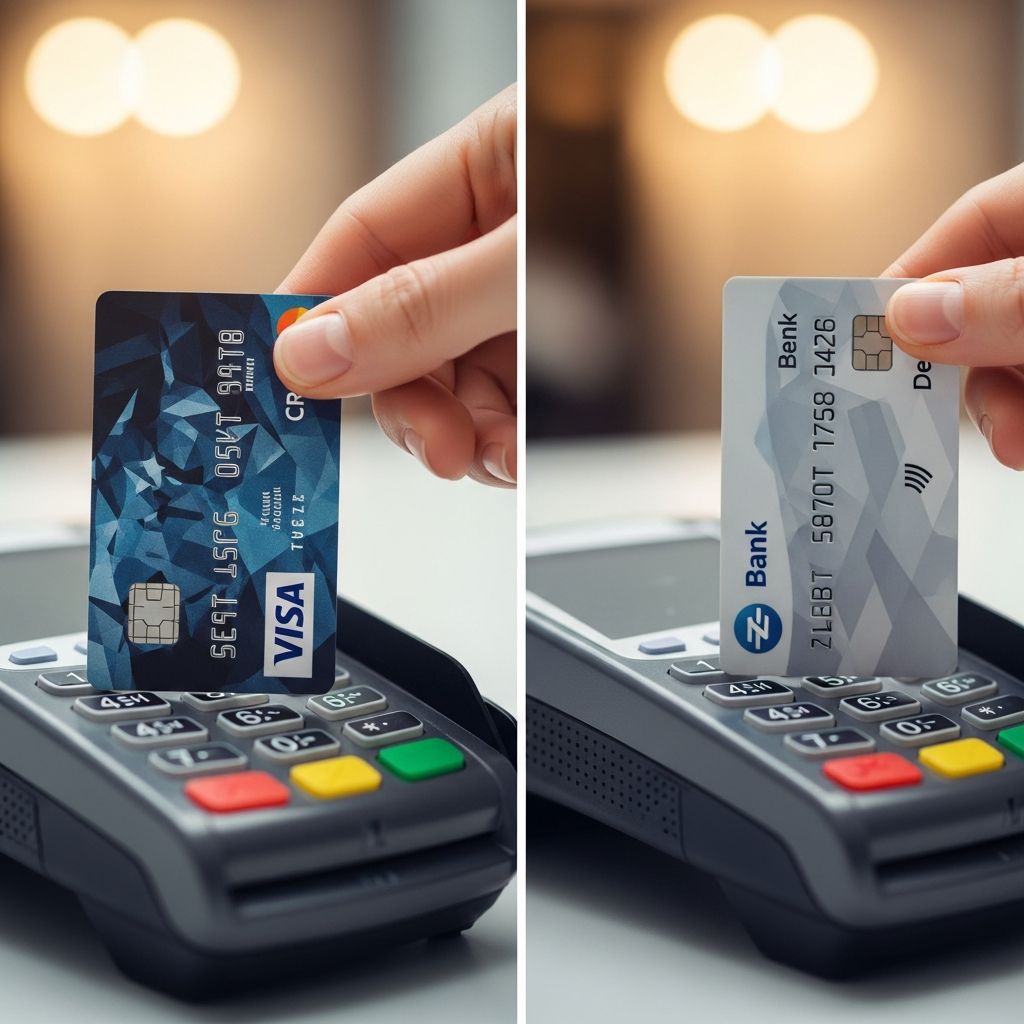
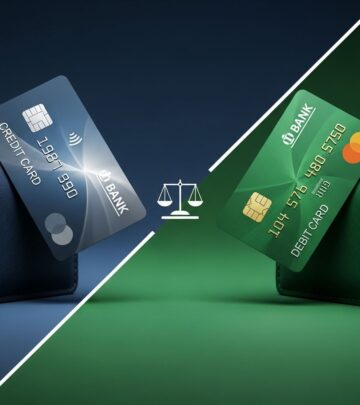
Credit cards and debit cards both enable convenient cashless transactions, but they differ fundamentally in funding sources, risks, benefits, and impacts on personal finances. Debit cards draw directly from your bank account for immediate spending of available funds, while credit cards provide a line of credit you repay later, often with rewards but potential interest charges.
Debit Cards vs. Credit Cards: Key Differences
The primary distinction lies in how transactions are funded and their financial implications. Here’s a detailed comparison:
| Aspect | Debit Card | Credit Card |
|---|---|---|
| Source of Funds | Directly from your checking account balance. Funds are deducted immediately upon purchase. | From a revolving line of credit provided by the issuer. You borrow money to be repaid later. |
| Spending Limits | Limited to available account balance. Transactions may decline if insufficient funds; overdraft fees possible. | Determined by credit limit based on credit history, income, and other factors. Over-limit fees may apply. |
| Payment Timing | Pay now—funds withdrawn instantly, no bill later. | Pay later—monthly statement with grace period (typically 21-25 days); minimum payment required. |
| Interest Charges | None, as you’re using your own money. | APR on unpaid balances (often 15-30%); cash advances accrue interest immediately. |
| Builds Credit | No—does not report to credit bureaus. | Yes—responsible use improves credit score. |
| Rewards | Rarely offered; some provide basic cash back. | Common: cash back (up to 4-5%), points, travel perks. |
| Fraud Protection | Limited; liability up to $500 if not reported promptly. | Stronger; zero liability for unauthorized charges under FCBA/Regulation E. |
| Cash Access | Free at in-network ATMs; cash back at stores. | Cash advances available but with high fees and immediate interest. |
How Debit Cards Work
Debit cards function as electronic cash, linked directly to your checking or savings account. When you swipe, tap, or insert your debit card, the merchant’s system verifies sufficient funds with your bank, reserves or deducts the amount in real-time, preventing overspending beyond your balance.
Pros of Debit Cards
- Real-Time Tracking: Purchases deduct immediately, aiding budget adherence and spending awareness.
- No Debt Risk: Spend only what you have, avoiding interest and revolving balances.
- Easy Access: No credit check required; ideal for those with poor or no credit history.
- Cash Convenience: Withdraw from ATMs or get cash back at retailers without fees in-network.
- Contactless Payments: Supports digital wallets for quick, secure transactions.
Cons of Debit Cards
- No Credit Building: Activity not reported to bureaus, missing opportunity to establish credit history.
- Overdraft Fees: If enabled, spending beyond balance incurs fees ($30-35 typical).
- Funds Holds: Gas stations/hotels may authorize $100+ holds, temporarily freezing funds.
- Daily Limits: Banks often cap transactions (e.g., $500-5,000/day).
- Limited Rewards: Few incentives compared to credit options.
How Credit Cards Work
Credit cards extend a line of credit from the issuer. Upon authorization, purchases are charged against your limit but not immediately withdrawn from your account. Transactions post to your monthly statement, offering a grace period to pay in full interest-free. Minimum payments are required; balances carry high APR if not paid off.
Pros of Credit Cards
- Rewards Programs: Earn cash back, miles, or points (e.g., 4% on gas/groceries); redeem for value.
- Builds Credit: On-time payments reported positively to Equifax, Experian, TransUnion.
- Fraud Protection: Zero liability for unauthorized use; easier disputes under federal law.
- Flexibility: Higher limits for big purchases; grace period defers payment.
- Perks: Purchase protection, extended warranties, travel insurance.
Cons of Credit Cards
- Debt Risk: Easy overspending leads to high-interest balances (average 20%+ APR).
- Fees: Late payments, over-limit, cash advance (3-5% + higher APR).
- Credit Check Required: Approval based on score/income; denials hurt score.
Interest Accrual: Compounds daily on unpaid amounts if not paid in full monthly. Credit Cards vs. Debit Cards: Pros and Cons Comparison
Choosing depends on habits: debit for discipline, credit for rewards/credit-building with caution.
- Debit Best For: Budget-sticklers, avoiding debt, simple transactions.
- Credit Best For: Frequent spenders seeking rewards, emergencies, credit establishment.
Debit Card vs. Credit Card Fraud Protection
Credit offers superior safeguards: Regulation Z limits liability to $50/$0 for fraud reported timely. Debit under Regulation E: up to $50 if notified within 2 days, $500 within 60 days. Credit disputes easier as funds not yet debited from your account.
Building Credit: Debit or Credit?
Debit cards do not build credit; only credit cards do via payment history (35% of FICO score). Use secured credit cards if starting out.
Debit Cards vs. Credit Cards for Online Shopping
Both work, but credit safer for disputes/refunds. Debit risks direct account exposure; use virtual numbers or low-balance accounts.
Travel: Credit Card or Debit Card?
Credit preferred: better fraud reversal, no foreign transaction fees on some, travel perks. Notify issuer of travel; carry both but minimize debit use abroad.
Which is Better: Credit Card or Debit Card?
Neither universally; use debit for necessities to control spending, credit for rewards/benefits if you pay balances fully monthly. Hybrid approach optimal.
Frequently Asked Questions (FAQs)
Is a debit card better than a credit card?
Debit prevents debt by limiting to your balance; credit builds credit and offers rewards but risks interest if mismanaged.
Does a debit card build credit?
No, debit activity isn’t reported to credit bureaus.
Can you use a debit card for online purchases?
Yes, but credit is safer due to stronger fraud protection.
What happens if you lose your debit card?
Notify bank immediately; liability capped at $50/$500 timely.
Do debit cards have rewards?
Rarely; some banks offer minor cash back.
References
- Debit Cards vs. Credit Cards: Key Differences To Know — PNC Insights. 2024-10-15. https://www.pnc.com/insights/personal-finance/spend/debit-cards-vs-credit-cards.html
- Debit Cards vs Credit Cards Key Differences and Benefits — Dollar Bank. 2025-08-01. https://dollar.bank/be-dollar-wise/august-2025/debit-cards-vs-credit-cards-key-differences-and-benefits
- The Difference between Debit and Credit Cards — Bar Harbor Bank. 2024-05-20. https://www.barharbor.bank/personal/the-difference-between-debit-and-credit-cards
- Difference Between Credit & Debit Cards — Huntington Bank. 2024-11-10. https://www.huntington.com/learn/checking-basics/difference-between-credit-debit
- Credit Card vs. Debit Card: What’s the Difference — Santander Bank. 2025-01-05. https://www.santanderbank.com/personal/resources/credit-card/credit-card-vs-debit-card
- Comparing Credit, Charge, Secured Credit, Debit, or Prepaid Cards — Federal Trade Commission (FTC). 2024-07-12. https://consumer.ftc.gov/comparing-credit-charge-secured-credit-debit-or-prepaid-cards
- Should I Use A Debit Card or A Credit Card? — Cornerstone Bank. 2024-09-18. https://www.cornerstone.bank/debit-card-or-credit-card/








Read full bio of Sneha Tete