Credit Card Tipping: Processing, Fees & Best Practices
Understand how credit card tips are processed and what happens to your money.
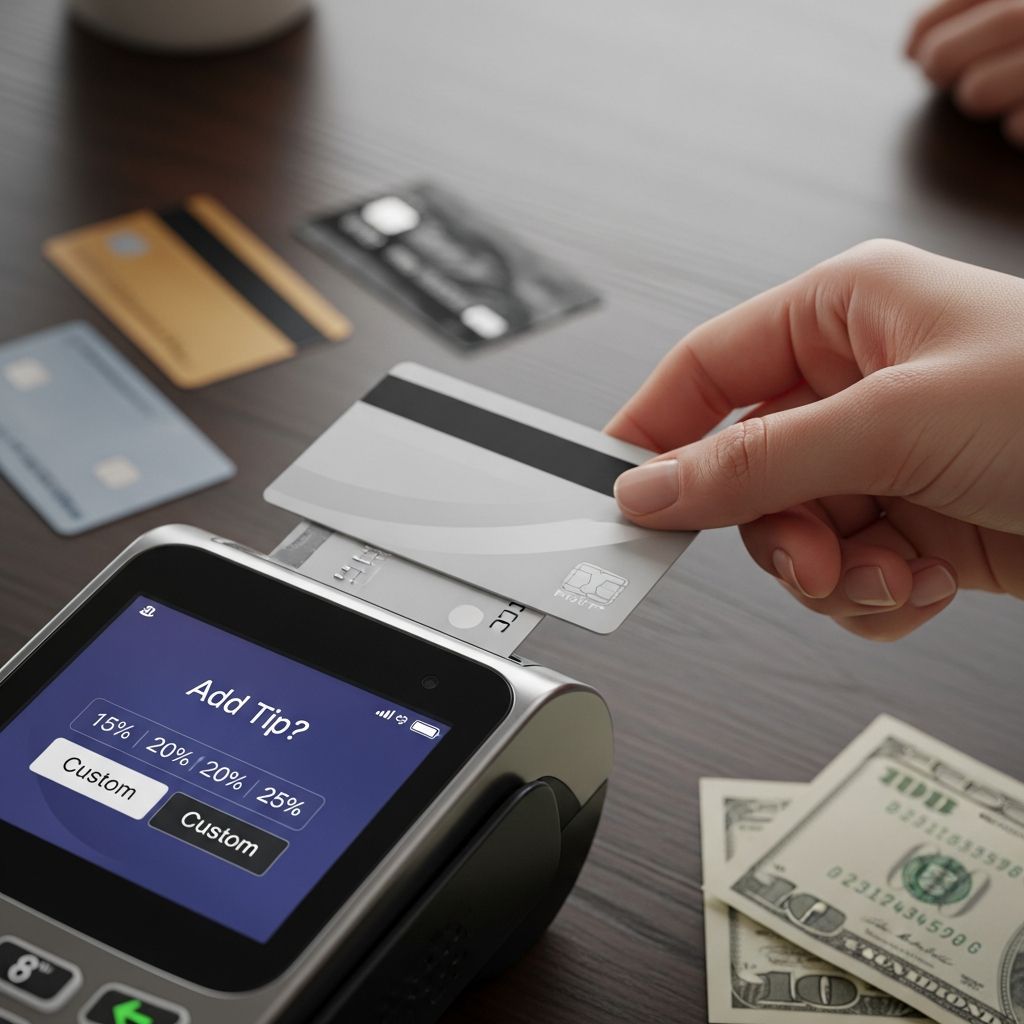
When you decide to tip using your credit card at a restaurant, salon, or service establishment, several behind-the-scenes processes occur that many customers don’t fully understand. Rather than treating the gratuity as a separate transaction, modern payment systems have evolved to handle tips as an integrated part of the overall charge. This article explores the mechanics of credit card tipping, how financial charges work, processing timelines, and important considerations for both customers and service workers.
The Mechanics Behind Card-Based Gratuities
Understanding how credit card tipping functions requires knowledge of payment terminal technology and merchant processing systems. When you provide your credit card to pay for a service, the transaction follows a specific sequence that has become standardized across most service industries.
The process begins when you hand your card to a service representative or insert it into a payment terminal yourself. The merchant’s system initiates an authorization request to your card issuer, confirming that your account has sufficient funds to cover the bill amount. This authorization appears as a pending charge on your account and may take a few moments to process depending on the payment network and your financial institution’s systems.
Once the base transaction receives authorization, the payment terminal displays options for adding gratuity. Modern systems typically present one of two approaches: either prompting you to select from suggested percentage amounts (commonly 15%, 18%, or 20%), or allowing you to enter a custom tip amount using the terminal’s keypad. If you’re paying with a physical receipt, you may write the tip amount by hand on the designated line.
How Payment Systems Handle Tip Integration
A critical misconception about credit card tipping involves the belief that merchants incur separate transaction fees for both the base bill and the gratuity. This myth stems from outdated payment practices, but modern merchant services have evolved significantly.
Contemporary payment processors combine the base bill and tip into a unified transaction rather than treating them as separate charges. This integration means that merchants incur only a single processing fee on the combined total rather than paying two separate sets of fees. From a merchant’s perspective, this is considerably more efficient, as they avoid duplicate processing costs that would otherwise reduce their profitability.
For customers, this unified approach also provides benefits. Although individual banks and credit card issuers may apply different fee structures, most cardholders experience a single charge to their account that encompasses both the original bill and the added tip. This consolidated charge ensures transparency in billing and eliminates confusion about multiple debits appearing on statements.
Authorization Versus Final Settlement
An important distinction exists between the initial authorization on your credit card and the final settled amount. When you first swipe or insert your card, the merchant’s system authorizes an amount equal to the bill total—not including the tip amount, which hasn’t been determined yet.
This authorization serves as a hold on your account to verify available credit. The authorized amount may appear on your online account immediately, labeled as a pending charge. However, this is not the final transaction amount.
After you add the gratuity, the transaction moves into a settlement phase. The merchant’s payment processor submits the finalized amount—original bill plus tip—for clearing. At this point, the pending charge on your account adjusts to reflect the new total. Depending on your financial institution’s systems and the merchant’s processor, this adjustment might occur within hours or could take a business day or longer to appear on your statement.
For example, if you dine at a restaurant and spend $85 on your meal, the initial authorization creates an $85 hold on your card. You then decide to add a $15 tip. The final settled charge becomes $100, and this is what ultimately appears on your billing statement.
Processing Timelines and Settlement Procedures
The duration required for credit card tips to fully process and become available to service employees varies depending on multiple factors within the payment ecosystem.
Most payment processors complete standard card transactions within one business day. However, some specialized payment service providers offer accelerated processing that can credit funds to merchant accounts within hours or even provide same-day settlement options. These faster processing options often come with premium fees that merchants must evaluate against their cash flow needs.
The payment provider that a business uses plays a significant role in processing velocity. Different financial institutions maintain varying protocols regarding fund transfers, and these differences directly impact how quickly money becomes available in a merchant’s account. Some processors prioritize rapid settlement as a competitive advantage, while others maintain standard industry timelines.
Once funds settle into the merchant’s account, the distribution to individual service workers depends on the business’s internal payroll practices. Some establishments distribute tips immediately through electronic transfers or cash allocations. Others incorporate credit card tips into regular payroll cycles, meaning an employee might not receive their credit card gratuities until their next scheduled paycheck.
Tip Distribution and Employee Considerations
How businesses distribute credit card tips to their employees varies significantly by establishment and jurisdiction. Many restaurants and service businesses maintain tip pooling arrangements where all gratuities collected during a shift or pay period are combined and then redistributed according to predetermined formulas.
These pooling arrangements might distribute tips equally among all service staff, allocate tips based on hours worked, or use other systematic approaches. Some jurisdictions have specific legal requirements governing tip pooling, including rules about which employee categories can participate in such arrangements. Generally, management and ownership cannot participate in tip pools, though specific regulations vary by location.
The delay inherent in credit card processing creates a practical disadvantage for service workers compared to cash tips. An employee who receives a cash gratuity has immediate access to the funds, while credit card tips might take days or weeks to reach them through payroll processing. This timing difference can significantly impact employees in service industries who may rely on tips for immediate financial needs.
Fee Implications for Different Payment Methods
| Payment Method | Processing Fees | Settlement Speed | Employee Access |
|---|---|---|---|
| Credit Card Tip | Merchant pays processor fee on combined total | 1-3 business days typically | Depends on payroll cycle |
| Debit Card Tip | Similar to credit card fees | 1-3 business days typically | Depends on payroll cycle |
| Cash Tip | No processing fees | Immediate | Immediate access |
| Mobile Wallet Tip | Variable by provider | 1-3 business days | Depends on payroll cycle |
Contrary to common assumptions, customers typically don’t bear the direct cost of merchant processing fees when tipping with credit cards. Most card issuers don’t pass along additional transaction fees specifically for tips added to existing purchases. However, individuals should review their specific card terms, as some financial institutions may apply fees depending on their particular account structure or card tier.
Best Practices for Credit Card Tipping
To ensure your credit card tip is processed correctly and reaches the intended recipient properly, consider these important practices:
- Verify the final charge: Always review your credit card statement several days after tipping to confirm the merchant charged the correct total amount. Errors occasionally occur during transaction settlement.
- Keep your receipt: Retain the customer copy of your transaction receipt as documentation of the tip amount you authorized. This serves as evidence if discrepancies arise.
- Use payment terminals when available: Modern electronic payment terminals reduce handwriting errors and provide digital records of the exact tip amount, minimizing disputes.
- Check for preset tip suggestions: Be aware that payment terminals often display suggested tip percentages that may not align with your preferences. You retain the ability to enter any tip amount you choose.
- Monitor recurring charges: If tipping at the same establishment regularly, watch your statements for any patterns of unusual charges or duplicate entries.
Advantages and Disadvantages of Card-Based Gratuities
Credit card tipping offers distinct advantages alongside certain limitations worth considering.
Advantages include:
- Convenience and elimination of ATM visits
- Unified billing that simplifies statement reconciliation
- Digital record creation for expense tracking and budgeting
- Ability to tip when you don’t carry cash
- Integration with rewards programs on some credit cards
Disadvantages include:
- Delayed access to tip funds for service workers
- Timing gap between transaction initiation and final settlement
- Potential for employee dissatisfaction compared to immediate cash tips
- Greater administrative burden for businesses managing tip distribution
Frequently Asked Questions About Credit Card Tipping
Do merchants pay duplicate fees when I tip with a credit card?
No. Modern payment systems process the bill and tip as a single unified transaction, not as separate charges. This means merchants incur only one processing fee on the combined total rather than two separate fees.
How long before a credit card tip appears on my statement?
The initial authorization typically appears as pending within hours, but the final settled amount reflecting the added tip may take one to three business days to appear, depending on your financial institution and the merchant’s payment processor.
When do service workers receive credit card tips?
This varies by business. Some establishments distribute tips immediately, while others incorporate them into regular payroll cycles, meaning employees might wait until their next scheduled paycheck to receive credit card gratuities.
Should I tip with cash or credit card?
This depends on your preferences and circumstances. Cash provides immediate access for employees and eliminates processing delays, while credit cards offer convenience and documentation. Both methods are widely accepted in the service industry.
Are there fees charged to me for tipping with my credit card?
Generally, individual cardholders don’t incur additional fees specifically for adding tips to credit card transactions, though this may vary by card issuer and account type. Merchants pay the processing fees, not customers.
Conclusion
Credit card tipping has become an integral part of modern service industry transactions, supported by payment technology that seamlessly integrates gratuities with base charges. Understanding how these systems work—from the initial authorization through final settlement—empowers customers to tip confidently while service workers can better anticipate timing for receiving their earnings. By following best practices and maintaining awareness of how these transactions process, both customers and service professionals can navigate credit card tipping more effectively.
References
- How Does Tipping With a Card Work — myPOS. 2024. https://www.mypos.com/en-gb/blog/business-guide/how-does-tipping-with-card-work
- How to Tip With a Credit Card — American Express Credit Intel. 2025. https://www.americanexpress.com/en-us/credit-cards/credit-intel/how-to-tip-with-card/
- How Does Tipping Work on a Credit Card? — Discover Card Smarts. 2025. https://www.discover.com/credit-cards/card-smarts/how-does-tipping-work-on-a-credit-card/
- U.S. Department of Labor Wage and Hour Division — Fair Labor Standards Act Information. https://www.dol.gov/agencies/whd/minimum-wage/tipped
Similar Articles








Read full bio of medha deb