Credit Card Surcharges: Legal Status Guide
Navigate the complex landscape of credit card surcharges across U.S. states, federal rules, and best practices for consumers and businesses in 2026.

Credit card surcharges are additional fees merchants impose on customers using credit cards to offset processing costs. Their legality varies by state, guided by federal rulings and card network policies, allowing them in most U.S. locations with strict disclosure rules.
Understanding What Constitutes a Surcharge
A surcharge differs from a cash discount: it adds a fee to the credit card price, while discounts reduce costs for non-card payments. Card networks like Visa and Mastercard cap surcharges at the merchant’s processing cost, typically 3% or less, prohibiting profit-making.
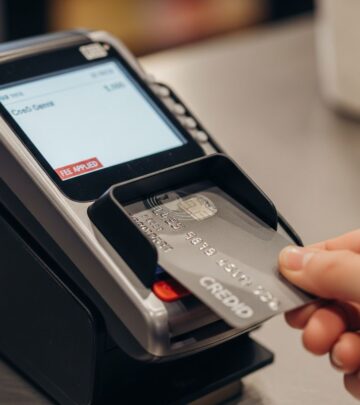
Merchants must notify customers upfront via signs, receipts, or digital prompts. Failure to disclose can violate laws and network rules, risking fines or penalties.
Federal Framework and Landmark Court Decisions
The U.S. Supreme Court’s 2018 ruling in Expressions Hair Design v. Schneiderman deemed state surcharge bans unconstitutional under the First Amendment, as they regulate price communication. This opened doors nationwide, but states retain authority over implementation details.
Card networks settled lawsuits in 2013, permitting surcharges up to actual costs with disclosures. Federal law prohibits surcharges exceeding 4% or processing fees, whichever is lower.
State-by-State Breakdown of Surcharge Regulations
Regulations differ significantly. Most states permit surcharges with caps and notices; others ban them outright. Below is a table summarizing key states as of 2026, based on recent statutes and rulings.
| State | Status | Key Rules | Max Surcharge |
|---|---|---|---|
| California | Legal (post-2018) | Cash discounts allowed; surcharges OK if disclosed per Italian Colors v. Becerra | Actual cost or 4% |
| Colorado | Legal | 30-day notice; disclose at entry, sale, receipts | 2% or actual cost |
| Connecticut | Illegal | Full ban on surcharges | N/A |
| Florida | Legal | Post-ban rulings allow with disclosures | Actual cost |
| Massachusetts | Illegal | Anti-surcharge laws enforced | N/A |
| New Jersey | Legal | Notice at entry/sale; max actual cost | Actual cost |
| New York | Restricted | No separate line item; effectively cash discount model | 3% |
| Texas | Legal (limited) | Court rulings allow; consult attorney | Actual cost |
This table highlights patterns: Western states lean permissive with caps, while Northeastern ones impose bans. Multi-state businesses must track variations to avoid violations.
Credit Card Network Guidelines for Merchants
Visa, Mastercard, and Amex enforce uniform rules:
- Surcharge ≤ merchant’s processing cost (avg. 1.5-3%).
- Clear pre-transaction notice.
- No surcharges on debit or prepaid cards.
- Include on receipts as line item (except restricted states).
- Apply uniformly to all cards in a brand.
Non-compliance leads to fines up to $500,000 per incident. Networks monitor via merchant acquirers.
Pros and Cons for Businesses and Consumers
Benefits for Merchants
Surcharges recover 2-4% processing fees, improving margins without raising base prices. Small retailers offset high costs from low-volume transactions.
Drawbacks for Merchants
Customer backlash reduces card use; some switch to cash or competitors. Implementation requires POS updates and signage, adding costs.
Consumer Impacts
Surcharges raise effective prices for card users, eroding rewards value. However, transparency aids budgeting. Cash payers avoid fees, potentially negotiating discounts.
| Stakeholder | Pros | Cons |
|---|---|---|
| Merchants | Cost recovery Transparency | Customer loss Compliance burden |
| Consumers | Choice (cash option) Fee visibility | Higher card costs Reward dilution |
Implementing Surcharges: Best Practices
For merchants:
- Calculate exact processing costs quarterly.
- Post prominent signs: “3% fee for credit cards; cash pays full price.”
- Train staff; update online checkouts.
- Monitor state law changes via resources like NFIB.
Alternatives include cash discounts (legal everywhere) or transparent pricing.
Consumer Strategies to Dodge Surcharges
Shoppers can:
- Opt for cash/debit where possible.
- Choose no-surcharge merchants via apps/reviews.
- Use rewards maximizing cards despite fees.
- Report undisclosed fees to state AG or CFPB.
Avoid if fee > rewards (e.g., 3% fee vs. 2% cashback).
Recent Developments and 2026 Outlook
Post-2024, more states align with federal permissiveness, but bans persist in CT, MA, and Puerto Rico. Proposed bills in FL and NY aim to clarify disclosures. Card networks tightened audits amid inflation-driven fee hikes.
International travelers note EU bans surcharges entirely.
Frequently Asked Questions (FAQs)
Are credit card surcharges legal everywhere?
No, banned in states like Connecticut and Massachusetts; legal with rules in most others.
Can restaurants add surcharges?
Yes, if menu-disclosed; mandatory fees exempt if cash alternative exists.
What’s the maximum surcharge allowed?
Typically 3-4% or actual cost; varies by state/network (e.g., 2% CO).
Do debit cards incur surcharges?
No, networks prohibit it.
How to challenge a surcharge?
Contact merchant, then state AG or card issuer for disputes.
Is surcharging profitable for merchants?
No, must match costs only.
Staying informed empowers better decisions. Laws evolve; check local regulations before transacting.
References
- Credit card surcharge laws by state explained for 2025 — LawPay. 2025. https://www.lawpay.com/about/blog/credit-card-surcharge-rules/
- CREDIT CARD SURCHARGE AND CASH DISCOUNT LAWS — NFIB. 2025-07. https://www.nfib.com/wp-content/uploads/2025/07/Credit-Card-Surcharging-Guide-Final-PDF.pdf
- A guide to credit card surcharges for businesses — Stripe. 2025. https://stripe.com/resources/more/credit-card-surcharges-explained-what-businesses-need-to-know
- Can A Business Charge For Using A Credit Card? — Bankrate. 2025. https://www.bankrate.com/credit-cards/business/can-a-business-charge-for-using-credit-card/
- Credit Card Surcharges — State of California Department of Justice. 2025. https://oag.ca.gov/consumers/general/credit-card-surcharges
- 6-6. Surcharges — Acquisition.GOV. 2025. https://www.acquisition.gov/afars/6-6.-surcharges
Similar Articles








Read full bio of medha deb