Comparing Credit Card Rewards: Points vs. Cash Back
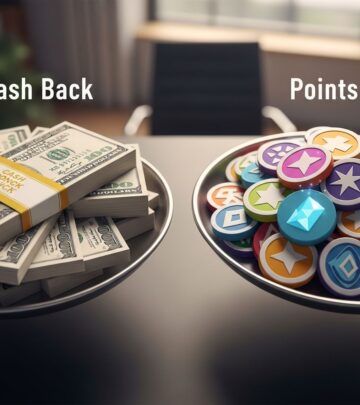
Explore the differences between points and cash back rewards to find the best fit for your spending habits.

When selecting a credit card, understanding the rewards structure is essential to maximizing the value you receive from your spending. Two primary reward mechanisms dominate the credit card landscape: cash back and points-based systems. While both aim to return value to cardholders, they operate differently and suit different spending patterns and lifestyle priorities. This comprehensive guide breaks down each system, highlights their strengths and weaknesses, and provides a framework for determining which aligns best with your financial situation.
The Foundation: How Rewards Systems Work
Cash back rewards function as a straightforward percentage return on your qualifying purchases. When you spend $100 on a cash back credit card offering 2% rewards, you earn $2 in cash value. This amount typically appears as a statement credit, check, direct deposit, or account credit that you can apply toward your balance. The simplicity of this model appeals to many consumers who value transparency and ease of redemption.
Points-based reward systems operate differently by creating a proprietary currency tied to your card issuer. Rather than earning a percentage of your spending directly, you accumulate points at a predetermined rate—for example, earning 1 point per dollar spent or bonus points in specific categories. These accumulated points can then be redeemed for various benefits including travel, merchandise, gift cards, statement credits, or converted to cash value through the card issuer’s redemption portal.
Earnings Potential: What You Can Accumulate
The earning rates differ significantly between cash back and points cards, though the distinction becomes clearer when examining specific category structures.
Cash Back Earning Rates
- Flat-rate cards typically offer 1-2% cash back on all purchases
- Category-specific cards provide enhanced percentages (often 3-6%) on purchases in designated categories such as groceries, gas, dining, or travel
- Rotating category cards shift their bonus categories quarterly, allowing flexibility but requiring active card management
Points Earning Rates
- Standard earning usually ranges from 1X to 2X points per dollar on regular purchases
- Bonus categories can yield significantly higher rates, sometimes reaching 5X to 10X points per dollar
- Sign-up bonuses on points cards typically exceed those offered by cash back cards, sometimes providing thousands of bonus points for meeting minimum spending requirements
Redemption Options: Converting Rewards to Value
Cash Back Flexibility
Cash back redemption remains refreshingly straightforward. Most cardholders can choose how their rewards appear: as a statement credit reducing their balance, a direct deposit to a linked bank account, a check, or stored credit for future purchases. Some cards allow redemption for gift cards or merchandise, though this extends beyond the core cash back offering. The primary advantage is that redemption value is predetermined and transparent—you know exactly what your rewards are worth.
Points Redemption Complexity
Points redemption offers greater versatility but requires more active decision-making. Points can typically be redeemed for:
- Travel bookings through the card issuer’s travel portal
- Direct transfers to airline or hotel loyalty programs
- Cash back or statement credits (usually at 1 cent per point value)
- Gift cards and merchandise from partner retailers
- Charitable donations
- Entertainment tickets and experiences
This flexibility represents a significant advantage for those who value diverse redemption options beyond straightforward cash value.
The Value Equation: What Your Rewards Are Actually Worth
This is where the comparison becomes particularly nuanced. The theoretical value of rewards varies dramatically depending on how you redeem them.
| Reward Type | Standard Redemption Value | Premium Redemption Value | Best Use Case |
|---|---|---|---|
| Cash Back | 1 cent per point | 1 cent per point (fixed) | Predictable savings on any purchase |
| Points (Non-Travel) | 0.5-1 cent per point | 1 cent per point | Flexible redemptions across categories |
| Points (Travel) | 1-1.5 cents per point | 1.5-2+ cents per point | Maximizing travel and hotel stays |
The critical insight is that points can be worth substantially more than cash when redeemed for premium travel experiences. For instance, certain hotel loyalty programs value points at 1.64 cents or higher, meaning 10,000 points could deliver $164 in travel value rather than the $100 cash equivalent. However, if you redeem those same points for cash back, you receive only 1 cent per point, making cash back the superior choice in that scenario.
Assessing the Advantages: Cash Back Rewards
Cash back rewards present several compelling advantages for specific consumer profiles:
Simplicity and Predictability
You always know the exact value of your earnings. A 2% cash back card yields exactly 2% of spending regardless of when you redeem or how economic conditions shift. This transparency eliminates the need to track complex redemption values or monitor program changes.
No Annual Fees
The vast majority of cash back cards charge no annual fee, ensuring you capture the full benefit of your rewards without offset costs. This contrasts with many points cards, particularly premium travel cards, which levy substantial annual fees that may exceed the value of rewards earned by casual users.
Universal Utility
Whether you travel frequently or never leave your home state, cash back works equally well. You’re not dependent on specific travel partners, airline alliances, or redemption partners to extract value. This universality makes cash back particularly suitable for individuals with unpredictable spending patterns or diverse reward preferences.
Immediate Application
Many cash back rewards can be applied directly to your card balance, providing instant debt reduction and simplifying accounting. There’s no need to wait for points to accumulate to particular thresholds or plan redemptions around travel schedules.
Assessing the Advantages: Points-Based Rewards
Points-based systems deliver distinct benefits that justify their complexity for many cardholders:
Superior Travel Value
For frequent travelers, points redemption can deliver dramatically higher value than cash back. When used strategically for premium travel experiences—particularly luxury hotel stays or premium airline cabins—points frequently exceed 1.5 cents in value. Someone planning a $5,000 annual travel budget can achieve substantially greater value through points redemption than an equivalent cash back amount.
Comprehensive Perks Ecosystem
Points cards frequently include exclusive benefits beyond reward accumulation. These may include airport lounge access, travel insurance coverage, free checked baggage, trip cancellation protection, emergency medical assistance, and concierge services. For those who utilize these perks, their cumulative value often justifies premium annual fees.
Generous Sign-Up Incentives
New points cardholders typically receive substantial welcome bonuses—often worth $500-$1,000 or more in travel value—that significantly exceed cash back card offers. These bonuses can offset annual fees entirely and establish a substantial points foundation before organic spending rewards even begin accumulating.
Redemption Flexibility
Beyond travel, points cards offer diverse redemption pathways. Whether you want merchandise, experiences, charitable donations, or entertainment, points provide options that cash back’s limited menu cannot match. This flexibility allows you to pursue rewards that align with personal values and interests.
Understanding the Limitations
Cash Back Drawbacks
- Earning rates rarely exceed 6% even in optimal bonus categories, typically staying in the 1-3% range for most spending
- Annual fees, while uncommon, can eliminate all rewards value if present
- Sign-up bonuses tend to be modest compared to points cards
- Limited redemption options restrict creative use of accumulated rewards
- Category restrictions on rotating cards require active management to maximize
Points Program Challenges
- Points can expire if not redeemed within specified timeframes, causing loss of accumulated value
- Redemption values fluctuate based on program changes, partner availability, and inventory
- Minimum redemption thresholds may prevent realizing value from small point balances
- Determining optimal redemption strategy requires research and planning
- Annual fees on premium cards can exceed reward value for modest spenders
- Points redemption through cash back options typically underperforms cash back cards directly
Card Types Across Both Reward Systems
Both cash back and points operate across multiple card architectures, each serving distinct purposes.
Cash Back Card Categories
Flat-rate cards appeal to those avoiding complex categories, while category-specific cards target consumers with predictable spending patterns in areas like groceries or gas. Rotating category cards suit engaged cardholders who track quarterly changes and adjust usage accordingly.
Points Card Categories
Travel-focused cards concentrate earning on flight, hotel, and transportation expenses. General rewards cards provide balanced earning across all spending. Co-branded cards partner with specific airlines or hotels, offering premium benefits to loyal customers of those brands.
Strategic Selection Framework
Choosing between cash back and points depends on answering several questions about your financial situation and priorities:
How often do you travel?
Frequent travelers should strongly consider points, particularly if interested in premium cabin experiences or luxury hotels. Occasional travelers or non-travelers benefit from cash back’s universal utility.
What are your spending patterns?
Those with consistent spending categories can leverage category bonuses in either system. Those with unpredictable or diverse spending favor flat-rate cash back for simplicity.
How engaged are you with rewards optimization?
Points require active management to maximize value through strategic redemptions. Cash back suits those preferring a passive, set-it-and-forget-it approach.
What is your tolerance for annual fees?
Significant annual fees only make sense if rewards value and perks exceed the cost. High-spending travel enthusiasts can justify premium cards; others benefit from fee-free cash back.
What matters most to you?
If you value simplicity and guaranteed value, cash back wins. If travel experiences, perks, and premium benefits matter, points may deliver superior overall value despite complexity.
Hybrid Approach Opportunities
Strategic cardholders often maintain both cash back and points cards simultaneously, using each for its optimal purpose. A primary cash back card handles everyday spending where rewards optimization isn’t a priority, while a secondary points card concentrates earning for planned travel or specific high-value categories. This approach captures cash back’s simplicity where it matters while enabling points’ premium travel value when circumstances align.
Making Your Decision
Neither rewards structure is universally superior; the optimal choice depends on individual circumstances. Cash back appeals to those seeking straightforward, transparent value without complexity or annual fees. Points rewards benefit those prioritizing travel experiences, desiring comprehensive perks, or willing to engage actively with redemption strategy.
Start by evaluating your spending patterns over the past year, your travel frequency, and your time commitment to rewards optimization. Then identify cards matching your profile and calculate projected annual value accounting for both rewards and annual fees. The superior card isn’t the one offering the highest published earning rate—it’s the one delivering maximum real-world value aligned with how you actually spend and what you genuinely value.
Frequently Asked Questions
Can I convert points to cash back?
Yes, most points cards allow redemption as statement credits or cash back, though typically at a 1 cent per point value. However, this often underperforms dedicated cash back cards, making it useful primarily for points surplus that won’t be used for travel.
Do points expire?
Many points programs include expiration policies, with points disappearing if unredeemed within specified timeframes. Always review your card’s terms to understand expiration rules and plan redemptions accordingly.
Which system offers higher earnings potential?
Points can theoretically generate higher value when redeemed for premium travel, potentially reaching 1.5-2+ cents per point. However, cash back provides more reliable, predictable value without requiring optimal redemption strategy.
Are cash back cards better if I don’t travel?
Generally yes. Without travel opportunities, you cannot realize the premium value proposition of points redemption. Cash back delivers straightforward value regardless of your lifestyle.
What if I want both simplicity and travel benefits?
Consider a cash back card for everyday spending plus occasional sign-up bonuses from points cards specifically when planning travel. This hybrid approach captures cash back’s simplicity with strategic points accumulation for travel redemptions.
References
- Cash Back vs. Points: Which Reward Option is Best — myCred. 2024. https://mycred.me/blog/cash-back-vs-points/
- Cash Back vs. Travel Points: How To Choose Credit Card Rewards — Bankrate. 2024. https://www.bankrate.com/credit-cards/cash-back/weighing-a-cash-back-card-vs-a-points-and-miles-card/
- Credit Card Points vs. Cash Back: How to Decide — Citi. 2024. https://www.citi.com/credit-cards/credit-card-rewards/credit-card-points-vs-cash-back
- Cash Back vs. Points: Which Type of Rewards Card Is Best? — Credit Karma. 2024. https://www.creditkarma.com/credit-cards/i/travel-rewards-vs-cash-back-credit-cards
- Which Credit Card Benefits are Better: Cash Back or Points? — SCCU. 2024. https://www.sccu.com/articles/personal-finance/which-credit-card-benefits-cash-back-or-points
Similar Articles








Read full bio of medha deb