Credit Card Rates Today
Discover the latest trends in credit card interest rates, how they impact your finances, and proven strategies to minimize borrowing costs in 2026.
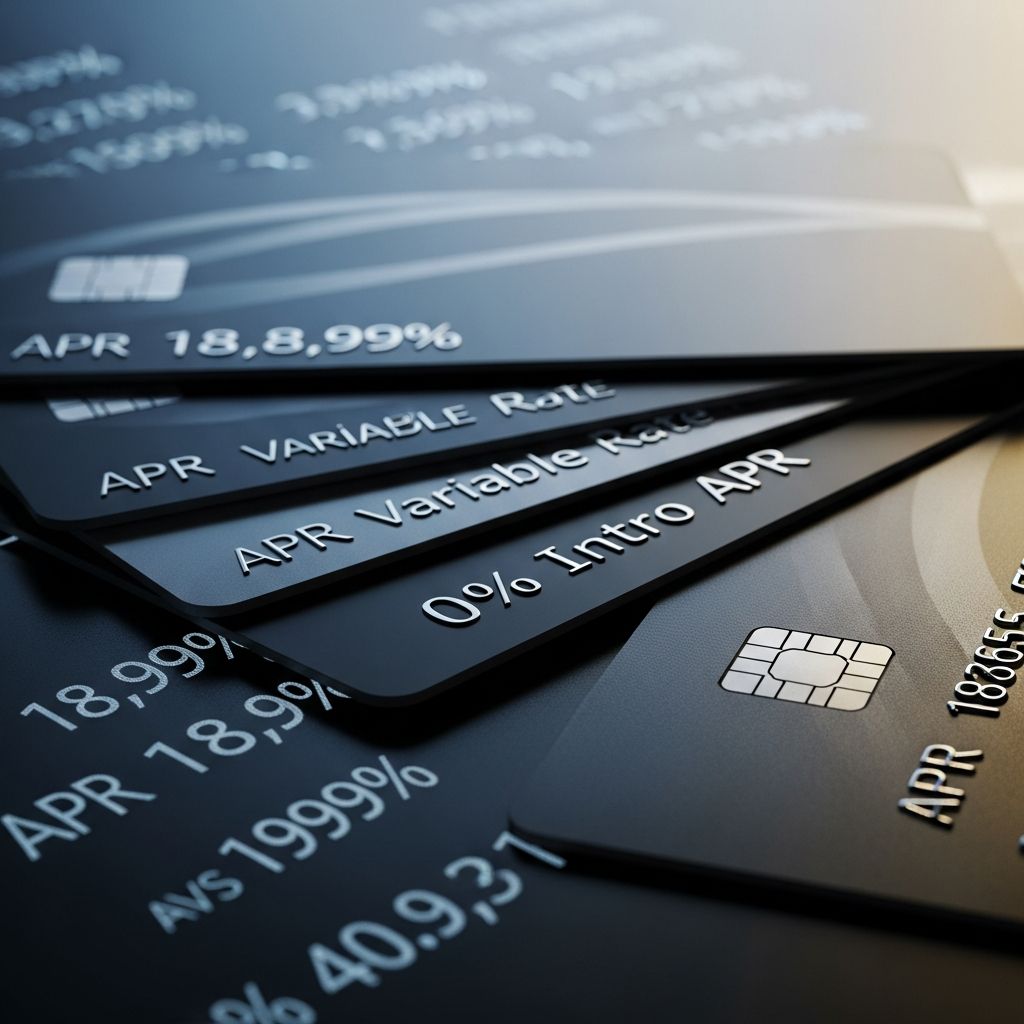
In the evolving landscape of personal finance, understanding
credit card interest rates
remains crucial for millions of Americans managing everyday expenses and larger purchases. As of March 2026, average annual percentage rates (APRs) hover between 19% and 24%, reflecting a modest decline from recent peaks but still posing significant costs for those carrying balances. This comprehensive guide breaks down the latest data, historical context, influencing factors, and actionable steps to navigate these rates effectively.Understanding How Credit Card APRs Work
Credit card APRs represent the annualized cost of borrowing on a card, calculated daily on unpaid balances after any grace period. Unlike fixed-rate loans, most credit cards feature variable APRs tied to the prime rate, which tracks the Federal Reserve’s federal funds rate. When the Fed adjusts its benchmark, card issuers typically follow suit, though with delays and varying degrees of pass-through.
APRs apply to purchases, cash advances, and balance transfers, often differing by category. For instance, cash advance APRs are usually higher, with no grace period, accruing interest immediately. Penalty APRs can spike even further—up to 29.99% or more—for late payments, underscoring the importance of timely payments.
Current National Averages and Recent Trends
Recent data shows the average credit card APR stabilizing around
19.58%
for weekly national averages, down slightly from 19.60% earlier in the year and a far cry from the 20.79% record high in August 2024. Meanwhile, analyses of new card offers report higher figures, with an average of23.72%
in March 2026, the lowest since March 2023.This discrepancy arises from measurement methods: national averages often reflect existing accounts assessed interest (around 22.30%), while new offers target prospective borrowers. For accounts overall, the mean sits at 20.97%.
| Date | Weekly National Average APR (%) |
|---|---|
| 03/25/2026 | 19.58 |
| 03/18/2026 | 19.58 |
| 03/11/2026 | 19.58 |
| 03/04/2026 | 19.58 |
| 02/25/2026 | 19.59 |
| 02/18/2026 | 19.60 |
The trend indicates six consecutive months of declines in new card APRs, driven by Fed rate cuts, yet rates remain elevated due to issuer caution amid rising delinquencies.
APR Variations by Card Type and Features
Not all credit cards charge the same rates; offers vary widely by category, reflecting risk levels and perks. Low-interest cards average
17.77%
, appealing to cost-conscious users, while secured cards for building credit hit26.13%
. Rewards cards, popular for cash back or travel, average 23.66-23.81%.| Card Category | Avg. APR (%) | Prior Month Avg. (%) |
|---|---|---|
| All New Offers | 23.72 | 23.77 |
| 0% Balance Transfer | 22.20 | 22.17 |
| No Annual Fee | 23.20 | 23.27 |
| Cash Back | 23.81 | 23.92 |
| Low-Interest | 17.77 | 17.37 |
| Student Cards | 22.29 | 22.29 |
| Secured Cards | 26.13 | 26.05 |
Premium cards from top issuers like Capital One can reach 28.99%, while platinum-level options average 17.87% median across major banks. Grocery and gas rewards cards cluster around 23.56-23.72%.
Credit Score’s Role in Determining Your Rate
Your credit score profoundly influences the APR you’re offered. Borrowers with excellent credit (scores 800+) secure rates as low as
20.04%
on new cards, compared to27.40%
for those with poor credit. Issuers assess risk via FICO or VantageScore, factoring payment history, utilization, and debt levels.- Excellent Credit (720+): Access to best rates, often 15-20%.
- Good Credit (670-719): Averages 20-23%.
- Fair Credit (580-669): 23-26% typical.
- Poor Credit (<580): 26%+, with limited options.
Improving your score through on-time payments and low utilization can unlock better rates over time.
Federal Reserve Policy and Its Limited Impact
The Fed’s March 2026 meeting highlighted ongoing rate cuts, yet credit card APRs have barely budged from over 21% highs. Unlike rapid hikes in 2022-2023, issuers now widen the prime-to-APR spread to buffer delinquencies and economic risks. Credit card debt hit $1.28 trillion, amplifying issuer conservatism.
Prime rates track Fed funds closely, but card adjustments lag, especially downward. Some issuers have even raised rates recently.
The Real Cost of Carrying a Balance
At 23.72%, paying minimums on a $5,000 balance takes 41 months and adds $3,297 in interest. Lower rates shave time and costs: a 20% APR might save $297 and one month. High rates compound quickly, turning manageable debt into a long-term burden.
Calculator example: For $10,000 at 23.72% with 4% minimum payments, payoff exceeds 15 years with over $20,000 in interest—highlighting urgency for action.
Proven Strategies to Reduce Your Credit Card Rates
Borrowers aren’t powerless. Here are effective tactics:
- Negotiate with Your Issuer: Call and cite good payment history; many reduce APRs for loyal customers.
- Balance Transfer Cards: 0% intro offers (avg. 22.20% post-promo) consolidate debt interest-free for 12-21 months.
- Hardship Programs: Temporary rate cuts and fee waivers for qualifying struggles.
- Debt Consolidation Loans: Fixed-rate personal loans often beat card APRs.
- Pay Down High-Utilization Cards: Frees credit limits, boosts scores for better offers.
Navigating Proposed Rate Caps and Regulations
Discussions of a 10% cap have surfaced, but top issuers’ medians (17.62-18.32%) exceed this, and implementation seems unlikely. Banks argue caps could limit credit access, especially for riskier borrowers. For now, rates remain market-driven.
Building Better Financial Habits for the Future
Beyond rates, habits like paying in full, avoiding cash advances, and monitoring statements prevent interest accrual. Tools like autopay and budgeting apps aid discipline. Regularly checking free credit reports spots errors affecting scores and rates.
In 2026, with debt at record highs, proactive management is key. Shop rates annually, as offers fluctuate with Fed policy and competition.
Frequently Asked Questions (FAQs)
What is the average credit card interest rate right now?
Around 19.58-23.72% depending on the metric—national averages or new offers.
Will Fed rate cuts lower my card APR soon?
Possibly, but issuers move slowly amid risks; spreads are widening.
How does my credit score affect my APR?
Excellent scores get 20.04%; poor ones face 27.40%.
Are there low-interest credit cards available?
Yes, averaging 17.77%, ideal for balance carriers.
Can I negotiate a lower rate on my card?
Absolutely—strong history improves success odds.
References
- Current Credit Card Interest Rates — Bankrate. 2026-03-25. https://www.bankrate.com/credit-cards/advice/current-interest-rates/
- Average Credit Card Interest Rate in US Today — LendingTree. 2026-03. https://www.lendingtree.com/credit-cards/study/average-credit-card-interest-rate-in-america/
- Credit card lenders’ interest rates not at risk, for now — S&P Global. 2026-02. https://www.spglobal.com/market-intelligence/en/news-insights/articles/2026/2/credit-card-lenders-interest-rates-not-at-risk-for-now-97935383
- Credit card interest rates and the Fed March meeting — CBS News. 2026-03. https://www.cbsnews.com/news/credit-card-rates-fed-march-2026-meeting-what-borrowers-need-to-know/
- Banks Respond to Proposed Cap on Credit Card Interest Rates — Bank Policy Institute. Recent. https://bpi.com/banks-respond-to-proposed-cap-on-credit-card-interest-rates/
Similar Articles








Read full bio of medha deb