Credit Card Payments: Weekly vs Monthly Strategies
Discover if paying your credit card weekly or monthly saves more on interest, boosts your credit score, and fits your budget better.
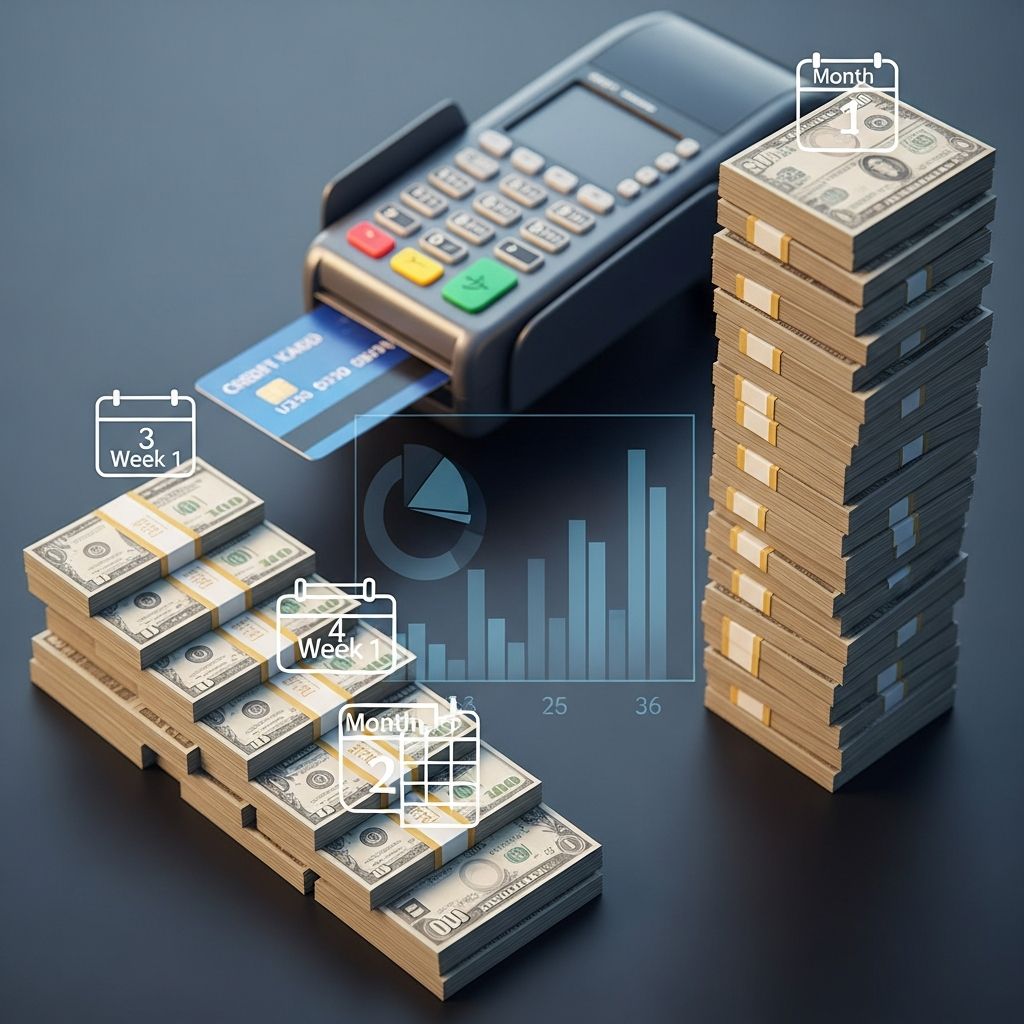
Managing credit card payments effectively can significantly impact your financial health, from reducing interest expenses to strengthening your credit profile. While monthly payments meet basic requirements, shifting to weekly or biweekly schedules offers distinct advantages for many users.
Understanding Credit Card Billing Fundamentals
Credit card billing operates on cycles typically lasting 28 to 31 days, ending with a statement date that summarizes activity. Payments due follow about 21-25 days later, as mandated by the Credit CARD Act for grace periods when balances are paid in full. Interest calculation hinges on the average daily balance within each cycle—keeping this low minimizes charges, especially for revolving balances.
Card issuers report balances to bureaus like Experian at statement close, influencing credit utilization—a key score factor comprising 30% of FICO models. Frequent payments lower reported balances, unlike single end-cycle payments.
Advantages of Frequent Payments Over Monthly Ones
Opting for multiple payments per cycle provides multifaceted benefits, particularly for those carrying balances or high utilization.
- Interest Reduction: Smaller, regular payments decrease the average daily balance, directly cutting accruing interest. For instance, dividing a $600 monthly payment into three $200 chunks yields lower interest than one lump sum, due to reduced daily exposure.
- Lower Credit Utilization: Utilization ratio—debt divided by credit limit—ideally stays below 30%, with top scores under 10%. Mid-cycle payments drop balances before reporting, improving ratios per card and overall.
- Budget Alignment: Tie payments to paychecks (weekly/biweekly) to match cash inflows, curbing overspending temptations.
- Avoiding Fees and Oversights: Regular checks prevent late fees ($25-$40 average) and detect fraud early.
Weekly Payments: A Deeper Dive
Weekly payments involve submitting smaller amounts each week, often aligning with direct deposits. This strategy excels for interest-bearing balances, as it minimizes daily averages continuously.
Consider a $400 monthly repayment: weekly $100 installments total $5,200 yearly (52 weeks) versus $4,800 monthly (12 months), accelerating debt payoff by $400 annually due to calendar quirks. Industry experts like Ted Rossman advocate biweekly or more for debt holders to optimize utilization.
| Score Range | Average Utilization |
|---|---|
| Poor (300-579) | 80.7% |
| Fair (580-669) | 61.4% |
| Good (670-739) | 38.6% |
| Very Good (740-799) | 15.2% |
| Exceptional (800-850) | 7.1% |
Data shows low utilization correlates with superior scores; weekly payers can achieve this effortlessly.
Biweekly Payments: The Practical Middle Ground
Biweekly aligns with most pay schedules (every other Friday), halving monthly efforts while doubling impact. Bankrate highlights benefits: routine spending checks, proactive bill management, and interest savings for debtors.
For full payers, biweekly still aids utilization if nearing limits, though grace periods protect against interest if statements clear fully. Automation tools from issuers facilitate this without extra effort.
Monthly Payments: When They Suffice
Single monthly payments work well if you pay in full each cycle, avoiding interest entirely via grace periods. No utilization issues arise if balances reset to zero before reporting.
However, for partial payers or high spenders, monthly timing risks elevated reported balances, dinging scores. Those unconcerned with imminent credit applications or low utilization needn’t complicate routines.
Strategic Tips for Implementing Frequent Payments
To maximize benefits:
- Automate via issuer apps for weekly/biweekly direct debits, ensuring sufficient funds.
- Adjust due dates to post-paycheck timing where possible.
- Track via apps (e.g., issuer portals, budgeting tools like YNAB) for real-time balances.
- Prioritize high-interest or high-utilization cards first.
- Set alerts for statements, due dates, and thresholds.
Even without debt, frequent payments foster discipline and visibility into habits, crucial during high-spend periods like holidays.
Potential Drawbacks and Considerations
Frequent payments aren’t flawless. Overpayment risks if not tracked, though refunds are standard. Time investment for manual setups exists, mitigated by automation.
Full payers see minimal gains beyond utilization tweaks. Ensure payments post before cycle end to affect averages. With U.S. credit card debt at ~$887 billion collectively, proactive strategies matter.
Real-World Impact on Credit Scores
Lower utilization from frequent payments boosts scores rapidly, as bureaus update monthly. Per-card and aggregate ratios both improve, with experts recommending <30% always, <10% ideally.
Timely payments (35% of scores) remain paramount; frequency enhances without replacing on-time habits.
Comparing Payment Frequencies
| Frequency | Best For | Key Benefit | Drawback |
|---|---|---|---|
| Monthly | Full payers, low spenders | Simplicity | Higher potential utilization |
| Biweekly | Salary earners with balances | Interest savings, score boost | Requires setup |
| Weekly | High debt, high utilization | Max debt reduction | More transactions |
This table illustrates tailored choices based on circumstances.
Frequently Asked Questions
Is paying credit cards twice monthly beneficial?
Yes, it reduces interest, utilization, and aids budgeting while monitoring spending.
Should I pay in full if possible?
Always ideal to avoid interest; use frequency for balances you carry.
Does frequency affect credit scores directly?
Indirectly via utilization (30% weight); on-time payments matter more.
Can I automate weekly payments?
Most issuers support it; confirm with your provider.
What if I forget a frequent payment?
Automation and alerts minimize risks; one miss incurs fees but doesn’t derail strategy.
Building Long-Term Financial Habits
Incorporate frequent payments into broader habits: budget tracking, emergency funds, debt snowball/avalanche methods. Consistent execution compounds savings—e.g., weekly strategies pay off faster via extra payments yearly.
As debt burdens grow, tools like payment calculators help simulate frequencies. Consult issuers for personalized options.
References
- How Often Should You Pay Your Credit Card? — NerdWallet. 2023. https://www.nerdwallet.com/credit-cards/learn/making-small-frequent-payments-credit-card-good-idea
- Why you should pay your credit card every two weeks — Bankrate. 2023. https://www.bankrate.com/credit-cards/advice/pay-every-two-weeks/
- Should I Pay My Credit Card More Than Once a Month? — CCCS of Iowa. 2023. https://www.cccsofiowa.org/about/blog/should-i-pay-my-credit-card-more-than-once-a-month
- How Often Should You Pay Your Credit Card for Better Credit? — WorkMoney. 2023. https://workmoney.org/money-tips/credit-101/how-often-should-you-pay-your-credit-card-for-better-credit
- When Is the Best Time to Pay My Credit Card Bill? — Experian. 2023. https://www.experian.com/blogs/ask-experian/when-should-i-pay-credit-card-bill/
Similar Articles








Read full bio of Sneha Tete