Strategic Credit Card Payments Beyond Minimums
Discover why paying more than minimum payments accelerates debt freedom and builds wealth.
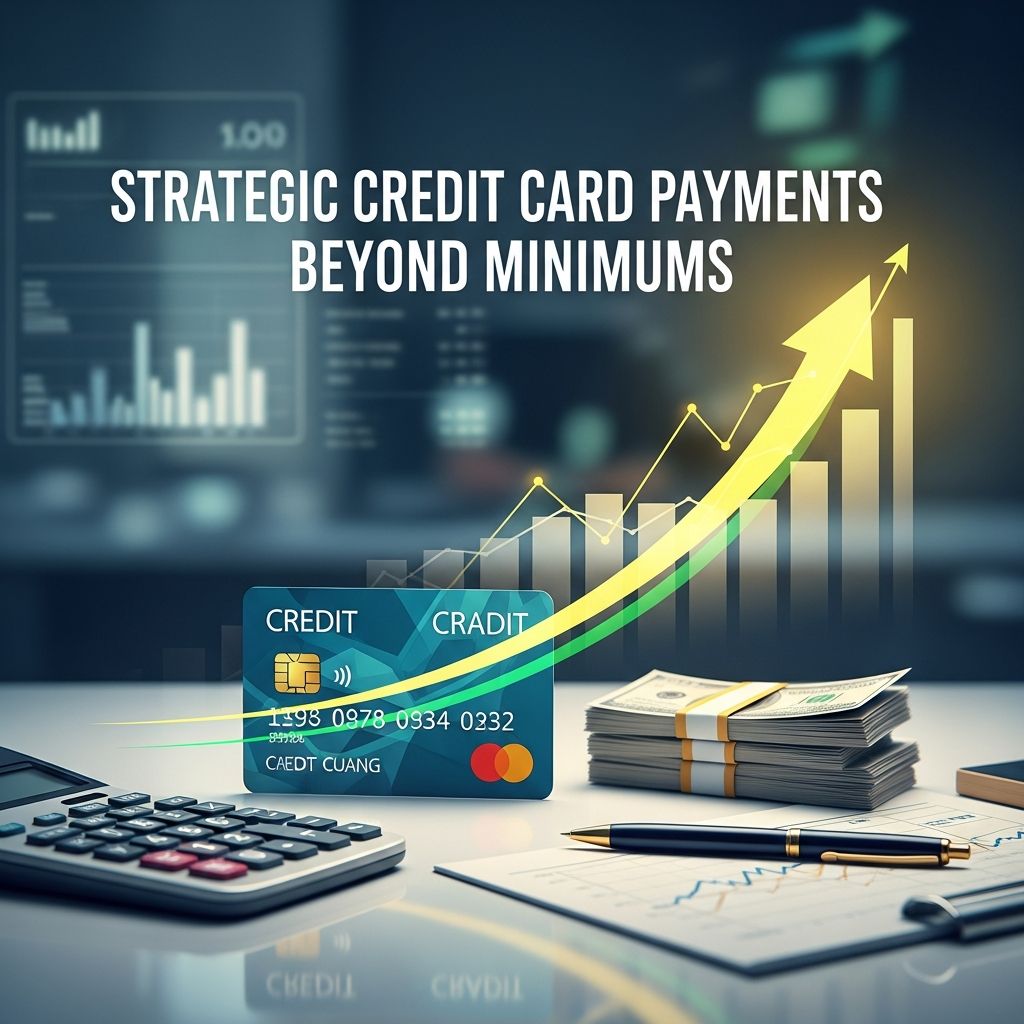
Credit card minimum payments represent one of the most misunderstood features of consumer debt. While they provide short-term relief by allowing cardholders to keep accounts in good standing without penalties, they often disguise a long-term financial trap. The minimum payment structure is calculated to benefit the credit card issuer far more than the cardholder, keeping consumers locked in debt cycles for years while accumulating substantial interest charges. Understanding why and how to move beyond minimum payments is essential for anyone serious about building genuine financial stability.
The Mechanics of Minimum Payments and How They Work Against You
Credit card minimum payments are typically calculated as either a fixed percentage of your outstanding balance—commonly around 2% to 3%—or a flat dollar amount, whichever is greater. This seemingly modest requirement carries significant implications for your financial trajectory. When you pay only the minimum, a disproportionate portion of your payment addresses accumulated interest rather than reducing your principal balance. This design ensures that credit card companies continue earning revenue from your debt while you make minimal progress toward freedom from it.
The mathematics behind minimum payments reveal their insidious nature. Consider a $5,000 balance at an 18% annual percentage rate (APR). The initial minimum payment might be around $100, but here’s the critical issue: as your balance decreases, so does the minimum payment amount, meaning you’re actually paying off less of your debt each month despite your payment amounts appearing consistent. This mathematical sleight of hand means that the later stages of your debt repayment take disproportionately longer than the earlier stages, extending your debt timeline dramatically.
Accelerating Debt Freedom Through Aggressive Principal Reduction
The most compelling argument for exceeding minimum payments lies in the accelerated timeline for becoming debt-free. Research demonstrates the transformative power of even modest increases above the minimum. When comparing a $1,000 balance at 13% APR, paying only the minimum ($20 initially) versus paying a fixed amount higher than the minimum shows striking differences: the accelerated approach eliminates the debt approximately nine years sooner and results in over $642 in interest savings.
This principle scales proportionally with larger balances and higher interest rates. A $3,000 balance at 18% APR illustrates this further. The difference between minimum payments and strategic overpayments transforms years of financial obligation into a compressed timeline that allows you to redirect funds toward other financial goals—building emergency savings, investing for retirement, or funding education expenses.
The psychological impact of accelerated payoff cannot be overstated. Moving from a multi-decade repayment timeline to a manageable payoff period within a few years provides powerful motivation to maintain disciplined spending and avoid accumulating additional debt. This mental shift from hopelessness to agency fundamentally changes how individuals relate to their financial obligations.
Interest Accumulation: Understanding the True Cost of Minimum Payments
Interest charges represent the hidden tax on minimum payment strategies. Credit card interest rates frequently exceed 20%, with some reaching even higher levels. When you make only the minimum payment, this high-interest environment means that the vast majority of your payment simply covers accruing interest rather than reducing what you owe. For example, a $1,000 balance at 13% APR generates approximately $10.83 in interest monthly—nearly 54% of a typical $20 minimum payment goes purely to interest with less than half addressing your actual debt.
The compounding effect amplifies this burden over time. If you continue making minimum payments on a balance that includes accumulated interest, that interest itself generates additional interest, creating an exponential growth pattern that works against you. Each month you maintain a balance while making minimum payments, you’re essentially paying the credit card company for the privilege of remaining in debt.
Understanding this mechanism helps explain why individuals often report feeling trapped by credit card debt despite making consistent payments. They see their account activity showing payments being applied, yet their balance barely budges. The interest component dominates their payment structure, creating a frustrating situation where effort yields minimal progress.
The Path to Improved Credit Utilization and Score Enhancement
Credit utilization—the percentage of available credit you’re actively using—significantly influences credit scoring calculations. Carrying high balances while making minimum payments keeps your utilization percentage elevated for extended periods. Credit scoring models interpret high utilization as increased risk, which negatively impacts your credit score even if you make payments consistently and on time.
By paying more than the minimum, you reduce your outstanding balance more quickly, which directly lowers your utilization ratio. This improvement creates a positive feedback loop: lower utilization leads to better credit scores, which can qualify you for better interest rates on future credit products, which reduces your borrowing costs and accelerates wealth building.
This relationship becomes particularly important when you consider how credit scores influence major financial decisions. Lower scores result in higher interest rates on mortgages, auto loans, and other credit products, ultimately costing tens of thousands of dollars over the life of these loans. The compounding financial advantage of maintaining lower utilization through strategic credit card payments extends far beyond the credit card itself.
Building Financial Resilience and Reducing Debt Burden
The psychological and financial burden of carrying substantial credit card debt affects multiple dimensions of life quality. Individuals managing high-interest debt often report difficulty saving for emergencies, investing for retirement, and making discretionary purchases without guilt or anxiety. This constrained financial position reduces flexibility when facing unexpected expenses, perpetuating a cycle where emergencies are funded with additional credit card debt.
Paying more than minimum payments breaks this cycle by gradually reducing the total debt burden. As your balance decreases, the interest charges themselves decline, freeing up more of each payment to address principal. This creates an accelerating positive cycle where each payment becomes increasingly effective at reducing your debt rather than simply covering interest.
Additionally, lower debt levels directly improve financial security. With fewer monthly obligations, your income becomes more available for building emergency savings, which is the foundational element of financial resilience. Research consistently demonstrates that households with adequate emergency savings experience fewer debt crises and recover more quickly from unexpected financial shocks.
Comparative Payment Strategies: Minimum Versus Strategic Approaches
The following table illustrates how different payment strategies produce dramatically different outcomes over time:
| Balance Amount | Interest Rate | Minimum Payment Approach | Strategic Payment Approach | Interest Savings | Time Difference |
|---|---|---|---|---|---|
| $1,000 | 13% APR | ~$642 total interest | Significantly reduced | Over $642 | ~9 years |
| $5,000 | 18% APR | 20+ years payoff | Substantially accelerated | Thousands | Many years |
| $3,000 | 18% APR | Extended timeline | Compressed timeline | Substantial | Years reduced |
These comparisons demonstrate that the difference between minimum and strategic payment approaches represents not merely mathematical differences but profound implications for your financial life.
Practical Implementation: Making the Transition
Moving beyond minimum payments requires practical strategies adapted to your financial situation. The first step involves calculating how much additional payment you can reasonably afford without compromising other financial obligations. Even increasing your payment by $10–20 monthly produces measurable improvements in your payoff timeline and interest charges.
Automating payments above the minimum ensures consistency and removes the temptation to reduce payments during months when cash flow tightens. Setting up automatic payments that exceed the minimum by a fixed amount makes this strategy effortless and sustainable.
Another effective approach involves directing unexpected financial windfalls—tax refunds, bonuses, or other irregular income—directly to credit card principal rather than treating them as discretionary spending. This strategy accelerates debt payoff without requiring permanent lifestyle changes.
Understanding Credit Card Issuer Incentives
It’s important to recognize that credit card companies deliberately emphasize minimum payments because the current system is highly profitable for them. The minimum payment structure is engineered to maximize the total interest they collect from your debt. By understanding this relationship, you can make decisions aligned with your interests rather than the credit card issuer’s interests.
This knowledge should motivate you to move beyond what the credit card company suggests is acceptable and instead pursue what actually serves your financial wellbeing. The company benefits from your debt; you benefit from its elimination.
Frequently Asked Questions
Does paying more than the minimum hurt my credit score?
No, paying more than the minimum does not hurt your credit score. In fact, it improves your credit utilization ratio and demonstrates responsible credit management, both of which positively influence your score. The only concern would be if paying more than the minimum prevented you from making payments on time, which is highly unlikely.
Can I pay less than the minimum without consequences?
Paying less than the minimum typically results in late fees and potential credit score damage if the situation persists. If you’re struggling to make minimum payments, contact your credit card issuer to discuss alternatives before missing or underpaying a payment.
How much more than the minimum should I pay?
Pay as much as you can comfortably afford without compromising essential expenses. Even small increases—$10–20 above the minimum—produce meaningful benefits. The goal is to create a sustainable strategy you can maintain consistently.
Does paying the minimum keep my account in good standing?
Yes, making minimum payments on time maintains your account in good standing and prevents late fees or penalties. However, good standing doesn’t equate to financial progress; it simply maintains account status while interest continues accumulating.
How does paying more than the minimum affect future minimum payment amounts?
As your balance decreases through higher payments, your future minimum payments will also decrease. This creates an accelerating effect where your fixed payment amount covers progressively more principal rather than interest.
The Long-Term Wealth-Building Perspective
Viewing credit card payments through a long-term wealth-building lens transforms how you approach this financial obligation. Every dollar you pay toward credit card principal that you might otherwise have paid as interest becomes available for wealth-building activities. Over decades, this difference determines whether you build substantial retirement savings or struggle throughout your working years.
The financial advantage compounds across multiple credit products and time horizons. Better credit scores qualify you for better mortgage rates, saving hundreds of thousands of dollars on home financing. Lower debt levels improve your ability to invest consistently. The discipline developed through strategic credit card payment management extends to all financial decisions.
Strategic credit card payments represent one of the highest-return financial decisions available. The interest rates you avoid paying are guaranteed returns on your investment in reducing debt—returns that far exceed most investment opportunities. From a pure financial optimization perspective, aggressive credit card debt reduction should receive priority in your financial planning.
References
- The Hidden Danger of Making Only Minimum Payments on Credit Cards — Bond & Notes. 2025. https://www.bondnbotes.com/blog/hidden-danger-making-only-minimum-payments-credit-cards
- Things To Know About Credit Card Minimum Payments — Chase Bank. https://www.chase.com/personal/credit-cards/education/basics/credit-card-minimum-payment
- 3 Reasons to Pay More Than the Minimum on Your Credit Card — Redwood Credit Union. https://www.redwoodcu.org/about/blog/3-reasons-to-pay-more-than-the-minimum-on-your-credit-card/
- Credit Card Minimum Payments: What to Know — Capital One. https://www.capitalone.com/learn-grow/money-management/credit-card-minimum-pay-explained/
- Three Reasons Why You Should Always Pay More Than the Minimum — Liberty Latin America Credit Union. 2025. https://www.llcu.org/Blog/Posts/181/Education/2025/2/Three-Reasons-Why-You-Should-Always-Pay-More-Than-the-Minimum/blog-post/
- 10 Things to Know About Credit Card Minimum Payments — CareCredit. https://www.carecredit.com/well-u/financial-health/credit-card-minimum-payments/
- Pay More Than the Minimum — USAA Educational Foundation. https://usaaef.org/credit-debt/debt/managing-debt/why-pay-more-than-the-minimum/
Similar Articles








Read full bio of medha deb