Credit Card Payment Neglect: Financial Consequences
Understand the cascading financial penalties and legal risks of abandoning credit card obligations.
When you cease making payments on your credit cards, the financial repercussions extend far beyond the initial missed deadline. The consequences unfold in stages, each more severe than the last, affecting your creditworthiness, financial flexibility, and potentially your legal standing. Understanding this progression is essential for anyone facing financial hardship or considering defaulting on credit obligations.
Understanding Default and Delinquency
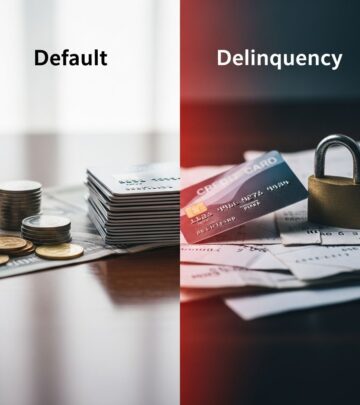
Before exploring the specific consequences, it’s important to distinguish between two critical terms: delinquency and default. Delinquency occurs the moment a payment misses its due date, though creditors typically report this to credit bureaus only after 30 days have passed. Default, by contrast, is a more formal status that generally occurs around the 180-day mark of nonpayment. At this juncture, the creditor typically assumes the debt will not be repaid and takes formal action to recover funds.
The journey from a single missed payment to default follows a predictable timeline, though the exact sequence and severity can vary depending on your card issuer’s policies and your state’s legal framework.
Immediate Financial Penalties: The First 30 Days
The earliest consequence of nonpayment arrives quickly: late fees. Credit card issuers may impose a fee for being even one day late. These fees vary based on your card’s specific terms and the issuer’s policies. While the Consumer Financial Protection Bureau capped late fees at $8 in March 2024, this ruling currently faces legal challenges, meaning the exact fee structure remains in flux. Some card issuers waive the first late fee as a courtesy, while others charge up to $30 for an initial late payment. Subsequent late payments within a six-billing-cycle window can incur even steeper penalties, reaching $41 or higher.
Beyond the direct fee, your interest rate remains poised to increase. Many issuers reserve the right to raise your annual percentage rate as a penalty for nonpayment, though they typically delay this action until 60 days of delinquency have elapsed.
Credit Score Deterioration: Days 30-90
Once your account reaches 30 days past due, the damage to your credit profile becomes official. Your card issuer reports the late payment to the three major credit bureaus—Equifax, Experian, and TransUnion. The impact on your credit score is immediate and substantial. A single missed payment can trigger a drop of 60 to 100 points, depending on your overall credit profile and payment history. Those with previously excellent credit may experience even more dramatic declines.
By the 60-day mark, the situation worsens considerably. Your interest rate increases as the penalty provision activates, causing your unpaid balance to grow faster due to compounding interest charges. Late fees continue to accumulate with each billing cycle. This is when creditors typically intensify collection efforts through phone calls and written correspondence.
At 90 days of delinquency, your credit score has taken a major hit. The negative mark on your credit report significantly impacts your ability to access new credit, secure favorable interest rates, or even qualify for certain employment opportunities or rental applications. Many creditors and collection agencies begin aggressive outreach during this period, recognizing that the longer a debt remains unpaid, the less likely they are to recover it.
Account Charge-Off and Collections Transition: Six Months and Beyond
Approximately 180 days into nonpayment, your account reaches formal default status. At this critical juncture, your credit card issuer typically performs a “charge-off,” meaning they write off the balance as a loss on their books and remove the account from their active portfolio. This action does not forgive your debt or eliminate your obligation to pay; rather, it represents the issuer’s admission that they believe recovery is unlikely through normal collection efforts.
Following the charge-off, the issuer typically transfers or sells your account to a third-party collection agency. This transition marks a significant shift in the dynamics of your debt situation. The original creditor may cease contact efforts, with all collection activities now handled by the specialized agency. Collection agencies often employ more persistent and aggressive tactics than the original card issuer, including frequent phone calls, written demands for payment, and threats of legal action.
Critically, by this point, your unpaid balance has likely ballooned substantially. Late fees, penalty interest rates, and accumulated interest charges may have increased your total obligation significantly beyond the original amount you failed to pay. For example, a $5,000 unpaid balance could easily grow to $7,000 or more over six months of accumulating fees and interest.
Credit Report Damage and Long-Term Consequences
The default remains on your credit report for up to seven years from the date of the first missed payment. During this extended period, the mark negatively influences virtually every credit-related decision. Lenders view defaults as the strongest signal of credit risk, often resulting in:
- Loan application denials or significantly limited approval odds
- Higher interest rates on approved loans, mortgages, and credit cards
- Difficulty securing rental housing, as many landlords review credit histories
- Potential employment barriers in positions requiring financial responsibility
- Higher insurance premiums, as insurers increasingly check credit scores
- Denial or limitation of utility services in some cases
Even after you resolve the debt by paying it in full, the default remains visible on your credit report for the full seven-year period, though its impact gradually diminishes over time. Some creditors may be reluctant to extend credit to you again, effectively blacklisting you from their services regardless of whether you’ve since demonstrated financial responsibility.
Collection Agency Actions and Harassment Concerns
Once your account transfers to a collection agency, you enter a new phase characterized by persistent recovery efforts. Collection agencies employ various tactics to motivate payment, including:
- Daily or multiple-times-daily phone calls to you, family members, or employers
- Detailed written demands for immediate payment
- Offers to settle for less than the full amount owed
- Threats of legal action and wage garnishment
- Reporting to additional credit bureaus and specialty databases
It’s important to recognize that collection agencies operate under legal constraints. The Fair Debt Collection Practices Act prohibits harassment, threats, contact at unreasonable hours, communication with employers in most circumstances, and false statements about the debt. If you believe a collection agency is violating these protections, you have the right to request cease-and-contact communications and file complaints with the Consumer Financial Protection Bureau.
Some collection agencies may offer to settle your debt for less than the full amount owed. While this can reduce your financial burden, any forgiven amount may be reported to the IRS as taxable income, potentially creating tax liability in the following year.
Legal Action: When Collections Escalate to Court
If collection efforts fail and sufficient time remains under the statute of limitations, creditors or collection agencies may pursue litigation. Filing a lawsuit is a significant escalation that signals the creditor’s determination to recover the debt through legal means. Should the creditor prevail in court, they obtain a judgment that grants them powerful collection tools.
With a judgment in hand, creditors can:
- Garnish your wages, directing your employer to withhold a portion of each paycheck
- Levy your bank accounts, directly seizing funds to satisfy the judgment
- Establish liens against your real property, securing their claim against your home or other assets
- Pursue other asset seizure depending on state law
The statute of limitations for credit card lawsuits varies by state, typically ranging from three to six years. However, creditors can attempt to collect even after this period expires. Importantly, making even a single payment on an old debt can reset the statute of limitations clock, potentially exposing you to renewed legal action. If you’re served with a lawsuit, ignoring it is particularly risky—creditors can obtain a default judgment against you without even proving their case, simply because you failed to appear or respond.
Broader Financial and Practical Impacts
Beyond the direct consequences of late fees, collections, and litigation, defaulting on credit cards creates ripple effects throughout your financial life. Your damaged credit profile makes it exponentially more expensive to borrow money for any purpose. When you can obtain credit, lenders offset the perceived risk by charging substantially higher interest rates. This means that recovering financially after default becomes significantly more difficult and expensive.
Additionally, defaulted debt can continue accumulating interest and fees for years. Many collection agencies add their own fees to your balance, further increasing what you ultimately owe. This compounding effect means that debts left unaddressed for years can grow to seemingly insurmountable levels, sometimes doubling or tripling the original amount.
Common Questions About Credit Card Default
Can creditors pursue legal action indefinitely?
No. Each state has a statute of limitations that restricts how long creditors can sue for unpaid credit card debt. This period typically spans three to six years but varies by jurisdiction. However, creditors can continue collection efforts after this period expires, and making a payment can restart the clock.
Will my debt disappear after seven years?
The negative mark on your credit report will disappear after seven years, but the underlying debt obligation remains. Creditors can potentially collect on very old debts in some circumstances, and the debt may never truly expire legally.
What should I do if I receive collection calls?
Request that the agency cease contact, preferably in writing. You have the right to demand verification of the debt and can file complaints if harassment occurs. Consulting with an attorney or credit counselor is advisable for guidance specific to your situation.
Is settling for less than the full amount a good option?
Settlement can reduce your financial burden but doesn’t erase the default from your credit report and may create tax liability for the forgiven amount. Weigh these factors carefully before accepting a settlement offer.
Proactive Steps to Mitigate Damage
If you’re struggling with credit card payments, addressing the problem early is crucial. Contacting your card issuer to discuss hardship options, negotiating payment plans, or seeking credit counseling can prevent or delay the progression to default. Many issuers offer temporary relief options before accounts reach delinquency status. Once default occurs, the options narrow significantly and consequences multiply. Taking action at the earliest sign of payment difficulty offers substantially better outcomes than ignoring the problem and hoping it resolves itself.
References
- Credit Card Default: What It Is & How It Works — Debt.org. Accessed 2026. https://www.debt.org/credit/cards/what-does-default-mean-on-a-credit-card/
- What is a credit card default? A complete guide — Business Insider. Accessed 2026. https://www.businessinsider.com/personal-finance/credit-score/what-is-a-credit-card-default
- What Happens If I Stop Paying My Credit Cards? — Experian. Accessed 2026. https://www.experian.com/blogs/ask-experian/what-happens-if-i-stop-paying-my-credit-cards/
- What happens if you default on all of your credit cards? — CBS News. Accessed 2026. https://www.cbsnews.com/news/what-happens-if-you-default-on-all-of-your-credit-cards/
- I Defaulted on My Credit Card — Now What? — NerdWallet. Accessed 2026. https://www.nerdwallet.com/credit-cards/learn/credit-card-default-what-to-do
- Here’s what you need to know about credit card defaults — KSAT. January 2025. https://www.ksat.com/business/2025/01/09/heres-what-you-need-to-know-about-credit-card-defaults/
Similar Articles








Read full bio of Sneha Tete