Credit Card Minimum Payments: 5 Smart Ways To Pay Less
Unlock the secrets of credit card minimum payments: how they're calculated, why they matter, and strategies to pay smarter for faster debt freedom.
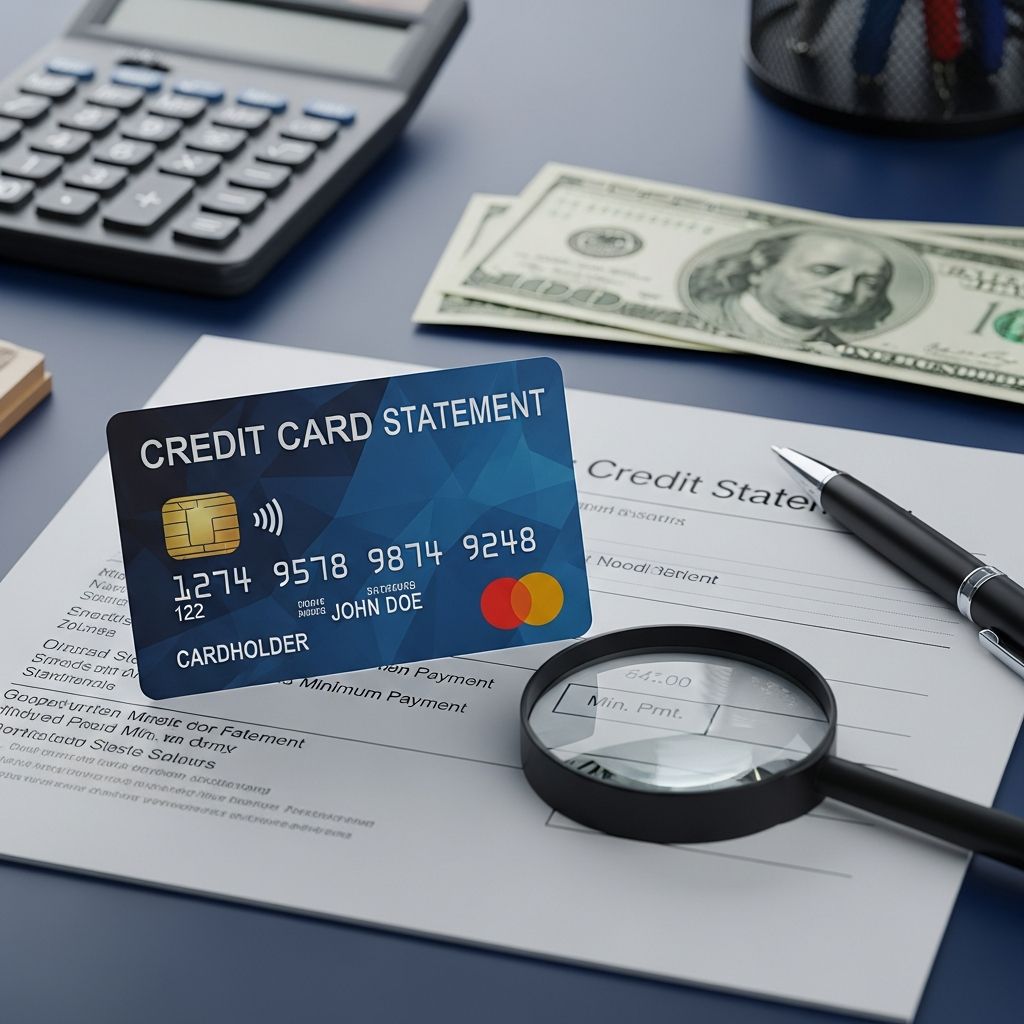
Credit card minimum payments represent the smallest amount cardholders must pay each billing cycle to keep accounts in good standing. These figures, often 1% to 4% of the balance plus fees, cover interest and a sliver of principal but prolong debt when paid exclusively.
Understanding the Fundamentals of Minimum Payments
Every credit card issuer employs a unique formula to determine the minimum due, influenced by balance size, accrued interest, and account status. This payment ensures timely coverage of new charges while signaling responsible management to lenders. Failing to meet it triggers penalties, higher rates, and credit score damage.
Minimums fluctuate monthly based on spending patterns and charges. For low balances, issuers enforce flat minimums like $25-$40; higher balances trigger percentage-based calculations. Always review statements or terms for specifics.
Common Formulas Issuers Use for Calculations
Issuers layer components to arrive at the total. Here’s a breakdown of prevalent methods:
- Percentage of Balance: Typically 1%-4% of the statement balance. A $5,000 balance at 2% requires $100 minimum.
- Interest + Percentage: Combines billed interest with 1% of principal. Ensures interest coverage while chipping at debt.
- Flat Fee Approach: Fixed sum like $35 or $40, or full balance if smaller.
- Layered Method: Base percentage or flat fee, plus past-due amounts, overlimit fees, and installment obligations.
Chase, for instance, uses the greater of $40 or 1% of balance plus interest and late fees. Variations exist across providers like Citi or Capital One.
Detailed Breakdown of Calculation Components
Minimum payments build progressively:
- Base Calculation: Start with greater of flat fee (e.g., $25-$40) or percentage (1%-4%) of balance.
- Add Interest: Include finance charges from the cycle, often at high APRs (15%-30%).
- Incorporate Fees: Late fees ($30-$40), overlimit charges, or returned payment penalties.
- Past-Due and Special Amounts: Any overdue balances or buy-now-pay-later installments.
- Finalize and Round: Total rounded up to nearest dollar; full balance if under threshold.
| Balance | Method | Base (2% or $30) | Interest ($50) | Fees ($20) | Total Minimum |
|---|---|---|---|---|---|
| $1,000 | Percentage + Add-ons | $30 | $50 | $20 | $100 |
| $2,500 | Same | $50 | $75 | $20 | $145 |
| $800 | Flat Fee | $30 | $40 | $0 | $70 |
This table illustrates variability; actuals depend on terms.
Factors That Increase Your Minimum Payment
Several elements inflate the due amount:
- New Purchases/Cash Advances: Boost balance, triggering higher percentages.
- High Interest Accrual: Unpaid balances compound daily, adding to next minimum.
- Penalty Fees: Late payments add $30+, overlimits similar.
- Past-Due Balances: Automatically included in full.
- Installment Plans: Fixed monthly portions layered on.
Large balances amplify effects; a $10,000 debt at 2% yields $200 base alone.
Where to Locate Your Exact Minimum Payment
Transparency rules mandate clear disclosure:
- Monthly statements highlight minimum due, due date, and payoff projections.
- Online portals/apps show real-time figures.
- Cardmember agreements detail formulas.
- Customer service confirms via phone.
Statements often project: “Minimum payments will take X years, costing $Y in interest.” Use this for planning.
The High Cost of Sticking to Minimum Payments
While avoiding immediate penalties, minimum-only strategy devastates long-term:
- Prolonged Payoff: $5,000 at 20% APR takes 30+ years, adding $10,000+ interest.
- Interest Dominance: 90%+ of early payments service interest, barely denting principal.
- Credit Utilization Rise: Lingering balances exceed 30% utilization, harming scores.
- Rate Hikes: Penalty APRs (up to 29.99%) after misses compound pain.
Calculators reveal: Fixed $100/month on $5,000 pays off in ~7 years vs. decades minimum-only.
Smart Strategies to Pay Beyond the Minimum
Accelerate freedom with these tactics:
- Budget Extra Principal: Direct windfalls (tax refunds) to balances.
- Debt Snowball/Avalanche: Target smallest/highest-rate cards first.
- Balance Transfers: 0% intro APR cards shift debt interest-free temporarily.
- Increase Payments Gradually: Add $20-50 monthly for exponential impact.
- Automate Higher Amounts: Set recurring payments above minimum.
Tools like payoff calculators simulate scenarios.
Consequences of Missing Minimum Payments
Non-payment invites cascade:
| Issue | Impact | Duration |
|---|---|---|
| Late Fee | $30-$40 | Immediate |
| Penalty APR | Up to 29.99% | 6-12 months |
| Credit Score Drop | 100+ points | 7 years |
| Collections | Account closure | After 180 days |
Communicate hardships for relief options like forbearance.
FAQs on Credit Card Minimum Payments
What if my balance is below the flat minimum? Pay the full balance to close the account properly.
Does paying minimum build credit? Yes, on-time payments do, but high utilization offsets gains.
Can minimums change mid-cycle? New charges post-statement may adjust next due.
How to estimate without statement? Use 2% of balance + estimated interest/fees as proxy.
Are minimums tax-deductible? No, but strategies like consolidation might offer relief.
Tools and Calculators for Better Planning
Leverage free calculators:
- Input balance, APR, minimum % for timelines/costs.
- Compare fixed vs. minimum payments.
- Project score impacts.
Proactively use to set goals, like 3-year payoff.
References
- How Are Credit Card Minimum Payments Calculated? — Experian. 2023-10-15. https://www.experian.com/blogs/ask-experian/how-is-your-credit-card-minimum-payment-calculated/
- How to Calculate Your Minimum Credit Card Payment — Chase. 2024-05-20. https://www.chase.com/personal/credit-cards/education/basics/how-to-calculate-your-minimum-credit-card-payment
- How is Minimum Payment Calculated on Credit Cards? — College Ave. 2023-11-08. https://www.collegeave.com/articles/how-is-minimum-payment-calculated-on-credit-cards/
- Credit Card Minimum Payment Calculator — GreenPath. 2024-02-14. https://www.greenpath.com/resources-tools/calculators/credit-card-minimum-payment-calculator/
- Credit Card Minimum Payments: What to Know — Capital One. 2024-01-22. https://www.capitalone.com/learn-grow/money-management/credit-card-minimum-pay-explained/
- How Do Credit Card Minimum Payments Work — Citi. 2023-12-05. https://www.citi.com/credit-cards/understanding-credit-cards/how-do-credit-card-minimum-payments-work
- What is a Credit Card Minimum Payment? — U.S. Bank. 2024-03-10. https://www.usbank.com/credit-cards/credit-card-insider/credit-card-basics/credit-card-minimum-payment.html
Similar Articles








Read full bio of Sneha Tete