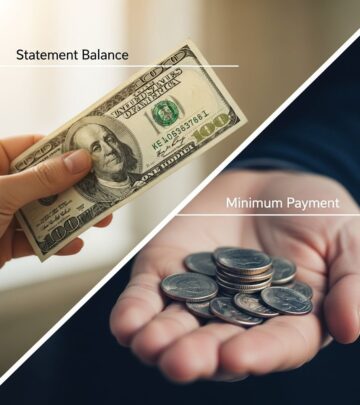
Credit Card Minimum Payments Explained
Discover how issuers determine your credit card minimum payment and why paying more accelerates debt freedom.

Credit card minimum payments represent the smallest amount cardholders must pay each billing cycle to keep accounts in good standing. These figures are determined by issuers using proprietary formulas that balance covering interest, fees, and a portion of principal while encouraging fuller repayments. Grasping these calculations empowers users to manage debt more effectively and minimize interest accumulation over time.
Why Minimum Payments Matter for Your Finances
Minimum payments serve as a safety net, preventing late fees and negative impacts on credit scores when met on time. However, they primarily cover interest and fees, leaving principal reduction minimal—often less than 1% of the balance on large debts. This structure prolongs repayment timelines, potentially spanning decades for high balances, and inflates total costs through compounded interest. Financial experts emphasize that while minimums maintain account status, exceeding them substantially shortens payoff periods and saves money.
Card issuers must disclose calculation methods in statements and agreements, typically expressed as a percentage of balance plus add-ons or fixed floors. Variations exist across providers, influenced by balance size, accrued charges, and account history. Understanding these empowers proactive budgeting.
Core Methods Used by Issuers to Compute Minimums
Issuers employ several standardized approaches, often blending them based on balance thresholds. Here’s a breakdown of prevalent strategies:
- Percentage of Balance: A straightforward method applying 1% to 4% to the statement balance. Common among credit unions and smaller banks, this yields predictable amounts but ignores isolated interest or fees.
- Percentage Plus Interest and Fees: Starts with 1% of principal balance, then incorporates billed interest and fees. Favored by major banks, it ensures coverage of carrying costs before principal attack.
- Fixed Dollar Minimum: Applies when calculated amounts fall below a set floor, like $25-$40, safeguarding issuers against very low balances.
- Full Balance Requirement: For balances under the fixed floor, the entire amount due becomes the minimum.
These methods adapt to account specifics, with past-due amounts or overlimits often added upfront or post-calculation.
Step-by-Step Breakdown of Typical Calculations
Most computations follow a multi-step process to arrive at the final figure. Consider a hypothetical $5,000 balance with $100 interest and $30 late fee under a common formula (1% balance + interest + fees):
- Determine Base Percentage: 1% of $5,000 = $50.
- Add Interest and Fees: $50 + $100 + $30 = $180.
- Apply Floor if Needed: If floor is $40, $180 exceeds it—no adjustment.
- Incorporate Specials: Add any past-due ($0 here) or installment obligations.
- Round Up: Final minimum: $180 (or nearest dollar).
For lower balances, say $300 with no extras and 2% formula: 2% = $6, but if floor is $25, minimum jumps to $25. If balance is $20, pay $20 fully. These tiers prevent negligible payments while prioritizing recovery.
Real-World Examples from Major Issuers
Practices differ by provider. Chase, for instance, uses the greater of $40 or 1% of balance plus interest and late fees since last cycle. On a $3,000 balance with $50 interest: 1% ($30) + $50 = $80 > $40, so $80 minimum. Citi blends fixed ($30) or 1% plus charges; a $800 balance with $12 interest and $30 fee yields $8 (1%) + $42 = $50, exceeding $30.
| Balance | Interest/Fees | Method | Minimum Payment |
|---|---|---|---|
| $10,000 | $200 interest | 2% flat | $200 |
| $700 | $0 | Greater of 2% or $25 | $25 |
| $800 | $42 total | 1% + charges or $30 | $50 |
| $23 | $0 | Full balance (<$40 floor) | $23 |
This table illustrates variability; always verify via your statement.
Hidden Dangers of Sticking to Minimums
Paying only the minimum on $10,000 at 20% APR could take over 30 years, accruing $20,000+ in interest. Small principal reductions early on mean interest balloons on near-static balances. Late payments trigger fees ($30-$40), penalty APR hikes (up to 29.99%), and credit score drops via delinquencies reported to bureaus like Experian.
Moreover, minimums exclude future purchases from payoff progress, fostering debt cycles. Tools like calculators reveal stark contrasts: minimums vs. fixed higher payments drastically cut timelines.
Strategies to Surpass Minimum Payments
- Review statements for payoff projections—many include ‘minimum only’ vs. accelerated scenarios.
- Automate payments above minimums, targeting 10%+ of balance.
- Prioritize high-interest cards via debt avalanche.
- Consolidate with 0% balance transfers if creditworthy.
- Build emergency funds to curb new charges.
Tracking via apps or spreadsheets aids consistency. Aim for full balance payments monthly to sidestep interest entirely.
Finding and Verifying Your Minimum Payment
Locate it prominently on statements, apps, or online portals. Agreements detail formulas; call issuers for clarification. Regulations mandate transparency, including estimated payoff periods under minimum-only plans.
FAQ: Common Questions on Minimum Payments
What happens if I miss my minimum payment?
Expect late fees, penalty rates, and credit damage after 30 days. Accounts may suspend rewards or new charges.
Does paying minimum affect my credit score?
On-time minimums build positive history; misses harm utilization and payment metrics, key FICO factors.
Can minimums change monthly?
Yes, tied to fluctuating balances, interest, and fees—review statements routinely.
Are minimums negotiable?
Hardship programs may adjust temporarily; inquire directly.
How to calculate payoff time?
Use online calculators inputting balance, APR, and payment amount for projections.
Long-Term Planning Beyond Minimums
Shift mindset from compliance to conquest: set aggressive goals like balance-zero in 12-24 months. Combine budgeting, side income, and windfalls. Monitor credit reports free weekly via AnnualCreditReport.com for accuracy. Educated payers escape debt traps faster, freeing resources for savings and investments.
In summary, minimum payments are issuer safeguards, not optimal paths. Decode yours, pay more strategically, and reclaim financial control. (Word count: 1678)
References
- How Credit Card Issuers Calculate Minimum Payments — NerdWallet. 2023-10-15. https://www.nerdwallet.com/credit-cards/learn/credit-card-issuer-minimum-payment
- How to Calculate Your Minimum Credit Card Payment — Chase Bank. 2024-05-20. https://www.chase.com/personal/credit-cards/education/basics/how-to-calculate-your-minimum-credit-card-payment
- How Are Credit Card Minimum Payments Calculated? — Experian. 2024-02-12. https://www.experian.com/blogs/ask-experian/how-is-your-credit-card-minimum-payment-calculated/
- How Do Credit Card Minimum Payments Work — Citi. 2023-11-08. https://www.citi.com/credit-cards/understanding-credit-cards/how-do-credit-card-minimum-payments-work
- Credit Card Minimum Payments: What to Know — Capital One. 2024-01-22. https://www.capitalone.com/learn-grow/money-management/credit-card-minimum-pay-explained/
Similar Articles








Read full bio of medha deb