Credit Card Minimum Payments: 5 Practical Tactics
Discover how minimum payments work, their hidden costs, and strategies to pay off debt faster while avoiding fees.

The minimum payment on a credit card serves as the smallest sum you must remit each billing period to maintain an active account status and sidestep penalties. While it offers short-term relief, relying solely on this amount often leads to extended debt periods and higher interest expenses.
Defining the Credit Card Minimum Payment
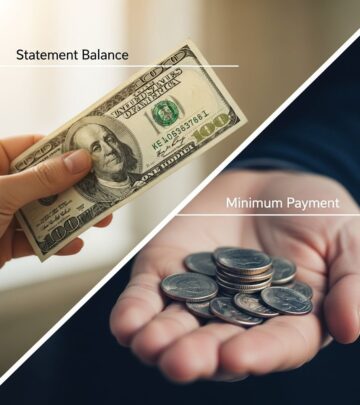
A credit card minimum payment constitutes the baseline obligation listed on your monthly statement, ensuring your account stays current if met by the due date. Issuers establish this figure to cover a portion of your balance, accrued interest, and any fees, preventing delinquency markers on your credit profile.
Meeting this requirement shields you from immediate repercussions like late charges, which can range from $25 to $40 depending on the issuer. However, it primarily services interest rather than reducing the principal substantially, perpetuating a cycle of borrowing.
Methods Used to Compute Minimum Payments
Credit card companies employ varied formulas to determine the minimum due, tailored to their policies and your account activity. Common approaches include:
- A fixed percentage of the statement balance, often 1% to 4%, sometimes excluding or including interest and fees.
- Inclusion of all past-due balances, new interest charges, and fees to prioritize overdue elements.
- A guaranteed minimum dollar threshold, such as $25 or $35, applied when percentage-based calculations yield lower figures.
Examine your cardmember agreement or contact customer service for precise details, as these methods can shift based on balance size or promotional status. For instance, during a 0% introductory APR period, minimums might solely address principal without interest accrual, but full payoff before expiration is crucial.
Financial Pitfalls of Minimum-Only Repayments
Opting for just the minimum each month appears convenient but amplifies total costs dramatically. Most of the payment funnels toward interest, leaving scant progress on the actual debt.
Consider a $1,000 balance at 20% APR with a 2.4% minimum payment rate. In the first year:
| Month | Minimum Payment | Interest Paid | Principal Paid | Remaining Balance |
|---|---|---|---|---|
| 1 | $24.17 | $14.17 | $10.00 | $990.00 |
| 2 | $23.92 | $14.02 | $9.90 | $980.10 |
| 3 | $23.69 | $13.88 | $9.81 | $970.30 |
| 4 | $23.45 | $13.75 | $9.70 | $960.59 |
| 5 | $23.21 | $13.61 | $9.60 | $950.99 |
| 6 | $22.98 | $13.47 | $9.51 | $941.48 |
| 7 | $22.75 | $13.34 | $9.41 | $932.07 |
| 8 | $22.53 | $13.20 | $9.33 | $922.75 |
| 9 | $22.30 | $13.07 | $9.23 | $913.52 |
| 10 | $22.08 | $12.94 | $9.14 | $904.38 |
| 11 | $21.86 | $12.81 | $9.05 | $895.33 |
| 12 | $21.64 | $12.68 | $8.96 | $886.37 |
After 12 months of $274.58 in payments, only $113.63 reduces the principal, with over $160 in interest. Extending this could span nine years, accruing $857 in interest. For a $2,000 balance at 20% APR, a $40 minimum might cover $33 interest, advancing principal by just $7.
Consequences of Failing to Meet the Minimum
Submitting less than the required minimum or missing the due date triggers severe outcomes. Late fees immediately add to your balance, and issuers may impose penalty APRs, elevating rates to 29.99% or higher.
These lapses also register as delinquencies on your credit report, potentially dropping your score by 100 points or more. Future minimums might rise as a higher balance percentage, compounding the issue. Recovery demands consistent on-time payments over months.
Advantages of Exceeding the Minimum Payment
Surpassing the minimum accelerates debt elimination and curtails interest. Direct extra funds to principal reduction, shortening payoff timelines significantly.
- Paying the full statement balance monthly eliminates interest entirely, optimizing credit utilization.
- Targeting higher amounts, like double the minimum, can halve payoff duration.
- Utilize issuer tools showing payoff projections for 36 months or minimum-only scenarios.
Multiple cards? Employ the debt avalanche (high-interest first) or snowball (smallest balance first) methods for efficiency.
Practical Tactics for Managing Minimum Payments
Effectively handling minimums demands proactive steps:
- Review Statements Promptly: Note due dates, minimums, and interest projections via online portals.
- Automate Payments: Set recurring minimums to avert oversights, adjusting upward as feasible.
- Track via Calculators: Use tools estimating minimum-only vs. aggressive payoff paths.
- Negotiate with Issuers: Request hardship programs lowering APRs or minimums temporarily.
- Consolidate Debt: Balance transfers to 0% APR cards provide breathing room.
During promotional periods, prioritize payoff to evade deferred interest traps.
Minimum Payments Across Different Card Types
| Card Type | Typical Minimum Calculation | Key Considerations |
|---|---|---|
| Standard Rewards | 2-4% of balance + interest/fees | High APRs amplify minimum-only costs |
| 0% Intro APR | 1-2% of principal (no interest initially) | Payoff before promo ends critical |
| Balance Transfer | Includes transferred balance portion | Watch transfer fees in minimum |
| Student/Secured | Fixed low dollar amount or % | Builds credit; avoid min-only habit |
Issuers like American Express, Capital One, and U.S. Bank vary formulas, so verify specifics.
Frequently Asked Questions
What happens if I pay less than the minimum?
Your account incurs late fees, potential penalty APR hikes, and negative credit reporting.
Does the minimum payment include interest?
Typically yes, covering interest first, with remainder to principal.
Can minimum payments change monthly?
Yes, fluctuating with balance, interest, and fees.
Is paying minimum better than nothing?
It prevents delinquency but sustains high interest; more is advisable.
How to find my card’s minimum formula?
Check terms, statement, or call issuer.
Long-Term Debt Freedom Blueprint
Escape the minimum payment trap through disciplined strategies. Budget allocations ensuring payments exceed minimums by 50% or more yield tangible progress. Combine with spending cuts and side income to attack principal aggressively.
Monitor credit utilization below 30% aids score improvement, unlocking better rates. Professional counseling via nonprofit agencies offers tailored plans if overwhelmed.
Ultimately, viewing minimum payments as a temporary safeguard—not a strategy—empowers financial control. Consistent overpayments transform daunting balances into manageable goals, fostering lasting stability.
References
- What Is the Minimum Payment on a Credit Card? — American Express. 2023. https://www.americanexpress.com/en-us/credit-cards/credit-intel/minimum-payments/
- Credit Card Minimum Payments: What to Know — Capital One. 2023. https://www.capitalone.com/learn-grow/money-management/credit-card-minimum-pay-explained/
- What is a Credit Card Minimum Payment? — U.S. Bank. 2023. https://www.usbank.com/credit-cards/credit-card-insider/credit-card-basics/credit-card-minimum-payment.html
- Guide To Credit Card Minimum Payments — Bankrate. 2023. https://www.bankrate.com/credit-cards/advice/guide-to-credit-card-minimum-payments/
- How Does a Minimum Credit Card Payment Work — Citi. 2023. https://www.citi.com/credit-cards/understanding-credit-cards/how-do-credit-card-minimum-payments-work
- What is the Minimum Payment on a Credit Card? — Discover. 2023. https://www.discover.com/credit-cards/card-smarts/credit-card-minimum-payment/
Similar Articles








Read full bio of medha deb