Understanding Credit Card Limits and Financial Consequences
Explore the hidden costs and ripple effects of reaching your credit card maximum.

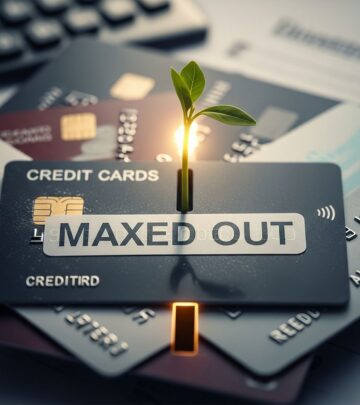
Reaching your credit card’s maximum balance represents more than a simple spending threshold. It initiates a chain reaction of financial complications that extend far beyond the immediate inability to make additional purchases. The consequences ripple through your financial life, affecting credit scores, monthly budgets, and long-term borrowing capacity. Understanding these interconnected effects helps you recognize why maintaining credit card balances well below your limit remains essential for financial health.
The Immediate Purchase Rejection Problem
When your credit card balance reaches its limit, the most obvious consequence emerges immediately: transaction rejection. Your card simply stops working for new purchases1. This creates frustrating real-world complications, particularly when you’re unaware of your current balance. You might discover your card is declined at a retail checkout, during an online transaction, or while attempting to pay automatic recurring bills.
This situation extends beyond simple inconvenience. Critical payments can be interrupted, including utility bills, insurance premiums, and subscription services that rely on automatic charging2. The timing of these rejections often catches people off-guard because credit card limits don’t always sync perfectly with when balances are reported to tracking systems.
Some credit card issuers offer over-limit coverage programs that allow continued spending beyond your stated limit, but this option comes with associated fees1. If you’ve enrolled in such protection, transactions may still process even when over the limit, though each transaction triggers additional charges. Understanding whether your card includes this feature proves important for knowing what to expect.
The Interest Rate Acceleration Trap
Among the most damaging consequences of maxing out your credit card is the interest rate increase. Credit card companies typically apply what’s known as a penalty annual percentage rate (APR) when accounts reach maximum balances3. This isn’t a modest increase—penalty rates represent the highest interest rate permitted under your card’s terms.
The significance of penalty APR becomes clear when examining the mathematics of credit card debt. A penalty rate can remain active for six months or longer, even after you’ve successfully paid down the balance3. During this period, every dollar of remaining balance accumulates interest at the elevated rate. For someone carrying a $5,000 balance, this could mean hundreds of additional dollars in interest charges compared to the regular APR.
This interest acceleration creates a vicious cycle. As interest accrues, your balance grows larger, which increases minimum payment requirements, making it progressively harder to escape the debt trap. The longer a maxed-out balance persists, the more total interest you ultimately pay4.
Credit Score Deterioration and Credit Utilization
Your credit utilization ratio—the percentage of available credit you’re actually using—comprises a substantial portion of your credit score calculation. When your balance reaches your credit limit, utilization jumps to 100%, creating immediate damage to your credit profile.
The impact varies slightly depending on which credit scoring model evaluates your profile. At FICO, credit utilization accounts for 30% of your overall score3. VantageScore considers it 20% of the total3. Both scoring systems recommend maintaining utilization ratios below 30% of available credit3. Maxing out a card violates this benchmark dramatically.
This credit score reduction carries long-term financial consequences that extend well beyond credit card management. Lower credit scores affect:
- Mortgage interest rates and loan approval eligibility
- Auto loan terms and monthly payments
- Insurance premiums in certain states
- Rental application approvals
- Employment opportunities in positions requiring background checks
Even if you pay off the maxed-out balance immediately, the damage to your credit score remains until the high utilization is no longer reflected in your credit report, which typically takes several billing cycles4.
Fee Accumulation and Budget Strain
Multiple fee structures activate when credit cards are maxed out. Over-limit fees, typically ranging from $25 to $35 per occurrence, apply when you exceed your credit limit—either through opted-in over-limit coverage or processing delays1. Late fees compound the problem when increased minimum payment requirements become difficult to meet within the billing cycle.
These fees represent pure financial waste. They don’t reduce your principal balance; they simply add to what you owe. Someone managing a maxed-out card while experiencing financial stress often struggles to make regular payments, triggering additional late fees that compound the problem5.
The cumulative fee impact strains monthly budgets precisely when they’re already under pressure. If you’re maxing out credit cards, cash flow is likely already constrained. Additional fees exacerbate this constraint, potentially forcing choices between paying bills, purchasing essentials, or managing other debt obligations.
Minimum Payment Escalation
Credit card issuers calculate minimum payments based on your outstanding balance. Maxing out your card directly increases your required minimum payment1. This isn’t simply a percentage calculation—the minimum payment requirement can increase substantially with a maxed-out balance.
The problem intensifies if you can only afford minimum payments. Making minimum payments on a maxed-out card with a penalty APR can extend repayment timelines by years, exponentially increasing total interest paid. If you then reuse available credit as you pay down the balance—a common pattern—you perpetuate the cycle indefinitely3.
Over-limit requirements can further complicate minimum payments. Some issuers require cardholders to pay not just the calculated minimum but also any amount exceeding the credit limit, forcing a larger payment to bring the balance below the limit threshold5.
Account Closure Risk and Future Credit Access
If a maxed-out card remains at maximum balance across multiple billing cycles, credit card issuers may declare the account in default and close it5. Account closure creates cascading consequences beyond the immediate card availability loss.
Closing an account reduces your total available credit pool, which increases your overall credit utilization ratio across all your accounts. If you had a $10,000 limit on a closed card and maintain balances on other cards, losing that credit availability makes your utilization ratio calculations worse, further damaging your credit score.
A closed account also reduces the diversity of your credit profile, another factor in credit score calculations. Additionally, closed accounts with balances still owed can result in collection attempts and legal action if the debt remains unpaid.
Comparing the Full Impact: What You Actually Owe
| Consequence | Typical Impact | Timeline |
|---|---|---|
| Transactions Declined | Immediate inability to purchase; potential missed bill payments | Immediate |
| Over-Limit Fees | $25-$35 per occurrence added to balance | Per transaction |
| Penalty APR | Significantly higher interest rate on entire balance | 6+ months |
| Credit Score Decline | 50-100+ point reduction depending on profile | Immediate to 1 month |
| Minimum Payment Increase | Potentially 2-3x higher than before | Next billing cycle |
| Late Fees | $25-$39 per late payment | Per missed payment |
| Account Closure | Loss of credit line; credit utilization worsens | 3-6+ billing cycles |
The Psychological and Behavioral Dimension
Maxing out credit cards often reflects deeper financial stress rather than isolated overspending. When credit cards reach maximum capacity, it frequently indicates that spending has exceeded income, creating unsustainable financial patterns. This situation often leads to increased financial anxiety, affecting decision-making quality precisely when clear thinking matters most.
Many people experiencing maxed-out cards are unaware of exactly how much they owe or when utilization became problematic. This lack of awareness perpetuates the cycle because it prevents timely intervention. Addressing a problem requires first acknowledging it exists.
Recovery Strategies and Prevention
If you’ve maxed out a credit card, prioritization determines recovery effectiveness. Making payments that bring your balance significantly below the limit—ideally below 30% of your credit limit—should take precedence. This aggressive paydown approach minimizes interest accumulation and begins credit score recovery.
For some people, a balance transfer to a card with a lower introductory APR provides temporary breathing room. Others benefit from personal loans at lower rates than credit card APRs, consolidating multiple maxed-out cards into a single, more manageable payment. However, these solutions require discipline to prevent reaccumulating credit card debt.
Prevention remains simpler than recovery. Establishing an emergency fund prevents the necessity of maxing out cards during financial disruptions. Consistent spending monitoring ensures you’re aware of your current balance relative to your limit. Setting personal spending caps well below the credit limit provides buffer space for billing timing delays or unexpected charges.
Frequently Asked Questions
Can I still use my card after maxing it out?
Not automatically. Transactions will be declined unless you’ve enrolled in over-limit coverage. With over-limit coverage, transactions may process but will incur additional fees2. You can typically enable or disable this feature through your credit card account settings.
How long does the penalty APR last?
Penalty APRs typically remain in effect for six months or longer, even after you’ve paid down the balance below the limit3. The specific duration depends on your card issuer’s policies and your account history.
Will my credit score recover if I pay off the balance immediately?
Your credit score will begin recovering once high utilization is no longer reported to credit bureaus, typically within 1-2 billing cycles. However, immediate payment still leaves the maxed-out status recorded in recent history, which affects score recovery timing4.
What happens if I can’t pay the minimum payment?
Missing minimum payments triggers late fees and begins a default process. Extended non-payment can result in collection attempts, potential legal action, and severe credit damage. Contact your card issuer immediately to discuss hardship programs if you’re struggling with payments.
Should I close the card after paying it off?
Closing a card eliminates available credit and can increase your overall credit utilization ratio. Keeping the paid-off card open helps credit scores. However, if the card has annual fees or is from an issuer causing you spending problems, closure may be appropriate.
References
- What Happens If You Max Out a Credit Card? — Chase Bank. Accessed 2026. https://www.chase.com/personal/credit-cards/education/basics/what-happens-if-you-max-out-your-credit-card
- What Happens When You Max Out Your Credit Card? — American Express. Accessed 2026. https://www.americanexpress.com/en-us/credit-cards/credit-intel/maxed-out-credit-card/
- What Happens If You Max Out Your Credit Card? — Capital One. Accessed 2026. https://www.capitalone.com/learn-grow/money-management/what-to-do-when-you-max-out-your-credit-card/
- Maxed-Out Credit Card: Consequences and Steps to Bounce Back — SoFi. Accessed 2026. https://www.sofi.com/learn/content/maxed-out-credit-card/
- What Happens if You Max Out a Credit Card? — Experian. Accessed 2026. https://www.experian.com/blogs/ask-experian/what-to-do-when-you-max-out-your-credit-cards/
Similar Articles








Read full bio of Sneha Tete