Credit Card Interest Accrual: 5 Ways To Minimize Interest
Master the timing of credit card interest to minimize costs and maximize savings on everyday spending.

Credit card interest begins accruing primarily when you carry an unpaid balance past the grace period or take certain transactions without one. Understanding these triggers empowers you to manage debt effectively and reduce costs.
Core Mechanics of Credit Card Interest
Credit card interest represents the price of borrowing funds from your card issuer. It is expressed as an
Annual Percentage Rate (APR)
, which indicates the yearly cost of carrying a balance. Issuers typically calculate this interest daily using a periodic rate derived from the APR divided by 365 days.The
prime rate
, influenced by the Federal Reserve’s federal funds rate, serves as the foundation for most credit card APRs. Factors like your credit score, card type, and payment history determine your specific rate. Higher APRs accelerate interest growth on unpaid balances.Timing Triggers for Interest Charges
Interest accrual varies by transaction type, with distinct rules for each.
- Purchases: These usually benefit from a grace period of 21-25 days after the billing cycle ends. Pay your full statement balance by the due date to avoid interest entirely.
- Balance Transfers: Interest often starts immediately upon posting, except during promotional 0% APR periods where minimum payments preserve the waiver.
- Cash Advances: No grace period applies; charges begin the day the advance posts, making them among the costliest options.
If you carry any balance from the prior cycle into the current one, the grace period for new purchases typically vanishes, and interest applies retroactively.
Grace Periods: Your Key to Interest-Free Borrowing
The grace period is the buffer between your statement closing date and payment due date, allowing interest-free use of credit for purchases. To preserve it:
- Pay the entire statement balance each month before the due date.
- Avoid carrying over balances from previous cycles, as this eliminates the grace period for all new purchases.
Without a full payment, interest compounds daily on the remaining amount plus ongoing transactions.
| Transaction Type | Grace Period? | Interest Start |
|---|---|---|
| Purchases | Yes (if no prior balance) | End of grace period |
| Balance Transfers | Usually No | Posting date |
| Cash Advances | No | Posting date |
Step-by-Step Interest Calculation Process
Issuers use the average daily balance method for precision. Here’s how it works:
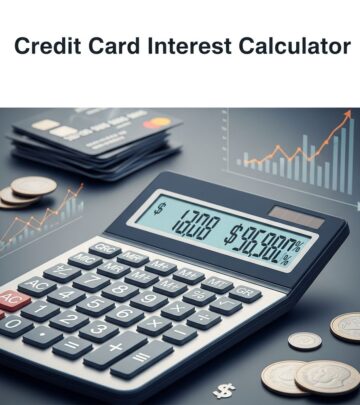
- Determine Daily Periodic Rate: Divide APR by 365. For a 24% APR: ( 24% / 365 approx 0.0658% ) or 0.000658 decimal.
- Calculate Average Daily Balance: Sum each day’s closing balance and divide by cycle days. Example: $1,000 balance over 30 days = $1,000 average.
- Compute Interest: Multiply average daily balance by daily rate by cycle days. ( 1000 times 0.000658 times 30 = $19.74 ).
This daily compounding means balances grow incrementally each day, amplifying costs over time.
Types of APRs Impacting Your Costs
Credit cards feature multiple APR categories:
- Purchase APR: Applies to everyday buys; often variable based on prime rate.
- Introductory APR: Temporary low or 0% rates for transfers or purchases; requires on-time payments.
- Penalty APR: Triggers on late payments; issuers must notify 45 days in advance. Not applied during grace periods.
- Fixed APR: Rare; can still change with notice.
Monitor your statements for these rates, as they dictate accrual speed.
How Payments Influence Interest Growth
Payments allocate strategically to minimize issuer profits:
- Minimum payments cover interest and fees first, then lowest APR balances.
- Excess payments target highest APR balances first, accelerating debt reduction.
Paying more than minimum early in the cycle lowers the average daily balance, slashing interest.
Example: $1,000 balance at 20% APR over 31 days yields ~$17.13 interest without payments. A mid-cycle $500 payment drops it significantly.
Real-World Examples of Accrual Scenarios
Scenario 1: Full Payment Compliance
You charge $800 in purchases. Statement closes; you pay full $800 by due date. Result: $0 interest.
Scenario 2: Partial Payment Trap
Same $800, but pay $300 minimum. Remaining $500 accrues at daily rate from due date. New purchases lose grace period.
Scenario 3: Cash Advance Pitfall
Withdraw $500 cash. Interest starts day one at higher cash APR (often 25%+), no grace. Daily cost: ~$0.34 at 25% APR.
Advanced Strategies to Minimize Interest
- Pay Twice Monthly: Reduces average daily balance mid-cycle.
- Target High-APR Debt: Use excess payments here first.
- Leverage 0% Promotions: Transfer balances strategically, meeting terms precisely.
- Autopay Full Balances: Ensures grace period preservation.
- Track Billing Cycles: Align payments post-statement for maximum grace.
These tactics can save hundreds annually on moderate balances.
Frequently Asked Questions
When does interest start on new purchases?
If you paid last month’s full balance, interest waits until next due date passes. Prior balances forfeit this.
Does paying early stop accrual?
Yes, lowering daily balances reduces total interest charged that cycle.
What’s the average credit card APR?
Variable; often 15-25% based on creditworthiness and market rates.
Can I avoid interest forever?
With consistent full payments and no cash advances/transfers without promo rates, yes for purchases.
How do I find my periodic rate?
Check statements or online account; calculate as APR/365 for daily.
Long-Term Impacts of Interest Accrual
Unchecked interest compounds, turning $1,000 at 20% into over $1,200 in a year. Proactive management preserves financial health, freeing funds for savings or investments. Review terms annually, as rates adjust with economic shifts.
By demystifying accrual timing, you gain control over one of credit’s biggest hidden costs.
References
- How Does Credit Card Interest Work? — Navy Federal Credit Union. 2023. https://www.navyfederal.org/makingcents/credit-debt/how-does-credit-card-interest-work.html
- Credit Card Interest: What It Is & How It Works — Ramp. 2024. https://ramp.com/blog/what-is-credit-card-interest
- How does my credit card company calculate the amount of interest I owe? — Consumer Financial Protection Bureau (CFPB). 2024-02-06. https://www.consumerfinance.gov/ask-cfpb/how-does-my-credit-card-company-calculate-the-amount-of-interest-i-owe-en-51/
- How To Use Your Grace Period To Avoid Paying Interest — Bankrate. 2024. https://www.bankrate.com/credit-cards/zero-interest/how-to-use-grace-period-to-avoid-paying-interest/
- How Does Credit Card Interest Work? — Capital One. 2024. https://www.capitalone.com/learn-grow/money-management/calculate-credit-card-interest/
Similar Articles








Read full bio of medha deb