Credit Card Holds: Essential Guide To Avoid Surprises
Discover how credit card holds work, their types, duration, and strategies to manage them effectively for better financial control.

Credit card holds temporarily reserve a portion of your available credit, ensuring transactions can be completed securely without immediate fund transfer. These mechanisms protect both consumers and merchants by verifying fund availability upfront.
Understanding the Fundamentals of Credit Card Holds
At their core, credit card holds represent a precautionary step in the payment process. When you swipe, tap, or enter your card details for a purchase, the merchant’s system communicates with your card issuer to confirm the transaction’s viability. The issuer then sets aside the approved amount from your credit limit, making it unavailable for other uses until the deal settles or expires. This process, known as authorization, prevents overspending and fraud while giving merchants confidence in payment receipt.
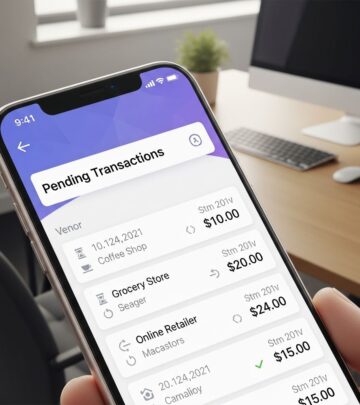
Unlike final charges that appear on your statement, holds show as pending transactions. They do not deduct from your balance permanently but reduce your spending power temporarily. This distinction is crucial for managing daily finances, as unexpected holds can limit access to funds when needed most.
Primary Categories of Credit Card Holds
Credit card holds fall into two main categories: authorization holds initiated by merchants and administrative holds imposed by issuers. Each serves distinct purposes in the ecosystem of card usage.
Authorization Holds: The Transaction Safeguard
Authorization holds occur during purchases where the final amount is uncertain or delayed. The merchant requests approval for an estimated sum, which the issuer reserves. Common in industries like hospitality and fuel, these holds ensure coverage for potential incidentals.
- Gas stations: Pumps often authorize $50–$175 more than pumped to account for fill-ups, releasing excess post-transaction.
- Hotels and rentals: Properties hold funds for room rates plus deposits for damages or extras, sometimes 1.5 times the base cost.
- Restaurants: Servers may authorize slightly above the bill for tips.
These holds typically last 1–30 days, depending on merchant settlement speed. If unsettled, they auto-release, restoring credit.
Administrative Holds: Issuer-Initiated Restrictions
Issuers apply administrative holds for account-specific issues, blocking credit until resolved. These differ from merchant requests as they stem from your payment history or risk flags.
| Type | Reason | Duration | Resolution |
|---|---|---|---|
| Over-Limit Hold | Exceeding credit cap | Until payment posted | Pay down balance |
| Late Payment Hold | Missed or delayed payments | Weeks to months | Consistent on-time payments |
| Fraud Suspicion Hold | Unusual activity | Investigation period | Verification or dispute |
| Account Review Hold | Compliance checks | Varies by issuer | Review completion |
Administrative holds can persist longer, sometimes leading to card suspension if unaddressed.
How Credit Card Holds Impact Your Finances
Holds directly lower available credit, potentially pushing utilization ratios higher—a factor in credit scoring. High utilization (over 30%) can ding scores temporarily.
They also surprise users, causing declined transactions elsewhere. For instance, a $200 hotel hold on a $1,000 limit leaves just $800 usable, risking rejections for other buys. Pending holds appear on apps and statements, cluttering views until cleared.
Prolonged holds tie up capital, affecting cash flow. Debit card equivalents reduce checking balances similarly, amplifying effects for those living paycheck-to-paycheck.
Typical Duration and Release Timelines
Hold longevity varies by type and merchant:
- Short-term (hours–3 days): Gas, quick retail swipes settle fast.
- Medium (3–7 days): Restaurants, standard e-commerce.
- Extended (7–30 days): Hotels post-checkout, rentals end-of-term.
- Administrative: Tied to resolution, not fixed timers.
Network rules (Visa, Mastercard) mandate release within 30 days max for authorizations if unsettled. Issuers monitor and auto-void expired holds.
Real-World Examples of Holds in Action
Consider renting a car: You book a midsize vehicle at $80/day for three days ($240). The agency authorizes $400 (base + $160 insurance deposit). Your limit drops by $400. Upon return sans issues, they settle $240; excess releases in 1–3 days.
At a gas pump: You authorize $100 but pump $45. Hold lingers 24–72 hours post-pump before adjusting.
Administrative case: Missing a payment flags late hold. Issuer restricts until caught up, visible as ‘account hold’ online.
Steps to Check and Monitor Holds
Stay proactive:
- Log into issuer app/portal daily for pending transactions.
- Review statements for ‘auth’ or ‘pending’ labels.
- Contact merchants for settlement status on large holds.
- Call issuer support for administrative flags.
- Use credit monitoring tools tracking utilization shifts.
Tools like issuer alerts notify of new holds instantly.
Strategies to Minimize Hold Disruptions
Avoid surprises with these tactics:
- Carry multiple cards to distribute holds.
- Pre-pay incidentals at hotels to shrink authorizations.
- Opt for debit at fixed-amount pumps.
- Maintain 30–50% buffer on limits.
- Pay balances mid-cycle to free credit.
For admins, automate payments and stay under limits.
Frequently Asked Questions
What triggers a credit card hold?
Holds activate on authorizations for uncertain-sum buys or issuer actions like delinquencies.
Do holds affect my credit score?
Indirectly via utilization; they don’t count as debt but reduce availability.
How do I remove a hold quickly?
Merchants settle transactions; for admins, resolve issues with issuer.
Can holds expire without settlement?
Yes, after 1–30 days per network rules.
Are debit cards affected similarly?
Yes, holds reduce checking balances pending settlement.
Navigating Disputes and Protections
If erroneous, dispute via issuer. Provide transaction details; they investigate, often releasing invalid holds. Regulations like Fair Credit Billing Act safeguard consumers.
Merchants must follow card brand rules; violations risk fines, benefiting you in escalations.
Future Trends in Hold Management
Real-time processing tech (RTP) may shorten holds. Tokenization and biometrics reduce fraud needs. Issuers innovate with dynamic limits adjusting holds smarter.
References
- Authorization hold – Wikipedia — Wikipedia. 2023-10-15. https://en.wikipedia.org/wiki/Authorization_hold
- What Is a Credit Card Hold? – Experian — Experian. 2024-05-20. https://www.experian.com/blogs/ask-experian/what-is-credit-card-hold/
- How Credit Card Holds Work & How to Manage Them – Paystand — Paystand. 2024-03-12. https://www.paystand.com/blog/credit-card-holds
- Everything You Need to Know About Credit Card Holds – SoFi — SoFi. 2024-07-08. https://www.sofi.com/learn/content/credit-card-hold/
- Credit card holds explained: Prevent disputes, boost trust – Solidgate — Solidgate. 2024-02-28. https://solidgate.com/blog/credit-card-authorization-holds/
- A Guide To Credit Card Holds – Brex — Brex. 2024-01-15. https://www.brex.com/resources/what-is-credit-card-hold
Similar Articles








Read full bio of medha deb