Understanding Credit Card Balances: A Complete Financial Guide
Master the difference between your statement and current balance for smarter credit management.

Credit card statements can feel confusing when you see multiple balance figures. Two numbers in particular—your statement balance and your current balance—often cause confusion among cardholders. While they may seem interchangeable, these figures tell completely different stories about what you owe on your credit card account. Understanding the distinction between these two balances is essential for managing your finances effectively, avoiding unnecessary interest charges, and maintaining healthy credit habits.
The Fundamentals: Breaking Down Balance Types
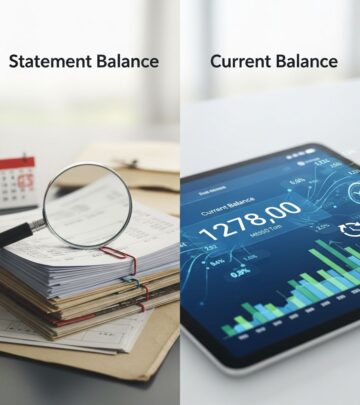
Every credit card account tracks financial activity through different lenses. Your credit card issuer generates monthly statements that capture a snapshot of your account on a specific closing date. This snapshot becomes your statement balance. Meanwhile, your account continuously updates throughout each day to reflect real-time activity, creating what we call your current balance. The key difference lies in timing and what transactions each balance includes.
Think of your statement balance as a historical record—a fixed point in time that documents what you owed when your billing cycle ended. Your current balance, conversely, functions as a live tracker that refreshes whenever transactions post to your account. This ongoing updating is why your current balance can change multiple times throughout a single day, while your statement balance remains constant until your next billing cycle closes.
What Comprises Your Statement Balance
Your statement balance represents the total amount you owed at the conclusion of your most recent billing cycle. Credit card billing cycles typically run between 28 to 31 days. During this period, every purchase you make, every fee applied, and every payment you submit gets recorded. When the cycle ends on your designated closing date, the card issuer calculates your statement balance by totaling all these transactions.
Several components make up your statement balance:
- All purchases charged during the billing cycle
- Balance carried forward from previous months, including any accrued interest
- Annual fees or other charges applied by your card issuer
- Late fees, if any were assessed during the cycle
- Cash advance fees and the principal amount of any cash advances
- Payments and credits applied to your account during the cycle
The statement balance remains fixed once your billing cycle closes. Even if you make a substantial payment the day after your statement date, that payment doesn’t alter your statement balance. Instead, it affects your current balance and will reduce the amount due on your next statement. This fixed nature makes your statement balance particularly important for budget planning and understanding exactly what you owed during a specific period.
Exploring Your Current Balance
Your current balance tells a different story. Rather than looking backward at a specific date, your current balance looks forward, capturing everything you owe at this exact moment. This figure updates continuously as transactions post to your account, which means it changes throughout the day as you make purchases, receive credits, or submit payments.
Your current balance encompasses:
- All posted purchases made since your last statement closed
- Your previous statement balance, minus any payments applied
- New charges not yet reflected in your statement
- Pending transactions that have been authorized but not yet posted
- Accumulated interest on any carried-over balance
- Fees and charges assessed after your statement date
- Credits or refunds issued after your statement closing
The dynamic nature of your current balance makes it the most accurate representation of your actual financial obligation at any given time. If you want to know exactly what you owe right now—not at some date in the past—your current balance is the figure to check. Most credit card companies provide real-time access to your current balance through their mobile apps and online banking portals.
Why These Balances Differ
The relationship between your statement balance and current balance depends entirely on your account activity after your statement closes. Several scenarios explain why these figures diverge:
You Made Payments After Closing: If you submitted a payment after your statement date, your current balance will be lower than your statement balance. For example, if your statement balance was $800 and you paid $300 the following day, your current balance would be approximately $500 (minus any new charges or interest accrued).
You Made New Purchases: Conversely, if you used your credit card after your statement closed without making payments, your current balance exceeds your statement balance. Each new purchase increases what you currently owe while leaving your statement balance untouched.
Interest Accrued on Carried Balances: If you carried a balance from a previous month, interest continues accruing between statement dates. This interest adds to your current balance but doesn’t change your statement balance, which was already calculated and closed.
Pending Transactions: Some authorized transactions take time to post. These pending charges may appear in your current balance calculation while being absent from your statement balance.
Fees and Credits: Late fees, annual fees, or account credits issued after your statement date affect your current balance immediately but don’t retroactively change your statement balance.
Practical Examples Illustrating the Difference
Scenario One: Payment After Closing
Suppose your billing cycle closes on the 15th of each month. Throughout that cycle, you charged $600 in purchases. Your statement balance on the 15th is $600. On the 17th, you make a $200 payment. Your current balance is now $400 (assuming no new charges and before any interest accrual on a carried balance). Your statement balance remains $600 until your next cycle closes on the 15th of the following month.
Scenario Two: New Purchases After Closing
Using the same scenario, imagine you don’t make any payment on the 17th. Instead, you use your credit card to buy groceries on the 18th for $75. Your statement balance is still $600, but your current balance is now $675. If you make more purchases before your next statement closes, your current balance continues increasing while your statement balance holds steady at $600.
Where to Find Each Balance
Locating these balances is straightforward in the digital age. Your statement balance appears prominently on your monthly billing statement, whether you receive it by mail or email. Most card issuers also list it in online banking portals and mobile applications, typically labeled as “statement balance” or “amount due.”
Your current balance is updated in real-time within your online account or mobile app. You won’t find it on your printed statement since statements represent a fixed point in time. To see your current balance, log into your account through the card issuer’s website or app and navigate to your account summary. Some issuers display both balances side-by-side for easy comparison.
Interest, Payments, and Your Billing Cycle
Understanding how these balances interact with interest and payments is crucial for managing credit card debt efficiently. Credit card companies typically offer a grace period—usually around 30 days—between your statement closing date and your payment due date. During this grace period, if you pay your entire statement balance, no interest accrues on new purchases made after the statement closed.
However, if you carry a balance from month to month, interest accrues continuously on that carried balance. This is why your current balance can exceed your statement balance even without making new purchases. The interest compounds, gradually increasing what you owe each day.
Many people mistakenly believe they need to pay their current balance to avoid interest charges. In reality, paying your statement balance by the due date avoids interest on that cycle’s purchases (assuming you’re not carrying a balance). Paying your current balance is unnecessary unless you want to eliminate all outstanding debt immediately.
Common Misconceptions About Card Balances
Misconception One: Your statement balance and current balance are the same thing.
Reality: They serve different purposes and typically differ unless you haven’t made any transactions since your statement closed.
Misconception Two: You must pay your current balance to avoid interest.
Reality: You only need to pay your statement balance by the due date to avoid interest on that cycle’s purchases.
Misconception Three: Your statement balance updates throughout the month.
Reality: Your statement balance is fixed once your billing cycle closes and doesn’t change until the next cycle ends.
Misconception Four: Payments appear in your statement balance immediately.
Reality: Payments reduce your current balance immediately (or within one business day) but don’t change your statement balance.
Strategic Tips for Balance Management
Effective credit card management involves using both balances strategically. Pay attention to your statement balance to understand your monthly spending patterns and ensure you pay by the due date to avoid interest. Monitor your current balance to track daily spending and stay within your budget. Some financial experts recommend checking your current balance weekly to prevent overspending.
If you’re trying to pay down debt, focus on your statement balance first. Paying at least your full statement balance ensures you’re not accumulating additional interest charges. Once you’ve eliminated your balance completely, you can use your credit card without carrying debt month-to-month.
For those with multiple credit cards, tracking statement balances across all accounts during the billing cycle helps you understand your total monthly obligations. Setting calendar reminders for payment due dates prevents missed payments that trigger late fees and damage your credit score.
Frequently Asked Questions
Q: Can my current balance be lower than my statement balance?
A: Yes. If you made substantial payments after your statement closed and haven’t made new purchases, your current balance will be lower. This situation indicates you’re ahead on payments.
Q: Why does my card issuer show different balances in different places?
A: Different areas of your account may update at different times. Your current balance in the mobile app updates more frequently than in your online banking portal, which may update every few hours.
Q: Does paying my current balance help my credit score?
A: Paying either your statement balance or current balance demonstrates responsibility. However, your payment history matters more than which balance you pay.
Q: What happens if I only pay part of my statement balance?
A: Interest accrues on the unpaid portion. Your new statement balance next month will include this unpaid amount plus interest.
Q: Can pending transactions become part of my statement balance?
A: Only if they post before your statement closes. Once your statement closes, pending transactions affect your current balance but not your statement balance.
The Bottom Line on Credit Card Balances
Your statement balance and current balance serve as complementary tools for understanding your credit card obligations. The statement balance provides a clear, fixed record of what you owed during a specific billing cycle, while your current balance offers a real-time picture of your actual debt. Neither is more important than the other—they simply provide different perspectives on your financial situation.
By distinguishing between these balances, you gain better control over your credit card finances, avoid unnecessary interest charges, and make more informed financial decisions. Pay your statement balance by the due date to maintain good credit standing, monitor your current balance to manage spending, and you’ll be well-equipped to use credit cards responsibly and strategically.
References
- Statement Balance vs. Current Balance — Chase Bank. Accessed March 2026. https://www.chase.com/personal/credit-cards/education/basics/statement-balance-vs-current-balance
- Statement Balance vs. Current Balance: What’s the Difference? — Citi. Accessed March 2026. https://www.citi.com/credit-cards/understanding-credit-cards/statement-balance-vs-current-balance
- Statement Balance vs Current Balance — U.S. Bank. Accessed March 2026. https://www.usbank.com/credit-cards/credit-card-insider/credit-card-basics/statement-balance-vs-current-balance.html
- Statement Balance vs. Current Balance — Discover. Accessed March 2026. https://www.discover.com/credit-cards/card-smarts/whats-the-difference-between-a-statement-balance-and-a-current-balance/
- Statement balance vs current balance: What’s the difference? — Bankrate. Accessed March 2026. https://www.bankrate.com/credit-cards/advice/statement-balance-vs-current-balance/
Similar Articles








Read full bio of Sneha Tete