Credit Card APR Types: Fixed vs Variable Rates
Understand how credit card interest rates work and choose the right option for your needs.
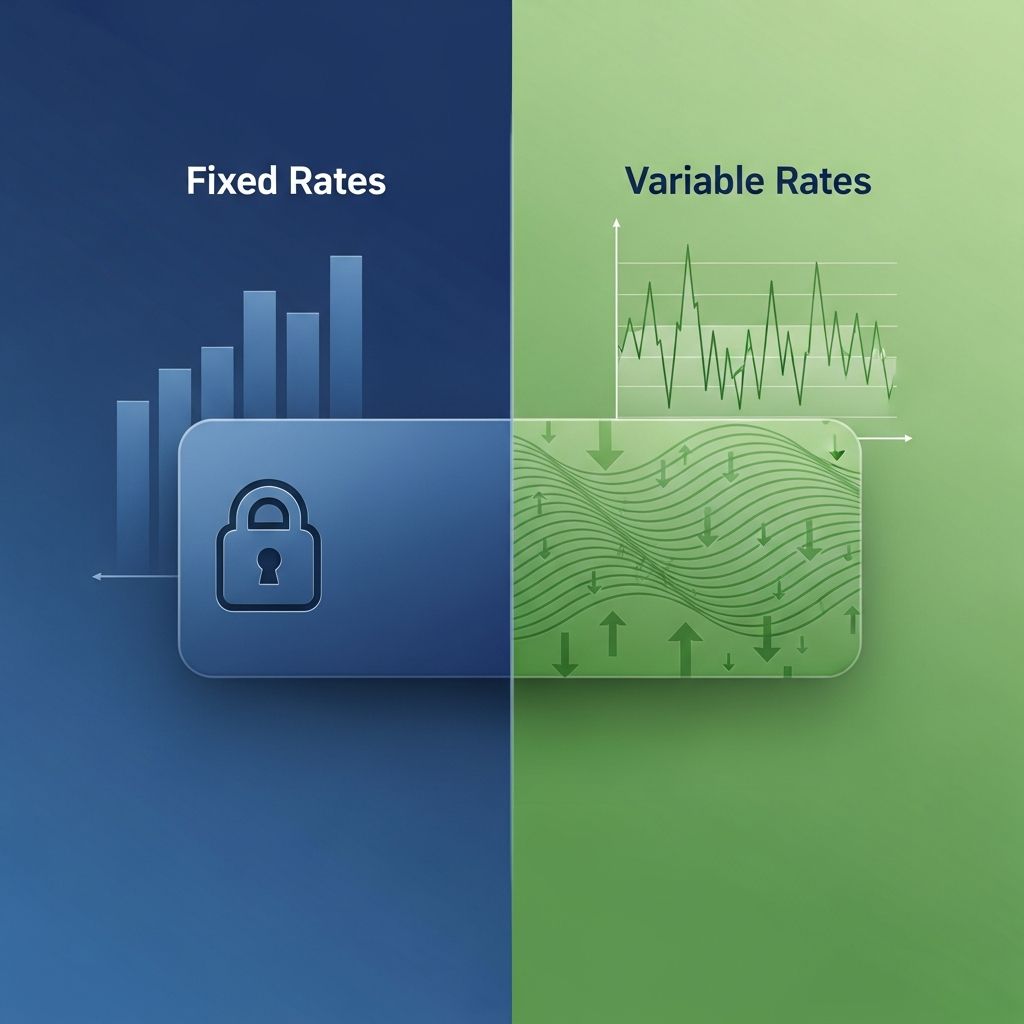
When you apply for a credit card, one of the most important factors to consider is the annual percentage rate, commonly known as APR. This rate determines how much you’ll pay in interest on your outstanding balance. However, not all credit cards offer the same type of interest rate structure. The two primary categories—fixed and variable APRs—each come with distinct characteristics that can significantly impact your financial planning and long-term costs.
The Fundamentals of Credit Card Interest Rates
An APR represents the yearly cost of borrowing money on your credit card, expressed as a percentage. This rate is applied to your outstanding balance to calculate the interest charges you’ll owe each billing cycle. Understanding whether your card carries a fixed or variable rate is crucial because it affects how predictable your payments will be and how external economic factors might influence your costs.
The reality of today’s credit card market is that most cards come with variable APRs rather than fixed rates. This prevalence of variable-rate cards means that for the majority of cardholders, their interest rates can fluctuate throughout the life of their accounts. However, some financial institutions, particularly credit unions and smaller banks, do offer fixed-rate alternatives, though these options are less common in the mainstream credit card market.
How Fixed-Rate Credit Cards Function
A fixed-rate credit card maintains the same interest rate throughout your ownership of the card, assuming your account remains in good standing. This stability stems from the fact that fixed rates are determined based on personal factors rather than broader economic indicators. Your creditworthiness—which includes your payment history, credit score, and overall financial profile—forms the foundation for setting your fixed rate.
The primary advantage of a fixed-rate credit card is predictability. You know exactly what your interest rate will be from month to month, which allows for more accurate financial planning. When you carry a balance, you can calculate precisely how much interest will accrue on your purchases, making it easier to budget for debt repayment. Additionally, fixed-rate cards often feature lower starting APRs compared to the lowest available variable rates, and many offer promotional periods with reduced or zero interest.
It’s important to note that while the term “fixed” suggests permanence, your rate isn’t completely immutable. Credit card issuers retain the right to increase your APR if you demonstrate payment delinquency, miss payments entirely, or if your credit score experiences a significant decline. However, federal regulations require card issuers to provide at least 45 days’ notice before implementing such rate increases, giving you an opportunity to respond or seek alternative options.
The Mechanics of Variable-Rate Credit Cards
Variable-rate credit cards operate on a fundamentally different principle. Rather than being tied solely to your creditworthiness, variable rates fluctuate based on broader economic indicators, most commonly the U.S. prime rate. Your card’s variable APR typically consists of two components: a fixed margin set by the card issuer (which may reflect your credit profile and creditworthiness) and the benchmark rate that changes with market conditions.
When the prime rate increases, your variable credit card APR increases as well. Conversely, when the prime rate decreases, your APR should decrease. This means your interest rate can change multiple times throughout a year, depending on how frequently the benchmark index changes and the specific terms of your credit card agreement. Some cards may adjust rates monthly, while others might change them quarterly or at other intervals specified in their terms.
The unpredictability inherent in variable-rate cards introduces an element of uncertainty into your borrowing costs. While lower prime rates can work in your favor by reducing your interest charges, rising rates can significantly increase the amount of interest you pay on existing balances. This uncertainty makes budgeting more challenging, particularly for individuals carrying substantial credit card debt.
Key Differences Between Fixed and Variable APRs
| Characteristic | Fixed APR | Variable APR |
|---|---|---|
| Rate Stability | Remains constant throughout the card’s life (under normal circumstances) | Fluctuates based on market conditions and benchmark indexes |
| Determination Method | Based on payment history and creditworthiness | Based on benchmark index (e.g., prime rate) plus issuer margin |
| External Economic Impact | Not affected by changes in prime rates or inflation | Directly affected by benchmark rate movements |
| Notification Requirements | Issuer must notify you 45 days before rate increases | Issuer is not required to provide advance notice of rate changes |
| Predictability | High; easier to forecast interest expenses | Low; interest costs can vary significantly |
| Typical Starting APR | Often lower than variable rate starting points | May start higher, with potential for reduction if rates fall |
Factors That Determine Your Credit Card APR
Regardless of whether you’re offered a fixed or variable rate, several factors influence the specific APR you receive when you’re approved for a credit card.
- Credit Score and Payment History: Lenders view your credit score as a primary indicator of financial responsibility. A higher credit score generally qualifies you for lower APRs, while a lower score may result in higher rates. Your payment history over time serves as concrete evidence of your reliability in meeting financial obligations.
- Card Type and Features: The card category you select affects your APR. Basic cards typically carry lower APRs, while premium rewards cards with extensive benefits often feature higher rates to offset the issuer’s costs of providing rewards programs.
- Prevailing Interest Rates: The broader economic environment influences available rates. When the Federal Reserve maintains higher benchmark rates, card issuers generally offer higher APRs across their products.
- Promotional Offers: Many credit cards feature introductory promotional rates that provide temporary relief from standard APRs. These promotional periods—which might last anywhere from a few months to over a year—typically cover purchases, balance transfers, or both. Once the promotional period concludes, the standard APR takes effect.
- Different APRs for Different Transactions: Your credit card may carry different APRs for different types of transactions. For example, you might have one rate for purchases, a higher rate for cash advances, and another rate for balance transfers. Understanding these distinctions helps you make strategic financial decisions.
How Variable Rates Change Over Time
The frequency and timing of variable rate adjustments depend on several factors. Credit card issuers typically tie their variable rates to the prime rate, which is influenced by Federal Reserve decisions. When the Federal Reserve adjusts its benchmark rate, the prime rate follows, and subsequently, variable credit card rates adjust accordingly.
The frequency of changes varies by card and issuer. Some cards may experience APR adjustments every month, while others might change quarterly. Your specific card’s terms and conditions will outline how often rates can be adjusted. Additionally, some variable-rate loans and credit cards include rate caps that limit how much your APR can increase, even if the benchmark index rises substantially. These caps provide some protection against runaway interest rates.
It’s important to understand that variable rates can work both in your favor and against you. During periods when the prime rate falls, your variable APR decreases, reducing the interest you pay on any outstanding balance. However, during rising rate environments, your borrowing costs increase, which can strain your budget if you’re carrying a balance.
Fixed-Rate Cards: Advantages and Limitations
Fixed-rate credit cards appeal to individuals who prioritize financial predictability and want to avoid surprises in their monthly payments. The stability of a fixed rate makes it easier to project your total interest costs and plan a debt repayment strategy. For people who anticipate carrying a balance for an extended period, the peace of mind that comes with knowing your rate won’t change can be invaluable.
The trade-off for this stability is that fixed rates are typically priced higher than the current variable rates available at any given moment. Card issuers charge this premium to compensate for their exposure to rising costs if they need to refinance or adjust their own borrowing rates. Additionally, fixed-rate credit cards are considerably less common than variable-rate options, limiting your selection when shopping for cards.
Finding a fixed-rate credit card requires more effort than simply browsing major issuers’ websites. Credit unions and smaller regional financial institutions are more likely to offer these products. Community banks also occasionally feature fixed-rate options that aren’t widely advertised.
Variable-Rate Cards: Flexibility and Risk
Variable-rate credit cards dominate the market because they offer card issuers flexibility in managing their risk and adjusting rates in response to economic conditions. For consumers, variable rates present both opportunities and challenges.
The primary opportunity is the potential for lower interest costs during periods when benchmark rates are declining. If you’re strategic about when you carry a balance, you might benefit from obtaining a card just before rates drop. However, this requires market timing and prediction abilities that most people don’t possess.
The challenge inherent in variable-rate cards is the uncertainty and potential for rapid increases in your borrowing costs. If you’re carrying a balance during a period of rising rates, your monthly interest charges can grow substantially without your having to take any negative action. Unlike fixed-rate increases, which require advance notice, variable rate changes can take effect immediately on new transactions and, depending on your state’s laws, may apply to existing balances as well.
One practical concern with variable-rate cards is the lack of notification requirements. While card issuers must provide advance notice before deliberately increasing a fixed rate due to payment delinquency, they are not required to notify you when your variable rate changes due to benchmark index movements. You’ll need to actively monitor your account or statements to stay informed about rate adjustments.
Making the Right Choice for Your Situation
Selecting between a fixed-rate and variable-rate credit card depends on your personal financial situation, risk tolerance, and expectations about future interest rate environments.
Choose a fixed-rate card if you tend to carry a balance regularly, prefer predictable monthly payments, or believe that interest rates will rise in the foreseeable future. Fixed rates provide security and make budgeting simpler. They’re also advantageous if you’re uncomfortable with financial uncertainty.
Consider a variable-rate card if you consistently pay off your balance in full each month, making interest rates less relevant to your situation. Variable-rate cards often offer benefits like rewards programs that compensate for the higher base rates. Additionally, if you believe benchmark rates will fall, a variable-rate card gives you the opportunity to benefit from those reductions.
Frequently Asked Questions
Can my fixed-rate APR ever increase?
Yes, your fixed rate can increase if you miss payments, make late payments, or if your credit score declines. However, the card issuer must notify you at least 45 days before implementing the increase, giving you time to respond or take action.
How often do variable credit card rates change?
The frequency depends on the card and issuer, but variable rates can change multiple times per year. Some adjust monthly, others quarterly. Check your card’s terms for specific details about adjustment frequency.
Are fixed-rate credit cards more expensive?
Fixed rates are typically priced higher than current variable rates because you’re paying for rate stability. However, if you believe rates will rise significantly, a fixed rate might cost less over time.
Do I need to notify my card issuer if I want to switch rates?
You cannot typically switch between fixed and variable rates on an existing card. Your rate type is determined when you open the account. However, you could apply for a new card with a different rate structure.
What’s a promotional APR?
A promotional APR is a temporarily reduced or zero-percent rate offered for a limited time, typically for purchases or balance transfers. After the promotional period ends, your standard APR applies.
References
- Fixed vs Variable Credit Card Interest Rates: Key Differences — SoFi Learn. 2024. https://www.sofi.com/learn/content/fixed-vs-variable-interest-rate-credit-cards/
- What are fixed and variable APR credit cards? — Chase Bank. 2024. https://www.chase.com/personal/credit-cards/education/build-credit/difference-between-fixed-variable-apr-credit-cards
- Fixed vs. variable interest rates: What’s the difference? — Capital One. 2024. https://www.capitalone.com/learn-grow/money-management/fixed-vs-variable-apr/
- What’s the Difference Between Fixed and Variable Interest Rates? — MEFA (Massachusetts Educational Financing Authority). 2024. https://www.mefa.org/article/what-is-the-difference-between-fixed-and-variable-interest-rates/
- Are Credit Card Rates Fixed or Variable? — Experian. 2024. https://www.experian.com/blogs/ask-experian/are-credit-card-rates-fixed-or-variable/
Similar Articles








Read full bio of Sneha Tete