Credit Card APR: How To Calculate Interest Charges In 2025
Master the math behind credit card APR to avoid surprise charges and take control of your debt.
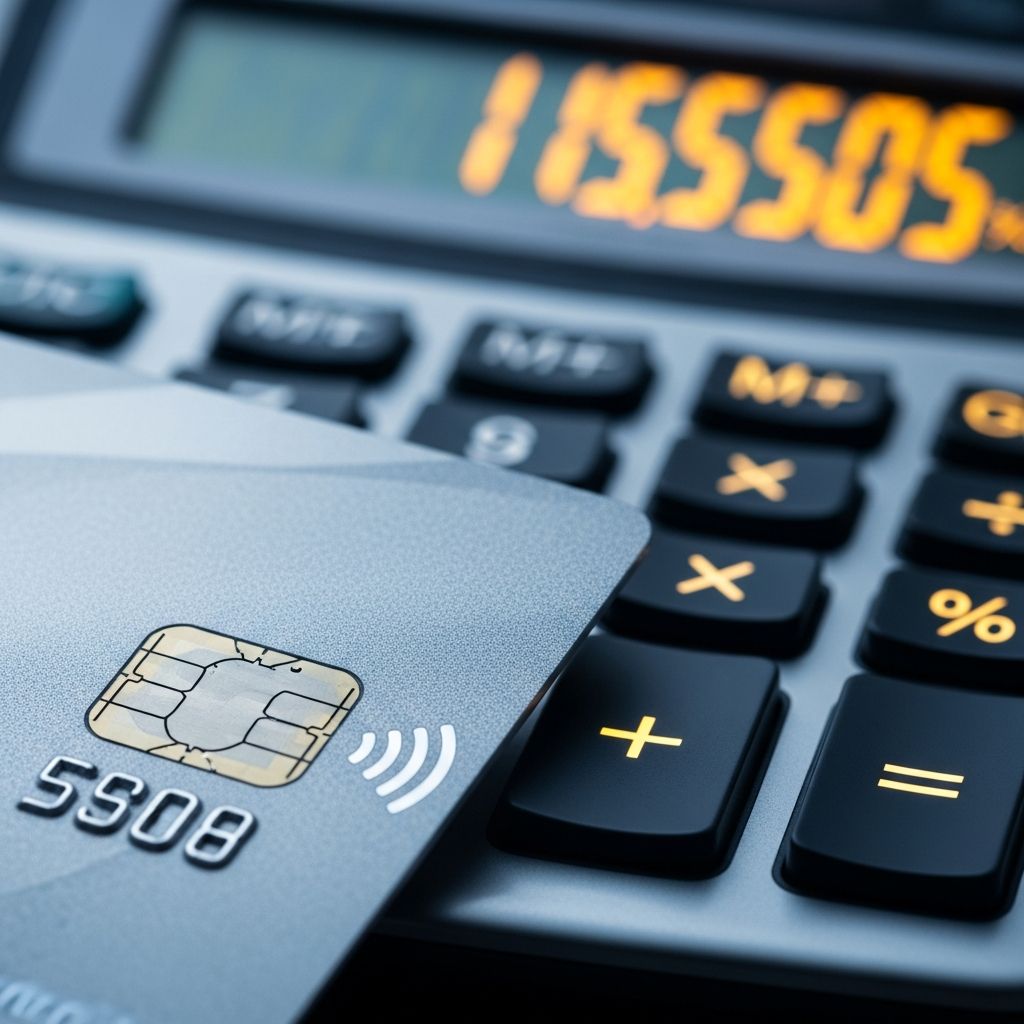
Credit card Annual Percentage Rate (APR) represents the yearly cost of borrowing money when you carry a balance beyond the grace period. Unlike simple interest on savings, this rate compounds daily, turning small balances into significant expenses over time. Grasping APR calculations empowers you to forecast charges, compare cards, and strategize repayments.
Understanding the Fundamentals of Credit Card APR
APR quantifies the total annual expense of credit, expressed as a percentage. For credit cards, it primarily reflects interest on unpaid balances, though some include fees. Issuers apply this rate daily by converting it to a daily periodic rate (DPR), calculated as APR divided by 365. This method ensures charges align with fluctuating balances throughout the billing cycle, typically 28-31 days.
Credit cards often feature multiple APRs: one for purchases, another for cash advances, and possibly promotional rates for balance transfers. The purchase APR applies to everyday spending if not paid in full, while cash advance APRs start immediately without grace periods, often exceeding 25%.
Fixed vs. Variable APR: Key Differences Explained
Credit card APRs come in two forms: fixed and variable. A fixed APR remains constant unless account terms change due to violations like late payments, though it isn’t tied to market indices. Conversely, a variable APR adjusts with benchmarks like the U.S. prime rate plus a margin based on your creditworthiness. Higher credit scores yield lower margins, potentially reducing rates during economic downturns.
| Aspect | Fixed APR | Variable APR |
|---|---|---|
| Rate Stability | Stable unless terms violated | Fluctuates with prime rate |
| Calculation Base | Issuer-set rate | Prime rate + margin |
| Notification | Changes announced in advance | Reflected on statements |
| Example | 15% unchanging | Prime (8%) + 10% = 18% |
Variable rates dominated in 2025, with averages around 20-24% amid steady prime rates, per recent financial data.
Step-by-Step: How to Compute Your Daily Periodic Rate
The DPR is the cornerstone of interest accrual. Convert your APR to decimal form, then divide by 365 (or 360 for some issuers). For a 20% APR: 0.20 / 365 ≈ 0.000548, or 0.0548% daily.
- Locate your APR on the statement or card agreement.
- Divide by 100 for decimal: 20% becomes 0.20.
- Divide by 365: 0.20 / 365 = 0.000548.
- Verify with issuer if using 360-day year.
This rate multiplies against your balance each day, compounding as interest adds to principal.
Mastering Average Daily Balance for Accurate Calculations
Your average daily balance (ADB) averages the ending balance each day in the billing cycle. Include purchases, fees, and prior interest; subtract payments. Days with negative or grace-exempt balances count as zero.
Example: 30-day cycle with balances $1,000 (days 1-10), $1,200 (11-20), $800 (21-30). Total = (10×1000) + (10×1200) + (10×800) = 30,000. ADB = 30,000 / 30 = $1,000.
- Track daily via app or spreadsheet.
- New transactions post to balance immediately.
- Payments reduce it from posting date.
The Complete Formula for Monthly Interest Charges
Monthly interest = DPR × ADB × billing cycle days. Using above: 0.000548 × $1,000 × 30 ≈ $16.44.
For precision:
Interest = (APR / 365) × ADB × Days
Real-world scenario: $2,500 ADB, 18% APR, 28-day cycle.
- DPR: 0.18 / 365 ≈ 0.000493.
- Daily interest: 0.000493 × 2,500 ≈ $1.23.
- Total: $1.23 × 28 ≈ $34.46.
Multiple APRs require separate calculations per category, summed on statements.
Penalty APR: The Cost of Account Infractions
Trigger a penalty APR (up to 29.99%) with late payments, over-limit usage, or returned checks. It applies retroactively to existing balances and new transactions, lasting 6-12 months minimum.
- Avoidance tips: Set autopay for minimums; monitor limits.
- Grace period: Pays off in full waives interest.
Post-2025 regulations cap penalty durations, but rates remain punitive.
Strategies to Minimize or Eliminate APR Impact
Proactive habits slash costs:
- Pay in full monthly: Leverages grace period (20-25 days post-statement).
- 0% intro APR cards: Ideal for large purchases; transfer balances timely.
- Debt payoff methods: Snowball (smallest first) or avalanche (highest APR).
| Method | Pros | Cons |
|---|---|---|
| Snowball | Motivational quick wins | Higher total interest |
| Avalanche | Minimizes interest | Slower visible progress |
Improve credit score for better rates: Pay on time (35% factor), keep utilization under 30%.
Tools and Resources for APR Management
Statements detail APRs, ADB, and charges. Use online calculators from banks or neutrals for simulations. Apps track balances real-time, alerting to high utilization.
Compare cards via sites listing intro offers, rewards vs. APR trade-offs.
Frequently Asked Questions (FAQs)
What if my billing cycle is 31 days?
Adjust formula: DPR × ADB × 31. Cycles vary; check statements.
Does APR include fees?
Credit card APR focuses on interest; separate annual fees listed.
How does prime rate affect my card?
Variable APR = prime + margin. 2025 prime ~7-8%, pushing rates higher.
Can I negotiate a lower APR?
Yes, post-positive history; cite competitors.
What’s the grace period?
Time from statement close to due date; pay full to avoid interest.
Advanced Tips for Long-Term Savings
Balance transfers to 0% cards save thousands; watch transfer fees (3-5%). Consolidate via personal loans at lower fixed rates (10-15%). Automate payments exceeding minimums target principal faster, curbing compounding.
Monitor FICO score monthly; scores above 740 unlock premium cards with sub-15% APRs. In rising rate environments, lock fixed if available.
Tax implications: Interest isn’t deductible for personal cards, unlike mortgages. Budget 1-2% monthly toward high-interest debt.
References
- What is APR on a Credit Card? — TD Bank. 2025. https://www.td.com/us/en/personal-banking/learning/what-is-apr-on-credit-card
- What is APR and How is it Calculated? — Ally Bank. 2025. https://www.ally.com/stories/credit/what-is-apr-and-how-is-it-calculated/
- How Does APR on a Credit Card Work? — Space Coast Credit Union. 2025. https://www.sccu.com/articles/personal-finance/how-does-apr-on-a-credit-card-work
- How Does Credit Card Interest Work? — Santander Bank. 2025. https://www.santanderbank.com/personal/resources/credit-card/how-credit-card-interest-works
- Credit Card Interest Calculator — NerdWallet. 2025. https://www.nerdwallet.com/credit-cards/learn/credit-card-interest-calculator
- What is APR? Types of APR, How to Calculate & Lower It — Bank of America Better Money Habits. 2025. https://bettermoneyhabits.bankofamerica.com/en/credit/what-is-apr
Similar Articles








Read full bio of Sneha Tete