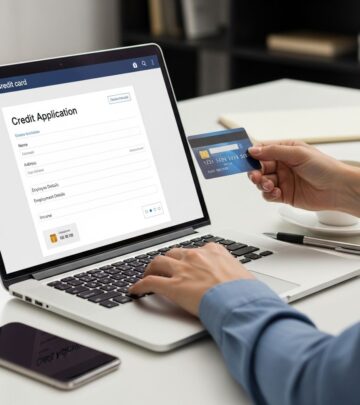
Credit Card Approval: Key Factors Lenders Evaluate
Understand what financial institutions review when assessing your credit card application.

When you submit a credit card application, your request triggers a comprehensive evaluation designed to assess your financial reliability and capacity to repay borrowed funds. Financial institutions have developed sophisticated methods to determine whether approving your application aligns with their risk management strategy. Understanding the specific criteria these lenders examine can help you prepare a stronger application and increase your likelihood of receiving approval.
The Foundation of Credit Evaluation: Your Credit Score
Your credit score represents one of the most critical factors in the approval decision. This numerical rating provides lenders with a snapshot of your credit history and reflects your estimated risk level based on patterns such as payment punctuality and outstanding debt amounts. Each major credit bureau—Equifax, Experian, and TransUnion—maintains separate credit files and calculates scores independently, which means your scores may vary slightly across these three sources.
Credit card issuers typically establish minimum credit score thresholds for each product they offer. These benchmarks vary considerably based on the card’s features and benefits. A score meeting or exceeding the lender’s minimum requirement generally improves your approval chances. However, scoring just above the minimum threshold may result in higher annual percentage rates (APRs) compared to applicants with substantially higher scores.
Consider this credit score classification framework that most issuers use to categorize applicants:
| Credit Score Range | Classification |
|---|---|
| 300 – 629 | Poor/Bad Credit |
| 630 – 689 | Fair/Average Credit |
| 690 – 719 | Good Credit |
| 720+ | Excellent Credit |
Applicants with excellent credit scores often gain access to premium rewards cards, competitive interest rates, reduced annual fees, and higher likelihood of immediate approval. Conversely, if your score falls below a lender’s minimum requirement or you lack established credit history, denial becomes more probable.
Income and Debt Obligations: Financial Capacity Assessment
Beyond credit history, issuers carefully examine your income level to determine whether you possess sufficient financial capacity to manage credit card payments. Most lenders establish minimum income thresholds that applicants must meet or exceed. Your reported income should demonstrate reasonable alignment with your existing debt obligations, which lenders evaluate through your debt-to-income ratio.
When providing income information, you may include various sources beyond traditional employment wages. Many applicants successfully incorporate supplementary income streams such as alimony, child support, investment returns, or retirement benefits, provided you feel comfortable disclosing these sources to the creditor. The key consideration is ensuring your total income adequately supports your overall debt responsibilities.
During the evaluation phase, lenders may verify your stated income through multiple methods. Some institutions access your bank accounts directly—typically with your explicit permission provided during the application process—to confirm deposit patterns and income consistency. This verification step helps lenders confirm that your reported figures align with actual financial activity.
Employment Stability: Demonstrating Reliable Income
Employment history signals your income stability to potential creditors. Lenders prefer applicants who have maintained employment for extended periods, as this pattern suggests consistent earning capacity. Recent job transitions or frequent employment changes may raise concerns about income reliability, potentially affecting approval decisions or offered terms.
If you recently started a new position, consider waiting several months before submitting your application. This waiting period allows you to establish a brief employment track record that strengthens your credibility. For individuals transitioning from military service to civilian employment, clearly communicate this status to the credit card issuer, as many institutions understand and accommodate this particular employment transition.
Unemployment status presents a significant challenge during the approval process. If you’re currently without employment, exploring secured credit card options or waiting until you secure employment may provide better application outcomes.
Application Completeness and Accuracy: The Details Matter
The information you provide on your credit card application undergoes careful review and verification by lenders. Accuracy and thoroughness directly impact approval likelihood. Incomplete applications or misstatements regarding income, housing costs, or other critical details may result in denial, even if other factors support approval.
Before submitting your application, perform a thorough review of all entered information:
- Verify personal identification details match official government documents
- Confirm current and previous address history is accurate
- Double-check income figures and employment information
- Review housing cost estimates for precision
- Ensure phone numbers and email addresses are current and correct
- Validate any additional financial information you’ve included
Should you discover an honest mistake after submitting your application, contact the card issuer immediately to provide corrected information. Proactive communication about errors demonstrates integrity and may prevent automatic denial.
The Multi-Step Automated Review Process
When you submit your application online or by phone, sophisticated automated systems activate to evaluate your eligibility. These algorithms process your information against established lending criteria and can produce decisions ranging from immediate approval to outright denial within minutes. However, the process often takes longer as issuers incorporate multiple evaluation stages.
The typical review sequence includes:
- Address Verification: The system confirms your address exists within the United States and is not a P.O. box, as institutional policy typically requires physical residential addresses
- Credit Score Assessment: Your score is verified to fall within the acceptable range for the specific card you’ve requested
- Credit Report Review: A comprehensive credit report is pulled from one of the major bureaus, revealing payment history, debt burden, recent credit applications, and any delinquencies, collections, or bankruptcy records
- Income and Employment Verification: Your reported income and employment status are confirmed through direct bank account access or other verification methods
Pre-Approval Signals: Understanding Marketing Communications
If you receive unsolicited emails or direct mail offers stating you’re pre-approved or pre-qualified for a credit card, understand that this represents marketing outreach with important implications. While these communications appear promotional, they signal that the issuer has conducted background checks and determined you meet their baseline eligibility criteria.
Pre-approval differs from pre-qualification in scope and rigor. Pre-approval typically involves more thorough evaluation than pre-qualification, often including specific criteria beyond basic credit score ranges, such as your percentage of on-time credit card payments in your established credit history. Receiving a pre-approval offer suggests a stronger likelihood of final approval compared to applying cold without such messaging.
However, pre-approval does not guarantee automatic card issuance. Additional verification steps remain necessary, and if your credit situation materially changes between receiving the offer and submitting your formal application, the issuer may adjust their decision accordingly.
Timeline Expectations: From Application to Card Receipt
Modern credit card approval timelines vary based on your application method and the issuer’s technology infrastructure. Online applications processed through advanced approval systems can generate near-instant decisions, sometimes within minutes. However, physical card delivery typically requires one to two weeks, though some issuers offer expedited shipping options.
Applications submitted through traditional channels—mail or in-person bank branch visits—generally require extended processing periods. These applications cannot leverage automated systems as effectively and necessitate manual review stages.
Applications that receive neither immediate approval nor denial enter a pending status, triggering human review. While this pending period might create uncertainty, it represents an opportunity to contact the issuer proactively and potentially strengthen your case through additional information or clarification.
The Automated Nature of Credit Card Decision-Making
Most credit card applications processed today never receive individual human attention—unless you count artificial intelligence systems. Issuers prioritize automation to handle massive application volumes efficiently. Applications meeting established approval criteria receive automated approvals, while those failing to meet thresholds receive automated denials.
The advantage of automation lies in speed and consistency. Disadvantages emerge when your application presents circumstances that fall outside standard algorithmic parameters. If you find yourself in the pending status category, recognize this as your window to engage directly with a human decision-maker and present additional context that might influence the outcome.
Strategic Preparation Before Applying
Understanding approval factors allows you to strengthen your application before submission:
- Review Your Credit Score: Check your score from all three bureaus and identify any errors that might negatively impact approval chances
- Address Delinquencies: If your credit report shows late payments or collections, focus on establishing a pattern of on-time payments before applying
- Reduce Existing Debt: Lower your outstanding balances to improve your debt-to-income ratio
- Verify Employment Status: Ensure sufficient employment stability before applying, particularly if recently hired
- Gather Documentation: Compile recent pay stubs, tax returns, and bank statements to support income claims if requested during verification
Common Denial Reasons and Mitigation Strategies
Several circumstances frequently result in credit card application denial. Recognizing these patterns helps you address issues before reapplying:
Low Credit Score: If your score falls below the lender’s minimum threshold, work on credit building through secured credit cards, becoming an authorized user on established accounts, or focusing on consistent on-time payments for several months before reapplying.
Insufficient Income: Increase reportable income through additional employment, or explore credit cards with lower income requirements designed for different credit profiles.
High Debt-to-Income Ratio: Accelerate debt repayment to lower your overall obligations relative to income, improving your approval prospects.
Recent Job Changes: Allow sufficient time in your current position to establish employment stability before submitting applications.
Application Errors: Ensure meticulous accuracy in all submitted information, as discrepancies provide justifiable grounds for denial.
Frequently Asked Questions
Will applying for multiple credit cards simultaneously hurt my approval chances?
Multiple applications generate multiple hard inquiries on your credit report, which can temporarily lower your score and signal financial desperation to lenders. Spacing applications across several months produces better outcomes.
Does checking my own credit score impact approval odds?
No. Checking your own credit reports and scores generates soft inquiries that don’t affect your score. This self-monitoring is encouraged and helps you identify errors before applying for credit.
Can I reapply if I’m denied?
Yes, but address the underlying rejection reason first. Reapplying immediately without addressing core issues typically results in another denial. Wait at least three to six months while working to improve the relevant factor—whether that’s credit score, income, or debt reduction.
How important is my employment length?
Employment duration matters considerably. Most lenders prefer applicants with at least one to two years at their current position, though some will approve those with shorter tenures if other factors are strong.
Will being self-employed affect my approval?
Self-employment requires additional documentation to verify income stability. Prepare tax returns from multiple years and business financial statements to demonstrate consistent earning capacity.
References
- How Does the Credit Card Pre-approval Process Work? — Credit Sesame. Accessed February 2026. https://www.creditsesame.com/blog/credit-score/how-does-the-credit-card-pre-approval-process-work/
- How to Get Approved for a Credit Card — Navy Federal Credit Union. October 22, 2024. https://www.navyfederal.org/makingcents/credit-debt/how-to-get-approved-for-a-credit-card.html
- How to Apply for a Credit Card So You’ll Get Approved — NerdWallet. Accessed February 2026. https://www.nerdwallet.com/credit-cards/learn/apply-for-a-credit-card
- What Happens When You Apply for a Credit Card? — Discover. Accessed February 2026. https://www.discover.com/credit-cards/card-smarts/what-happens-when-apply-credit-card/
- What Really Happens When You Apply for a Credit Card — Bankrate. Accessed February 2026. https://www.bankrate.com/credit-cards/advice/what-really-happens-when-you-apply-for-a-credit-card/
- 7 Things Credit Card Issuers Consider When You Apply — myFICO. Accessed February 2026. https://www.myfico.com/credit-education/blog/7-things-credit-card
Similar Articles








Read full bio of Sneha Tete