Credit Balances vs Utilization: Key Differences
Discover how credit card balances differ from utilization rates and master both to boost your credit score effectively.
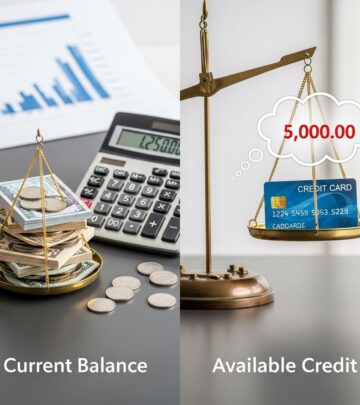
Your credit card’s balance shows what you owe right now, while utilization measures how much of your available credit you’re using as a percentage. Understanding both is essential for managing debt and improving your credit score, as utilization directly influences scoring models.
Defining Credit Card Balances
Credit card balances come in two primary forms: the current balance and the statement balance. Each serves a different purpose in your financial tracking and billing process.
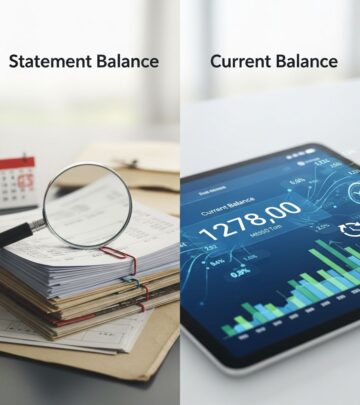
The current balance reflects the total amount owed at any moment. It includes your last statement balance plus recent purchases, payments, fees, or interest charges. You can view this by logging into your online account or app, making it a real-time snapshot of your debt.
In contrast, the statement balance is fixed at the end of your billing cycle, typically a monthly period. This figure determines your minimum payment and is printed on your monthly statement. Even if you make new charges after the statement closes, your bill is based on this snapshot until the next cycle.
Why does this matter? Your payment due date is usually 21-25 days after the statement date. New activity between statement closing and due date increases your current balance but doesn’t alter the billed amount immediately.
Unpacking Credit Utilization
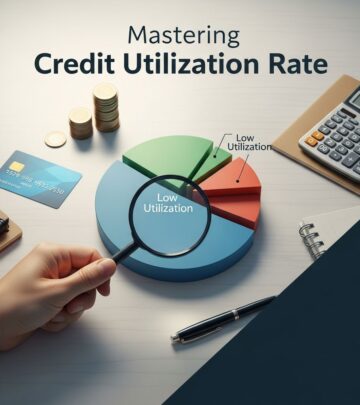
Credit utilization, also known as the credit utilization ratio, is calculated by dividing your credit card balance by your credit limit, then multiplying by 100 for a percentage. For instance, a $2,000 balance on a $10,000 limit yields 20% utilization ($2,000 ÷ $10,000 = 0.2 × 100 = 20%).
This metric applies to revolving credit like credit cards. Credit bureaus receive data from issuers near the end of your billing cycle, so they typically use your statement balance—not current balance—for utilization calculations.
Low utilization signals responsible credit use to lenders. Experts recommend keeping it under 30% across all cards for optimal credit health. High ratios, especially over 30%, can harm scores by suggesting over-reliance on credit.
How Balances Influence Utilization Calculations
Balances and utilization interconnect closely. Credit reports pull statement balances reported by issuers, which may lag behind your live current balance. If you charge heavily post-statement, your reported utilization stays low until the next report.
Consider per-account vs overall utilization:
- Per-account utilization: Each card’s balance divided by its limit.
- Overall utilization: Total balances across all cards divided by total limits.
Both factor into scores like FICO and VantageScore, with overall often weighted more heavily.
| Scenario | Card Limit | Balance | Per-Account % |
|---|---|---|---|
| Card 1 | $5,000 | $500 | 10% |
| Card 2 | $10,000 | $2,000 | 20% |
| Total | $15,000 | $2,500 | 16.7% |
In this example, overall utilization is 16.7%, better than the highest per-account rate.
Why These Metrics Drive Your Credit Score
Payment history leads FICO scores at 35%, but amounts owed—including utilization—account for 30%. Low utilization demonstrates control over debt.
High utilization raises red flags:
- Over 30%: Potential score drops.
- Over 50%: Significant negative impact.
- Near 100%: Severe damage, even with on-time payments.
Even paid-off cards affect utilization if closed with a balance reported. Once zeroed, closed accounts drop from calculations, potentially raising ratios by removing available credit.
Practical Strategies to Lower Utilization
Improving utilization boosts scores quickly. Key tactics include:
- Pay down balances: Target high-utilization cards first. Pay before statement closing to report lower figures.
- Request limit increases: Higher limits lower ratios if spending stays same. Approval depends on history.
- Avoid closing old cards: Preserve total available credit.
- Distribute charges: Spread spending across cards for balanced per-account ratios.
- Make multiple payments: Mid-cycle payments reduce current balance, though reported is statement-based.
Track via free credit monitoring. Aim for under 10% for top scores, though under 30% suffices for most.
Common Pitfalls and Myths
A widespread myth: Carry a small balance to ‘build credit.’ Untrue—paying in full optimizes utilization at 0% without hurting scores.
Another error: Ignoring per-account ratios. A maxed single card spikes overall utilization, even if total is low.
Closed accounts with balances linger in reports until paid off, inflating utilization. Always clear debts before closure.
Real-World Examples and Scenarios
Scenario 1: Jane has $1,500 on a $5,000 limit (30%). She pays $1,000 before statement close, dropping to $500 (10%). Her score rises noticeably next month.
Scenario 2: Mike closes a $0 balance card with $10,000 limit. His remaining $20,000 limits now carry $4,000 (20% to 20% unchanged, but less buffer if spending rises).
Scenario 3: Multiple cards—focus overall: Total $25,000 limits, $6,000 balances = 24%. Safe zone.
Tools and Monitoring Tips
Use issuer apps for balances/limits. Credit bureau sites or apps show reported utilization. Set alerts for high usage.
Annualcreditreport.com provides free weekly reports to verify data.
Frequently Asked Questions
What balance is used for credit utilization?
Statement balance as reported to bureaus at billing cycle end, not current balance.
Is 0% utilization good?
Yes, but some activity shows credit use. 1-10% ideal for activity without high ratio.
Does utilization affect mortgage approval?
Yes, lenders review it alongside scores.
How often do issuers report?
Monthly, near statement date.
Can I improve utilization without spending less?
Yes, via limit increases or timely payments.
Long-Term Financial Planning
Integrate balance/utilization management into budgeting. Automate payments to avoid interest, review statements weekly. As limits grow with good history, utilization eases naturally.
For debt-heavy situations, prioritize high-interest cards. Balance transfers can temporarily lower utilization if managed well.
Building credit history pairs with low utilization: Use cards regularly, pay off fully. This combo yields strong scores over time.
References
- What Is the Difference Between Credit Card Balance and Utilization? — Experian. 2023. https://www.experian.com/blogs/ask-experian/credit-card-balance-vs-utilization/
- How is credit card utilization calculated? — Chase. 2024. https://www.chase.com/personal/credit-cards/education/basics/how-to-calculate-credit-utilization
- What is credit card utilization and how does it affect your credit scores? — Credit Karma. 2024. https://www.creditkarma.com/credit/i/credit-card-utilization-and-your-credit-score
- Understanding Credit Utilization — American 1 Credit Union. 2024-05-02. https://www.american1cu.org/financial-resources/understanding-credit-utilization
- Understanding Accounts That May Affect Your Credit Utilization Ratio — myFICO. 2023. https://www.myfico.com/credit-education/blog/accounts-credit-utilization-ratio
- Credit utilization ratio: What you need to know — Capital One. 2024. https://www.capitalone.com/learn-grow/money-management/credit-utilization-and-credit-score/
Similar Articles








Read full bio of medha deb