Payment Relief During COVID: Credit Report Impact
Understanding how pandemic payment deferrals affect your credit history and score

When financial hardship strikes, many borrowers turn to payment relief options to stay afloat. During the COVID-19 pandemic, millions of Americans utilized deferrals and forbearance agreements to pause or reduce their loan and credit card payments. However, confusion persists about whether these relief measures damage credit scores and payment histories. Understanding the distinction between protected relief and unprotected missed payments is essential for anyone who participated in pandemic-era payment programs.
The Legal Framework Protecting COVID-Related Payment Relief
Congress enacted the Coronavirus Aid, Relief, and Economic Security (CARES) Act in March 2020 to provide financial assistance during the pandemic emergency. A critical component of this legislation included specific credit protections for borrowers who entered into formal payment relief agreements. The law established that if you negotiated a payment deferral or forbearance agreement before missing any payments, your lender was legally obligated to report your account as current to the three major credit reporting bureaus: Equifax, Experian, and TransUnion.
These protections applied to a covered period spanning from January 31, 2020 through August 8, 2023. The intent was to ensure that individuals facing temporary financial difficulties due to the pandemic would not suffer permanent damage to their creditworthiness simply for utilizing available relief programs.
Understanding the Difference Between Payment Relief Types
Payment relief takes multiple forms, and each operates differently from both a financial and credit reporting standpoint. Forbearance and deferment are the two primary options, though they carry distinct characteristics and implications.
Forbearance suspends or reduces your monthly loan payments temporarily, typically available for federal student loans, mortgages, and credit cards. During forbearance, interest continues to accrue on your loan balance in most cases. At the end of the forbearance period, you must resume regular payments and typically repay the suspended amounts through a lump sum or as installments added to your regular monthly payment schedule.
Deferment similarly pauses or reduces payments but is generally available for federal student loans, auto loans, and personal loans. A key distinction is that during deferment of certain federal student loans, interest does not accrue. Additionally, skipped payments are added to the end of the loan term rather than requiring repayment through an accelerated schedule.
| Feature | Forbearance | Deferment |
|---|---|---|
| Available For | Federal student loans, mortgages, credit cards | Federal student loans, auto loans, personal loans |
| Payment Status | Payments paused or reduced | Payments paused or reduced |
| Interest Accrual | Yes, in most cases | Yes, except for specific federal student loans |
| Repayment Structure | Lump sum or added to monthly payments | Added to end of loan term |
| Credit Impact (with agreement) | Should not affect credit score if terms followed | Should not affect credit score if terms followed |
When Credit Reports Should Remain Unaffected
If you obtained a formal payment relief agreement before falling behind on payments, your lender was required to report your account as current during the covered period, meaning your credit score should not suffer. The account must have been current as of January 31, 2020 for these protections to apply.
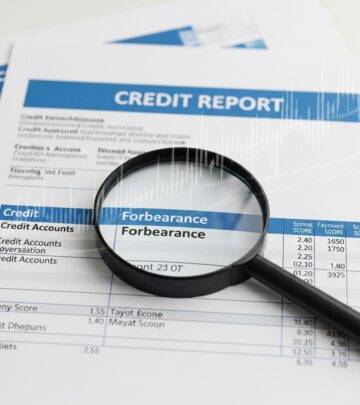
Additionally, if you entered forbearance and adhered to your agreement terms, your credit scores should remain unaffected as long as you maintained the agreed-upon payment schedule and made up any suspended payments as required. While your account might be noted as being in forbearance on your credit report, this notation is not considered negative information and does not factor into credit score calculations.
The Impact of Missed Payments Without an Agreement
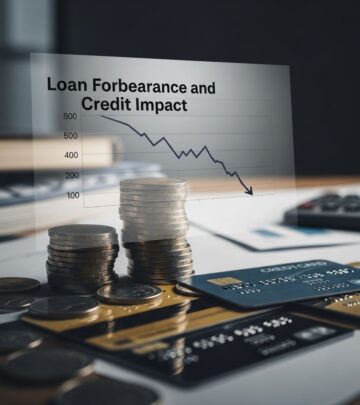
The situation changes dramatically if you missed payments without first establishing a formal relief agreement. In such cases, your lender would report your account as delinquent to the credit bureaus, resulting in significant credit score damage. A single late payment can reduce an otherwise excellent credit score by as much as 100 points and take considerable time to recover.
Critically, the CARES Act protections do not apply retroactively. If your account became delinquent before you negotiated a relief agreement, those missed payments remain on your record and will continue to impact your credit score. The protections only shield borrowers who had relief agreements in place before payments were missed.
Real-World Problems: Reporting Errors and Lender Mistakes
Despite legal protections, hundreds of consumers reported that lenders incorrectly placed negative marks on their credit accounts during the pandemic relief period. Some companies reported deferred payments as late payments rather than listing accounts as current, directly violating CARES Act requirements.
These reporting errors had serious consequences. Incorrect negative marks affected borrowers’ ability to obtain favorable interest rates on new loans, qualify for mortgages, rent apartments, or even secure employment in some cases. While some lenders and credit card companies voluntarily offered payment deferrals without credit impact, others failed to comply with their legal obligations.
Special Provisions for Student Loan Borrowers
Federal student loan holders received particularly robust protections during the pandemic. Beyond standard payment deferrals, the student loan payment pause included a significant provision: the removal of derogatory marks from credit reports for borrowers who had previously defaulted on federal student loans. This provision meant that borrowers with damaged credit histories from prior defaults experienced mechanical improvements in their credit scores simply from having those negative marks eliminated.
Research shows that borrowers with previous student loan defaults saw their median credit scores increase by approximately 27 points by mid-2021 compared to borrowers with clean payment records, primarily because their delinquent marks were removed. This improvement in credit access had tangible benefits beyond credit score calculations, enabling these borrowers to qualify for other forms of credit they might otherwise have been denied.
Proactive Steps to Protect Your Credit Record
If you participated in pandemic-era payment relief, taking several precautionary steps can help ensure your credit report accurately reflects your situation.
- Request Your Credit Reports: Obtain free copies of your credit reports from all three bureaus at AnnualCreditReport.com and review them carefully for any errors or negative marks that should not appear given your relief agreement.
- Document Your Agreement: Keep detailed records of any forbearance or deferment agreements, including dates, terms, and communication confirming the agreement was finalized before you missed any payments.
- File Disputes for Errors: If your credit report shows late payments despite having a valid relief agreement, immediately file disputes with the credit bureaus and provide copies of your agreement documentation as proof.
- Add a Statement of Circumstances: If negative marks were placed on your report despite a relief agreement, you can add a permanent comment to your credit file explaining the pandemic’s impact, though this will not directly improve your credit score.
- Monitor Your Score Regularly: Use free credit monitoring tools to track your credit score and catch any errors quickly, allowing more time for disputes to be resolved.
Frequently Asked Questions
Q: Will a forbearance or deferment agreement hurt my credit score?
A: If you had a formal agreement in place before missing payments and your account was current on January 31, 2020, your credit score should not be affected. Your lender is required to report your account as current during the relief period.
Q: What if I missed payments without getting an agreement first?
A: Without a pre-arranged relief agreement, missed payments are reported as delinquencies and will damage your credit score. CARES Act protections do not apply retroactively.
Q: How long do late payments stay on my credit report?
A: Late payments typically remain on your credit report for seven years from the original delinquency date, though their impact on your credit score diminishes over time as newer information is added.
Q: Can I dispute incorrect late payments from my relief period?
A: Yes. If your credit report shows late payments despite a valid relief agreement, file disputes with the credit bureaus and provide documentation of your agreement. The bureaus must investigate and correct the error if your claim is valid.
Q: What is a disaster code on a credit report?
A: Some lenders may mark accounts with a special code indicating disaster-related hardship. While FICO scores do not factor in disaster codes, VantageScore will disregard late payments for accounts with such codes, resulting in a potentially higher score under that model.
Long-Term Credit Recovery
For those whose credit was negatively impacted despite relief agreements, recovery is possible. Credit scores improve naturally as more recent positive payment history accumulates and older negative marks age. Additionally, successfully disputing incorrect negative marks can result in their removal, providing more immediate improvement.
The pandemic relief protections under the CARES Act represented a significant intervention in normal credit reporting practices, prioritizing borrower welfare during an unprecedented crisis. Understanding these protections and actively monitoring your credit reports helps ensure you received the protection the law intended to provide.
References
- Credit Protections Under the CARES Act — Nolo. 2020-2026. https://www.nolo.com/legal-encyclopedia/credit-protections-under-the-coronavirus-cares-act.html
- CARES Act Late Payment Forgiveness: Who Qualifies & How? — The Credit People. 2020-2026. https://www.thecreditpeople.com/credit/cares-act-late-payment-forgiveness-explained
- Does Forbearance Affect Credit? — Experian. 2020-2026. https://www.experian.com/blogs/ask-experian/how-forbearance-affects-credit/
- Is your credit score suffering because of deferments during COVID-19? — 6ABC. 2020-2026. https://6abc.com/post/is-your-credit-score-suffering-because-of-covid-19-deferments/6391863/
- Here’s how the COVID-19 pandemic may have hurt your credit score — KSAT. 2021-03-25. https://www.ksat.com/news/local/2021/03/25/heres-how-the-covid-19-pandemic-may-have-hurt-your-credit-score/
- How the Student Loan Payment Pause Affected Borrowers’ Credit Access and Credit Use — Federal Reserve Bank of Boston. 2025. https://www.bostonfed.org/publications/current-policy-perspectives/2025/how-the-student-loan-payment-pause-affected-borrowers-credit-access-and-credit-use.aspx
- Protecting your credit during the coronavirus pandemic — Consumer Finance Protection Bureau. 2020-2026. https://www.consumerfinance.gov/about-us/blog/protecting-your-credit-during-coronavirus-pandemic/
Similar Articles








Read full bio of medha deb