Why You Can’t Buy Cigarettes at Most Costco Stores
Costco phases out tobacco sales at most locations due to low margins and operational challenges.
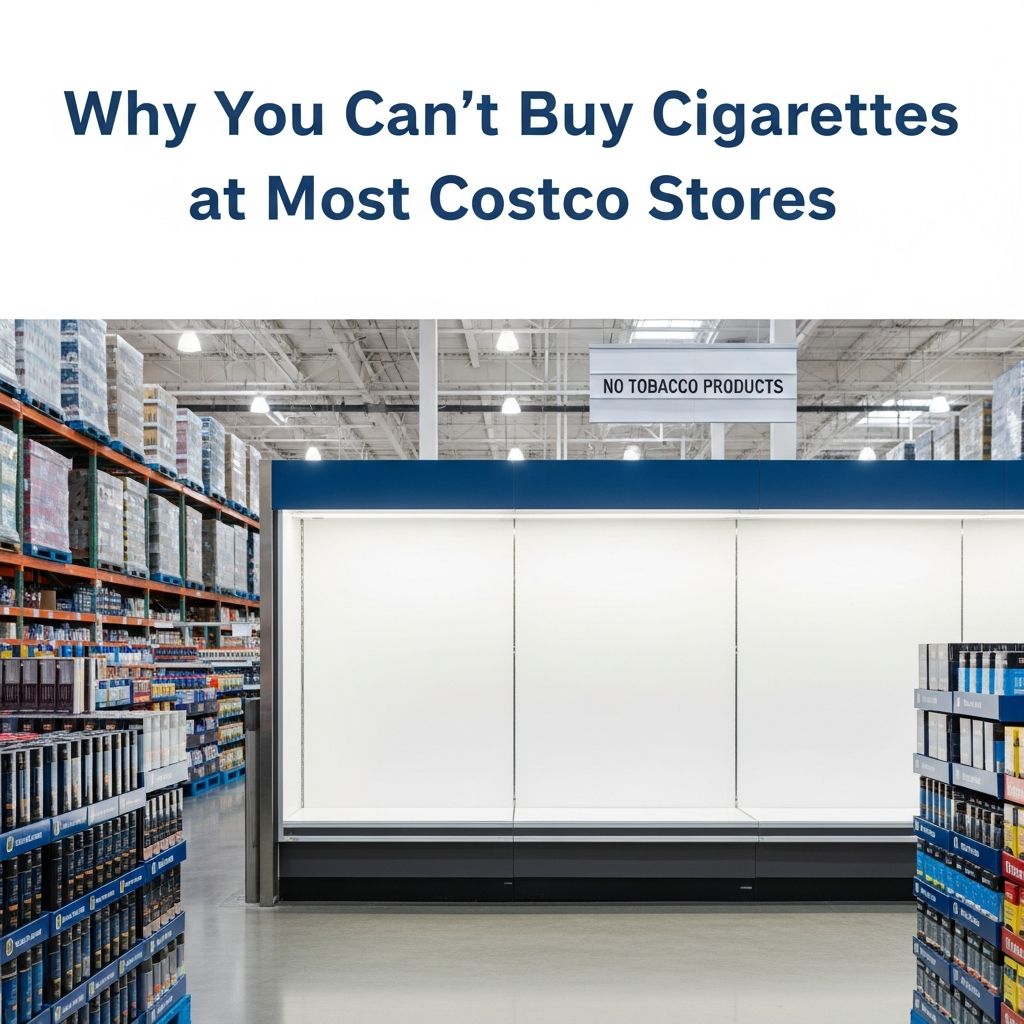
Why You Can’t Buy Cigarettes at Most Costco Stores Anymore
In a significant shift in the retail landscape, most U.S. Costco locations have quietly discontinued the sale of tobacco products, marking another notable blow to the tobacco industry. The wholesale retail giant has been systematically phasing out sales of all tobacco products around the country over the past several years, continuing a trend that reflects changing business priorities and evolving consumer behaviors.
The Quiet Phase-Out: How Costco Made Its Move
Unlike other major retailers that have made headline-grabbing announcements about exiting the tobacco business, Costco took a low-key approach to its withdrawal from tobacco sales. The company began reducing tobacco products from its shelves several years ago without publicizing the decision widely. True to its no-frills corporate culture, Costco made the strategic decision to phase out these products gradually across its warehouse network.
A Costco spokesperson revealed that the move began quietly “several years ago” and was “primarily a business decision.” Rather than making a public relations push or seeking credit for the transition, the company simply reallocated shelf space to more profitable merchandise. Out of Costco’s 488 U.S. locations, only 189 warehouses continue to sell tobacco products, meaning that approximately 299 stores have already stopped carrying cigarettes and other tobacco items.
Understanding the Business Rationale
Costco’s decision to phase out tobacco sales was driven by several compelling business factors that made the continued sale of these products untenable for the wholesale retailer. The company carefully evaluated the economics of tobacco sales and determined that the disadvantages significantly outweighed any benefits.
Low Profit Margins
The primary driver behind Costco’s exit from tobacco sales was the extremely low profit margin associated with these products. Tobacco represents a very low margin business, meaning that after accounting for wholesale costs, storage, and handling, the profit per unit sold is minimal. For a company focused on maximizing warehouse efficiency and profitability, dedicating valuable shelf space to low-margin items made little financial sense.
High Theft and Security Concerns
Tobacco products have historically represented a significant theft problem for retailers. The portable nature of cigarette packages combined with their consistent demand and resale value make them attractive targets for shoplifters. Costco found that the high theft rates associated with tobacco sales increased operational costs and required additional security measures, further eroding already-thin profit margins.
A particular concern for Costco involved customers purchasing cigarettes in bulk at lower prices from low-tax states like Virginia and reselling them on the black market. This practice created additional legal and operational headaches for the company, drawing it into crime-fighting operations that detracted from its core business mission.
Labor-Intensive Regulations
The sale of tobacco products is subject to increasingly complex municipal and state regulations that vary dramatically by location. These regulations cover age verification, packaging, display requirements, and numerous other compliance issues. Managing these varying local regulations across hundreds of warehouse locations created significant operational complexity and required dedicated labor to ensure compliance. Costco determined that the labor intensity required to manage tobacco sales across its diverse geographic footprint was not justified by the minimal revenue generated.
Space Reallocation Strategy
Perhaps most importantly, Costco recognized an opportunity to better utilize its valuable warehouse space. The square footage previously dedicated to tobacco products could be repurposed for higher-margin merchandise that better serves customer needs and drives greater profitability. This strategic reallocation of space represents a more efficient use of Costco’s real estate and inventory management capabilities.
By removing tobacco products, Costco could focus on expanding inventory for categories where it could achieve better margins and serve its membership base more effectively. This business-focused approach contrasts sharply with other retailers that exited tobacco for public health and corporate values reasons.
Impact on the Retail Landscape
Costco’s decision to phase out tobacco sales has significant implications for the broader retail ecosystem. The company’s wholesale business centers, which sell products in bulk to small retailers and convenience stores, had been a major source of tobacco inventory for local convenience stores and small retailers. The reduction of tobacco availability through Costco’s business centers has disrupted supply chains for smaller retailers that relied on this wholesale channel.
Benefits for Dollar General and Other Retailers
The news has been particularly beneficial for retailers like Dollar General, which continue to sell tobacco products. As major retailers exit the tobacco business, smaller retailers that maintain these sales gain a competitive advantage by serving the tobacco-purchasing customer base. This mirrors the situation that occurred when CVS made its high-profile exit from tobacco sales in 2014, which benefited competing retailers that continued to stock these products.
Comparison with CVS’s Approach
While Costco’s decision was primarily business-driven, CVS Health’s 2014 exit from tobacco sales was motivated by different considerations. CVS framed its decision as being inconsistent with its corporate mission to promote health and wellness. The company announced it would remove all tobacco products by October 1, 2014, even exiting a month early. CVS’s announcement drew widespread support, including commendation from President Barack Obama, because it aligned with the company’s repositioning as a health-focused retailer.
Costco’s approach is notably different. Rather than positioning itself as a health advocate, Costco is making a straightforward business calculation that tobacco products are no longer worth the operational hassle and workspace commitment.
Timeline and Future Plans
Costco has indicated that it does not expect tobacco products to disappear from all its warehouses “anytime soon.” The company is continuing its gradual phase-out strategy, pulling tobacco products from additional locations as circumstances permit. During its recent second-quarter earnings call, Costco reported that tobacco sales had declined by a “low double-digit” percentage as the company “continues to eliminate tobacco SKUs from various locations.”
The gradual nature of this transition reflects Costco’s cautious approach. Rather than making an abrupt announcement and immediate shift, the company is allowing the phase-out to occur organically across its warehouse network, adjusting to local conditions and customer preferences in different markets.
Consumer and Market Trends Supporting the Decision
Several broader trends in the consumer marketplace support Costco’s decision to exit tobacco sales. Smoking rates in the United States have declined significantly over recent decades, and particularly younger consumers are demonstrating decreased interest in traditional cigarettes.
Recent regulatory changes have further accelerated this trend. California’s decision to increase the legal smoking age to 21 is one example of regulations that make tobacco sales increasingly complicated for retailers while simultaneously reducing the addressable market for these products. As more states consider similar changes, selling tobacco becomes an increasingly niche business with limited growth potential.
Additionally, despite the rise of alternative nicotine delivery systems like vaping and e-cigarettes, consumers overall are trending away from traditional tobacco use. This long-term structural decline in tobacco consumption means that retailers like Costco can safely reduce their commitment to these products without sacrificing long-term revenue streams.
Broader Retail Implications
Costco’s quiet exit from tobacco sales reflects a broader shift in retail strategy. Target similarly exited the tobacco business approximately 20 years ago, recognizing that tobacco represented a tiny percentage of total sales while creating disproportionate regulatory and operational headaches.
As major retailers withdraw from tobacco sales, the customer experience of purchasing cigarettes continues to shift. Rather than convenient one-stop shopping at large retailers, tobacco purchasers increasingly must visit dollar stores, independent convenience stores, or specialized retailers to buy these products. This fragmentation of the shopping experience may further encourage some consumers to reconsider their tobacco consumption.
Frequently Asked Questions
Q: When did Costco start phasing out tobacco sales?
A: Costco began reducing tobacco products from its shelves approximately three to four years before publicly discussing the decision, making it a quiet, gradual transition rather than an abrupt announcement.
Q: Does Costco still sell any tobacco products?
A: Yes, 189 of Costco’s 488 U.S. locations continue to sell tobacco products, though the company expects to continue reducing availability over time.
Q: Why didn’t Costco make a public announcement about exiting tobacco sales?
A: Costco follows a no-frills corporate culture and doesn’t publicize business decisions it considers routine. A spokesperson stated that “We don’t do releases at Costco, they are a waste of money.”
Q: How does Costco’s decision compare to CVS’s exit from tobacco?
A: While CVS framed its 2014 exit as a health and values decision, Costco’s move is purely business-driven, focusing on low margins, high theft, and labor-intensive regulations.
Q: What retailers are benefiting from Costco’s tobacco phase-out?
A: Dollar General, independent convenience stores, and other retailers that continue to sell tobacco products are benefiting as customers seek alternative purchasing locations.
References
- Why You Can’t Buy Cigarettes at Most Costco Stores Anymore — Money.com. Published 2025. https://money.com/costco-stops-selling-cigarettes-tobacco/
- Costco phasing out tobacco sales in most stores — Retail Dive. Published 2025. https://www.retaildive.com/news/costco-phasing-out-tobacco-sales-in-most-stores/415654/
- Costco Phasing Out Tobacco Sales — Convenience Store News. Published 2025. https://csnews.com/costco-phasing-out-tobacco-sales
- The Legal Smoking Age is 21 Nationwide — U.S. Food and Drug Administration. Published 2020. https://www.fda.gov/tobacco-products/retail-sales-tobacco-products/tobacco-21
- CVS to Stop Selling Tobacco Products in All CVS/pharmacy Locations by October 1, 2014 — CVS Health Newsroom. Published February 2014. https://www.cvsnews.com/news-and-insights/press-releases/cvs-caremark-will-stop-selling-all-tobacco-products-in-all-cvs-pharmacy-locations-by-october-1-2014
Similar Articles








Read full bio of medha deb