Cost vs. Expense: What Is the Difference?
Master the crucial distinction between costs and expenses for accurate financial management.
Understanding Cost vs. Expense: A Comprehensive Guide
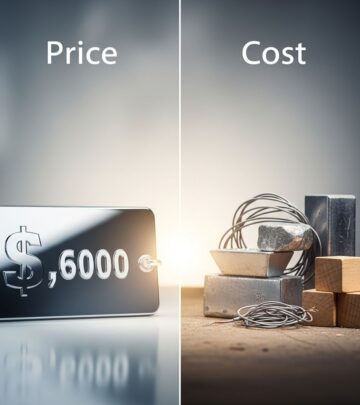
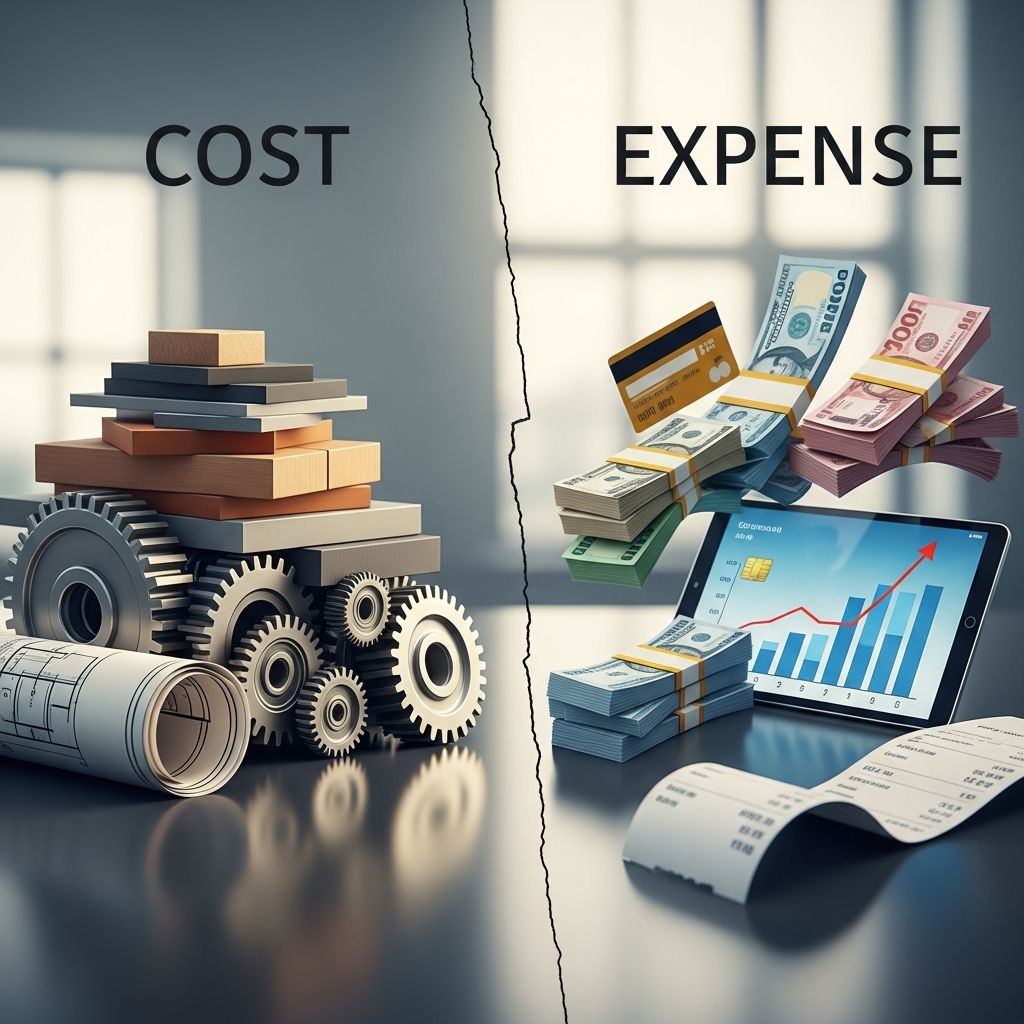
One of the most fundamental distinctions in accounting and business finance is the difference between a cost and an expense. While many people use these terms interchangeably, they represent fundamentally different concepts in accounting. Understanding this distinction is critical for accurate financial reporting, tax compliance, and sound business decision-making. A cost represents the amount of money or resources you spend to acquire or produce something, while an expense represents the portion of that cost that has been consumed or used up during business operations.
Defining Cost
A cost is fundamentally defined as the total investment or expenditure made to acquire, produce, or set up an asset or service. When you purchase something for your business, that initial outlay is recorded as a cost. This cost includes not only the purchase price but also all associated expenses necessary to bring the asset into usable condition, such as sales taxes, shipping fees, and installation charges.
The critical characteristic of a cost is that it does not necessarily reflect consumption. When you incur a cost, you are investing resources with the expectation that those resources will provide benefits over a period of time. Because the benefits have not yet been realized or consumed, the cost is typically recorded as an asset on the balance sheet rather than immediately impacting profit and loss.
Examples of costs include the purchase of equipment, inventory, supplies, vehicles, and real estate. In each case, you have expended resources, but the acquired item has not yet been fully utilized in business operations. The cost represents the value of what you have acquired, held in asset form until it is eventually consumed.
Understanding Expense
An expense, by contrast, is a cost that has been consumed, used up, or allocated to generate revenue during a specific accounting period. When a cost is converted to an expense, it appears on the income statement as a reduction to revenues. This conversion happens when the asset provides its benefits to the business through actual use in revenue-generating activities.
Expenses are fundamentally tied to the matching principle in accounting, which requires that revenues and the expenses incurred to generate those revenues be recognized in the same accounting period. This ensures that financial statements accurately reflect the profitability of business operations during a specific timeframe.
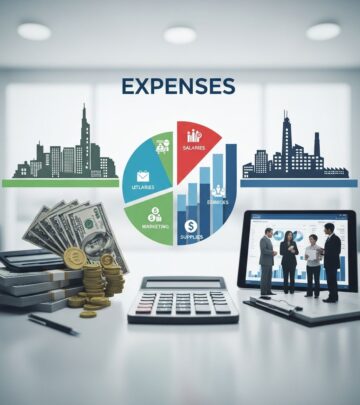
Examples of expenses include wages paid to employees, rent for office space, utilities consumed, depreciation of equipment, cost of goods sold, insurance premiums, and supplies used in daily operations. Each of these represents a cost that has been consumed in the process of conducting business and generating revenue.
Key Differences Between Cost and Expense
Timing and Recognition
The most fundamental difference between costs and expenses relates to timing. A cost is incurred when resources are expended to acquire something, while an expense is recognized when that asset is consumed or used up. A cost may be incurred in one accounting period and not become an expense until a subsequent period or even multiple periods later.
For example, if you purchase office equipment in January for $50,000, that is a cost incurred in January. However, if that equipment has a 10-year useful life, it becomes an expense gradually over 10 years through depreciation charges. Each year, a portion of the original cost is converted into a depreciation expense on the income statement.
Balance Sheet vs. Income Statement
Costs are initially recorded on the balance sheet as assets because they represent future benefits to the business. They remain on the balance sheet until they are consumed, at which point they are transferred to the income statement as expenses. This distinction is crucial because it affects how financial position and profitability are presented.
When you purchase inventory for $100,000, that entire amount is recorded as an asset (inventory) on the balance sheet. As inventory is sold, the cost of that inventory is transferred to the income statement as cost of goods sold (an expense). If half the inventory is sold and half remains, then $50,000 remains as an asset while $50,000 becomes an expense.
Impact on Profitability
Because costs appear on the balance sheet and expenses appear on the income statement, they have different impacts on reported profitability. Properly classifying items as costs rather than immediate expenses allows businesses to more accurately reflect their profitability in each period. If all costs were immediately expensed, profitability would be artificially depressed in the period when the cost is incurred, rather than spread across the periods when the asset actually provides benefits.
Scope and Nature
Cost is a broader concept that encompasses all outflows of resources, while expense is a narrower subset specifically related to the consumption of resources in generating revenue. All expenses are costs, but not all costs are expenses—at least not immediately.
A cost can be capital in nature (resulting in the acquisition of a long-term asset) or revenue in nature (relating to the current period’s operations). By contrast, an expense always relates to the current period and the process of generating revenue during that period.
Capitalization vs. Expensing
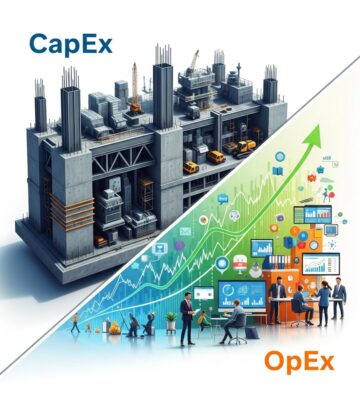
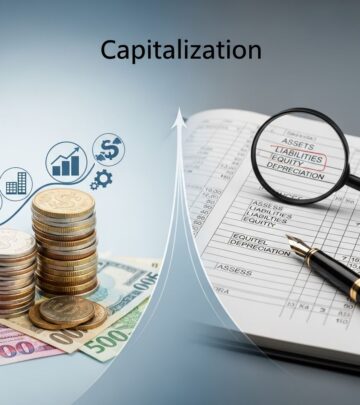
One of the most important accounting decisions involves whether to capitalize a cost (record it as an asset) or expense it immediately (record it as an expense). This decision is typically based on the useful life of the item being acquired.
When to Capitalize
Costs that are expected to provide benefits extending more than one year into the future are typically capitalized. These are recorded as assets on the balance sheet and are gradually converted to expenses through depreciation or amortization over their useful life. Examples include:
- Buildings and real estate
- Equipment and machinery
- Vehicles
- Technology and software systems
- Improvements that extend asset life
When to Expense
Costs that provide benefits only within the current accounting period or are expected to be consumed within one year are typically expensed immediately. These costs appear on the income statement in the period they are incurred. Examples include:
- Office supplies used during the month
- Utilities and rent
- Employee wages and salaries
- Marketing and advertising
- Repairs and maintenance
Real-World Examples
Example 1: Delivery Truck
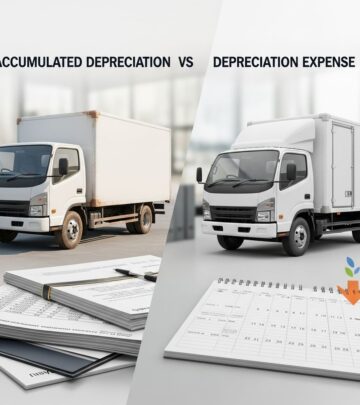
A company purchases a delivery truck for $40,000. When the truck is purchased, the entire $40,000 is recorded as a cost on the balance sheet in the asset account “Delivery Truck.” However, as the truck is used in business operations over its estimated 5-year useful life, the cost is gradually converted to depreciation expense. Each year, approximately $8,000 (assuming straight-line depreciation) appears as an expense on the income statement, while the corresponding value on the balance sheet is reduced.
Example 2: Office Supplies
A company purchases $10,000 worth of office supplies. Initially, this is recorded as a cost (inventory) on the balance sheet. As supplies are used during the month, the amount used is transferred to supplies expense on the income statement. If 1,500 units costing $5 each are used, $7,500 becomes an expense, while the remaining $2,500 in unused supplies remains on the balance sheet as an asset.
Example 3: Manufacturing Equipment
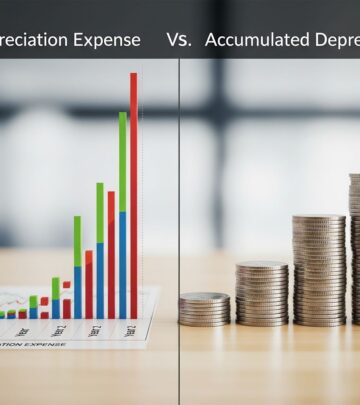
A manufacturing company purchases a specialized machine for $100,000. This cost is capitalized and recorded as a fixed asset. Over the machine’s 10-year useful life, it is depreciated at $10,000 per year. Each year, $10,000 is recorded as depreciation expense on the income statement, while the asset value on the balance sheet is reduced by the accumulated depreciation.
Why This Distinction Matters for Business
Accurate Financial Reporting
Properly distinguishing between costs and expenses ensures that financial statements accurately reflect the company’s financial position and operational performance. When costs are misclassified as expenses, profitability is artificially depressed in the current period. When expenses are not recognized in a timely manner, profitability is artificially inflated.
Tax Implications
The classification of items as costs versus expenses has significant tax consequences. Generally, only expenses can be deducted from business income to reduce taxable income. Costs that are capitalized as assets cannot be immediately deducted; instead, deductions occur over time through depreciation or amortization. Understanding these distinctions is essential for tax planning and compliance.
Business Decision-Making
Misunderstanding the difference between costs and expenses can lead to poor business decisions. For example, if a business incorrectly expensed a $100,000 equipment purchase immediately, management might see a dramatic drop in profitability and potentially make unnecessary cuts to spending. By properly capitalizing the equipment and recognizing the expense over its useful life, management can more accurately assess the company’s performance and make better strategic decisions.
Financial Analysis and Performance Evaluation
Analysts and investors rely on proper cost and expense classification to evaluate company performance. Comparing profitability metrics between periods is only meaningful when costs and expenses are consistently and correctly classified. Inconsistent classification makes it difficult to identify true operational trends.
The Matching Principle
The matching principle is a fundamental accounting concept that requires expenses to be recognized in the same period as the revenues they help generate. This principle is directly related to the cost-versus-expense distinction. When a cost is converted to an expense, it is matched to the revenue it produces, ensuring that financial statements accurately reflect profitability for each period.
For example, inventory is held as a cost (asset) until it is sold. When the sale occurs, the inventory cost is immediately converted to cost of goods sold (an expense) and matched against the revenue from that sale. This ensures that the profitability of each transaction is immediately apparent on the income statement.
Cost Accounting vs. Financial Accounting
It is important to note that the cost-versus-expense distinction is primarily relevant to financial accounting. In management accounting or cost accounting, which is used for internal business planning and decision-making, costs are tracked and allocated in different ways that may not follow the same rules as financial accounting. Managers might track all expenditures as costs regardless of when they become expenses for financial reporting purposes.
Common Mistakes to Avoid
Mistake 1: Immediately Expensing Large Capital Purchases — One of the most common errors is recording the full cost of equipment or other long-term assets as an expense when purchased, rather than capitalizing and depreciating them over time. This distorts profitability and violates accounting standards.
Mistake 2: Capitalizing Short-Term Operating Costs — Conversely, recording routine operating expenses as assets is incorrect. For example, monthly rent or office supplies should be expensed when incurred, not capitalized.
Mistake 3: Failing to Properly Allocate Costs — Failing to properly allocate the costs of long-term assets through depreciation or amortization means that expenses are not being recognized according to the matching principle.
Mistake 4: Mixing Cost and Expense Terminology — Using these terms interchangeably in financial discussions can lead to confusion and miscommunication about actual financial performance and status.
Frequently Asked Questions
Q: Can a cost become an expense?
A: Yes. All expenses start as costs. A cost becomes an expense when the asset is consumed or used up in the process of generating revenue. For example, inventory held as an asset becomes an expense (cost of goods sold) when the inventory is sold.
Q: Why is understanding the difference important for my small business?
A: Proper classification directly affects your reported profitability, tax liability, and financial decision-making. Misclassifying costs and expenses can lead to inaccurate financial statements and poor business decisions.
Q: What determines whether something should be capitalized or expensed?
A: The primary factor is the expected useful life of the item. If it provides benefits for more than one year, it is typically capitalized. If the benefits are expected within one year, it is expensed immediately.
Q: Is depreciation an expense or a cost?
A: Depreciation is an expense. It represents the portion of a capitalized cost that is being allocated to each accounting period. The original purchase is the cost; the annual depreciation charge is the expense.
Q: How do costs and expenses appear differently on financial statements?
A: Costs appear on the balance sheet as assets, while expenses appear on the income statement. As costs are consumed, they are transferred from the balance sheet to the income statement as expenses.
References
- What is the Difference Between Cost and Expense? — AccountingTools. https://www.accountingtools.com/articles/what-is-the-difference-between-cost-and-expense.html
- Capitalize vs. Expense: Cost Accounting Rules + Examples — Wall Street Prep. https://www.wallstreetprep.com/knowledge/capitalize-vs-expense/
- What is the Difference Between a Cost and an Expense? — AccountingCoach. https://www.accountingcoach.com/blog/cost-expense
- Cost vs. Expense: Why Knowing the Difference Matters for SMEs — BinarBase. https://www.binarbase.com/blog-en/cost-vs-expense-why-knowing-the-difference-matters-for-smes
- What is a Cost? What is an Expense? — Anderson School of Management, UCLA. https://www.anderson.ucla.edu/faculty/michael.williams/slide2.pdf
Similar Articles








Read full bio of Sneha Tete