Cost-Volume-Profit Analysis: Breaking Even and Maximizing Profit
Master CVP analysis to understand profitability dynamics and make data-driven business decisions.
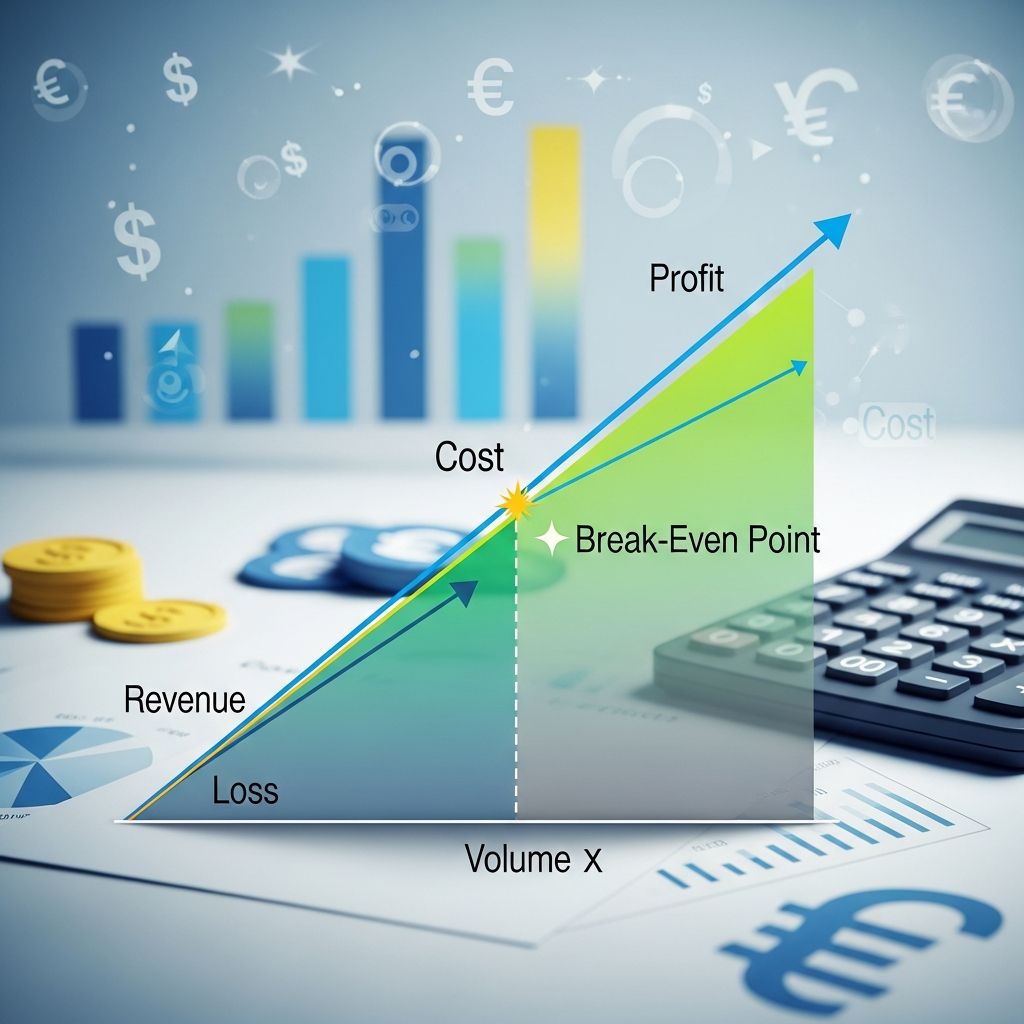
Cost-Volume-Profit Analysis: A Comprehensive Guide
Cost-volume-profit (CVP) analysis is a fundamental tool in managerial accounting that examines the relationship between fixed costs, variable costs, sales volume, and profit. Also commonly referred to as break-even analysis, CVP analysis helps businesses understand how changes in pricing, costs, and sales volume impact their profitability. For financial planning and analysis (FP&A) leaders, product managers, and business strategists, mastering CVP analysis is essential for making informed decisions about pricing strategies, product mix optimization, and resource allocation.
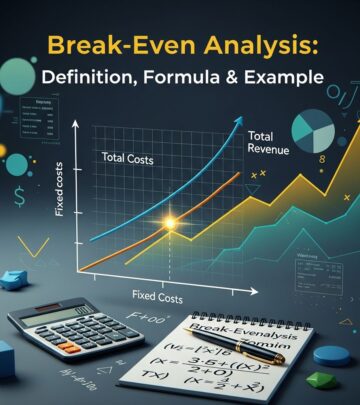
The primary purpose of CVP analysis is to determine the break-even point—the sales volume at which a company’s total revenue equals its total costs, resulting in neither profit nor loss. Beyond this critical threshold, organizations can model different financial scenarios, assess business risks, and develop strategies that support sustainable growth.
What is Cost-Volume-Profit Analysis?
Cost-volume-profit analysis is a mathematical framework that businesses use to determine how many units of a product they need to sell to achieve a specific profit level or break even. This analysis applies a series of equations involving pricing, costs, and volume variables to create a comprehensive picture of a company’s financial performance.
At its core, CVP analysis recognizes that business profitability is not static—it depends on the interplay between multiple variables that constantly shift based on market conditions, operational efficiency, and strategic decisions. By understanding these relationships, managers can make short-term tactical decisions and long-term strategic plans with greater confidence.
For example, a manufacturing company might use CVP analysis to determine how many units of a product it needs to sell to earn a target profit of $100,000, or a service business might use it to understand how price changes affect its break-even point.
Key Components of CVP Analysis
Effective CVP analysis requires understanding and correctly classifying several critical components. These elements work together to provide a complete picture of a company’s cost structure and profit potential.
Fixed Costs
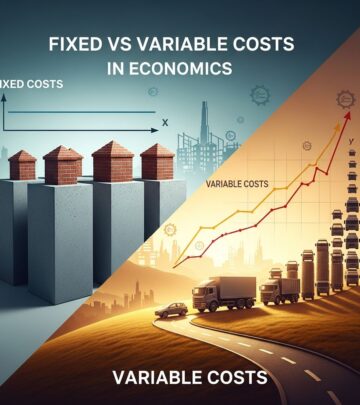
Fixed costs are expenses that remain constant regardless of the volume of production or sales. These costs do not fluctuate with operational activity and must be paid even if the company produces zero units. Common examples include rent, salaried labor, insurance premiums, and depreciation on equipment.
Variable Costs
Variable costs change proportionally with the quantity of products produced or sold. These expenses scale directly with production volume and include items such as raw materials, packaging, shipping, direct labor (when paid on an hourly or piece-rate basis), and utilities tied to production.
Sales Price Per Unit
The selling price per unit represents the amount customers pay for each unit of product or service. This is a critical variable in CVP analysis, as changes in pricing strategy directly affect the contribution margin and overall profitability.
Sales Volume
Sales volume refers to the number of units sold during a specific period. This is often the most unpredictable and sensitive lever in financial models, making it crucial to analyze volume carefully when forecasting performance and setting revenue targets.
Contribution Margin
The contribution margin is the difference between total sales revenue and total variable costs. On a per-unit basis, it is calculated by subtracting the variable cost per unit from the selling price per unit. This metric represents the amount available to cover fixed costs and generate profit.
The contribution margin can also be expressed as a ratio—the contribution margin ratio—which is calculated by dividing the contribution margin by total sales revenue. This ratio helps companies compare profitability across different products, business units, or time periods.
The CVP Formula and Calculations
Understanding the mathematical foundation of CVP analysis is essential for applying it to real-world business scenarios. Several formulas can be used depending on what you need to calculate.
Basic Profit Formula
The foundational CVP formula shows the relationship between all key variables:
Profit = (Selling Price per Unit − Variable Cost per Unit) × Number of Units Sold − Fixed Costs
This can also be expressed as:
Profit = Contribution Margin per Unit × Number of Units Sold − Fixed Costs
Break-Even Point Formula
To find the break-even point in units, the formula is rearranged as follows:
Break-Even Point (units) = Fixed Costs ÷ (Selling Price per Unit − Variable Cost per Unit)
Or alternatively:
Break-Even Point (units) = Fixed Costs ÷ Contribution Margin per Unit
This formula tells you exactly how many units must be sold to cover all fixed and variable costs.
Target Profit Calculation
If a company wants to achieve a specific profit target, the formula can be adjusted by adding desired profit to fixed costs:
Target Sales Revenue = (Fixed Costs + Desired Profit) ÷ Contribution Margin Ratio
For instance, if a company has fixed costs of $100,000, desires a profit of $50,000, and has a contribution margin ratio of 40%, the required sales revenue would be ($100,000 + $50,000) ÷ 0.40 = $375,000.
The Break-Even Point Explained
The break-even point is one of the most important metrics in CVP analysis. It represents the exact sales volume—measured in units or revenue dollars—at which a company’s total revenue equals its total costs. At this point, the company neither makes a profit nor incurs a loss.
Understanding your break-even point serves several purposes. First, it provides a baseline for profitability analysis, helping managers understand the minimum performance level required to sustain operations. Second, it informs decisions about pricing, product mix, and resource allocation by showing which sales volumes are required to cover specific cost structures. Third, it helps assess business risk by illustrating how sensitive the company is to changes in volume or costs.
Financial reporting and planning tools can calculate break-even points, providing visual representations that help management better understand profitability dynamics.
Conducting CVP Analysis: A Step-by-Step Approach
Performing a comprehensive CVP analysis requires a systematic approach. Follow these steps to ensure accuracy and actionable insights.
Step 1: Identify and Classify Relevant Costs
Begin by examining all business expenses and classifying them as either fixed or variable costs. This distinction is foundational to all CVP modeling. Fixed costs (such as rent, salaried employees, and insurance) remain constant regardless of output levels, while variable costs (such as packaging, raw materials, and shipping) scale proportionally with production.
Step 2: Calculate the Contribution Margin
Determine your contribution margin by subtracting the variable cost per unit from the selling price per unit. This shows how much revenue is left from each sale to cover fixed costs and contribute to profit. Express this as both a dollar amount per unit and a percentage ratio to enable comparisons across products or business units.
Step 3: Determine the Break-Even Point
Use your cost and margin data to calculate the break-even point using the formula described earlier. This calculation reveals the exact sales volume required to cover all expenses.
Step 4: Analyze and Model Scenarios
With the break-even point established, use CVP analysis to model different scenarios. Examine how changes in pricing, fixed costs, variable costs, or sales volume would affect profitability. This enables data-driven decision-making about strategic initiatives.
Applications of CVP Analysis in Business Decision-Making
CVP analysis serves multiple strategic purposes beyond simply calculating break-even points. Understanding these applications helps unlock the full value of this analytical tool.
Product Mix Optimization
One of the most valuable applications of CVP analysis is assessing which products and offerings deliver the most value. By comparing contribution margins across different products, managers can identify which ones are most profitable and deserve increased investment or production focus. This supports smarter product mix decisions and more targeted go-to-market strategies.
For example, if a company produces three different products, CVP analysis can determine the contribution margin per unit of each product, allowing management to adjust production volumes to favor the product with the highest contribution margin per limited resource (such as labor hours or machine hours), significantly enhancing overall profitability.
Pricing Strategy Development
CVP analysis provides crucial insights for setting optimal prices. By understanding how different price points affect contribution margins and break-even volumes, companies can develop pricing strategies that balance competitive positioning with profitability requirements.
Strategic Scaling Decisions
When considering whether to increase production levels or expand headcount, CVP analysis helps model the cost-benefit implications. Understanding how fixed and variable costs behave at different volumes allows companies to grow with confidence without overcommitting resources. This analysis ensures that expansion decisions are grounded in realistic financial projections.
Assumptions and Limitations of CVP Analysis
While CVP analysis is a powerful tool, it operates under several key assumptions that users should understand. The analysis assumes that the sales price per unit, fixed costs per unit, and variable costs per unit remain constant throughout the analysis period. In reality, economies of scale, supplier price changes, and market dynamics may cause these values to fluctuate.
Additionally, CVP analysis typically assumes a linear relationship between cost and volume, which may not reflect the complexity of real-world operations. It also usually focuses on a single product or assumes a stable product mix, which may not represent companies with diverse offerings.
Despite these limitations, CVP analysis remains invaluable for short-term planning and decision-making, particularly when used alongside more sophisticated planning tools like corporate performance management (CPM) platforms that can automate modeling and expand analytical capabilities.
Advanced CVP Concepts: The Profit-Volume Ratio
An important metric in CVP analysis is the profit-volume ratio, which shows the profit contribution per unit of variable costs. Calculated as (Contribution ÷ Sales) × 100, this ratio provides insights into operational efficiency and profitability potential.
This ratio helps managers understand how much of each sales dollar contributes to covering fixed costs and generating profit, making it a valuable complement to contribution margin analysis.
Frequently Asked Questions
Q: What is the primary purpose of cost-volume-profit analysis?
A: The primary purpose of CVP analysis is to determine the break-even point and understand how changes in costs, volume, and pricing impact profitability. It helps businesses make informed decisions about pricing strategies, product mix, and resource allocation.
Q: How do you calculate the contribution margin?
A: The contribution margin is calculated by subtracting the variable cost per unit from the selling price per unit. Alternatively, on a total basis, it is total sales revenue minus total variable costs. The contribution margin ratio is the contribution margin divided by total sales.
Q: What is the difference between fixed costs and variable costs?
A: Fixed costs remain constant regardless of production volume (such as rent or salaried labor), while variable costs change proportionally with production levels (such as raw materials or packaging).
Q: How can CVP analysis help with pricing decisions?
A: CVP analysis shows how different price points affect contribution margins and break-even volumes, enabling companies to develop pricing strategies that balance competitiveness with profitability requirements.
Q: What are the main limitations of CVP analysis?
A: CVP analysis assumes constant unit prices and costs, linear relationships between cost and volume, and typically focuses on a single product or stable mix. Real-world conditions may involve price fluctuations, economies of scale, and complex product portfolios.
References
- Cost volume profit analysis (CVP): Everything you need to know — Cube Software. 2024. https://www.cubesoftware.com/blog/cost-volume-profit-analysis
- Cost-Volume-Profit (CVP) Analysis Definition — Investopedia/Scribd. 2024. https://www.scribd.com/document/506148116
- Cost-Volume-Profit Analysis (With Formula and Example) — Indeed Career Advice. 2024. https://www.indeed.com/career-advice/career-development/cost-volume-profit-analysis
- What is Cost Volume Profit Analysis? Complete Guide for 2025 — GoLimeLight. 2025. https://www.golimelight.com/glossary/cost-volume-profit-analysis
- Cost–volume–profit analysis — Wikipedia. 2024. https://en.wikipedia.org/wiki/Cost%E2%80%93volume%E2%80%93profit_analysis
Similar Articles








Read full bio of medha deb