What It Costs to Rent a Building Space in 2025
Complete guide to commercial rental costs: understand lease rates, hidden fees, and budgeting essentials.
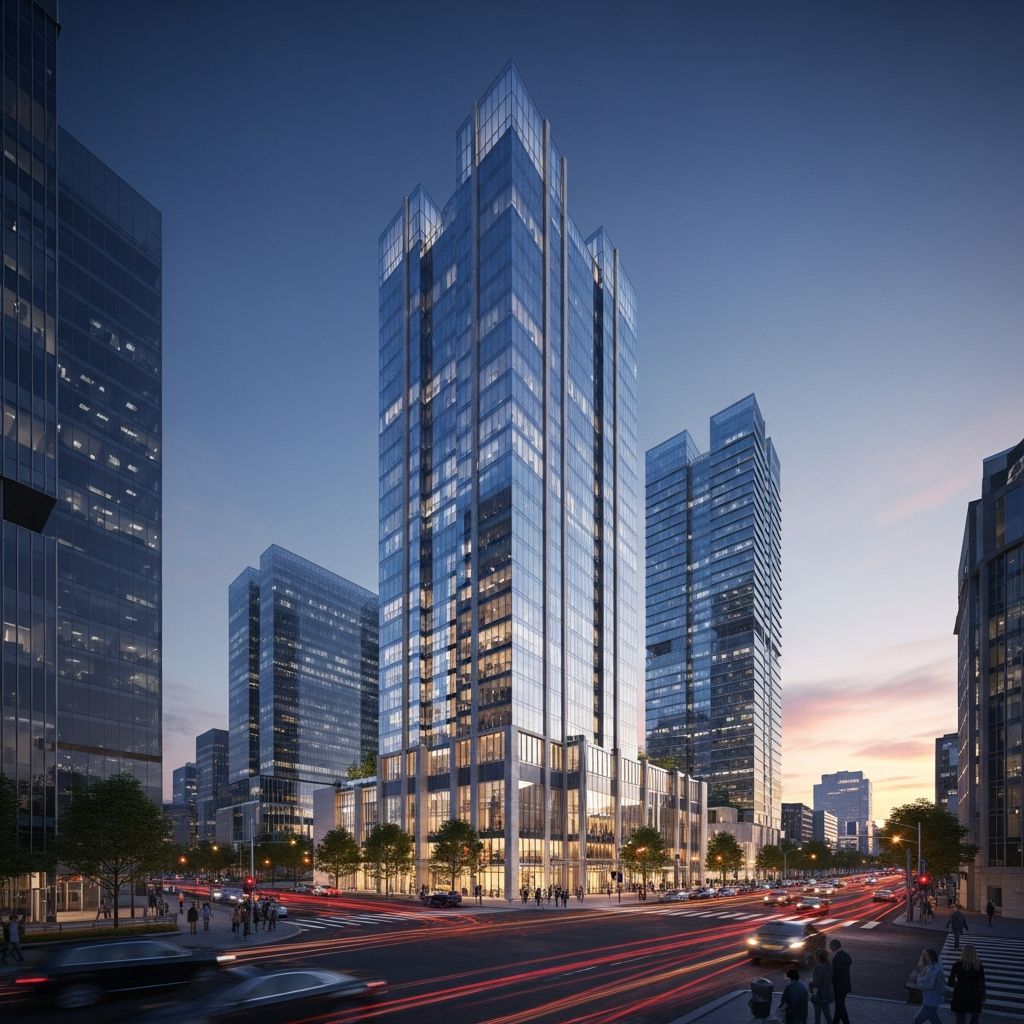
Understanding the true cost of renting commercial building space requires more than just looking at the headline lease rate. Whether you’re a small business owner, entrepreneur, or corporate tenant, the expenses associated with commercial real estate extend far beyond the base rent figure quoted by landlords and brokers. The commercial real estate market in 2025 presents a complex landscape where lease rates, property taxes, insurance, maintenance costs, and various fees combine to create your actual occupancy expenses.
Commercial space rental costs vary dramatically based on location, property type, building class, and lease structure. Understanding these variables helps you make informed decisions and avoid budget overruns that could impact your business operations. This comprehensive guide breaks down all the components of commercial rental costs and provides practical strategies for budgeting effectively.
Understanding Commercial Lease Rates
Commercial real estate lease rates are typically quoted as an annual cost per square foot, measured as dollars per square foot per year ($/SF/YR). This base rent figure serves as the foundation for your rental agreement, but it represents only one component of your total occupancy cost. The national average for office space in 2025 sits at approximately $33.41 per square foot annually, though this figure varies significantly based on geographic location and market conditions.
To calculate your basic annual rent, multiply the quoted rate by your total square footage. For example, a 2,500 square foot office space quoted at $15 per square foot results in an annual rent of $37,500, or $3,125 monthly. However, this calculation becomes more complex when you factor in lease structure variations and additional expenses.
Regional Variations in Lease Rates
Location creates enormous variation in commercial lease rates. Manhattan commands approximately $68.93 per square foot, while Detroit spaces average just $21.45 per square foot. In Los Angeles specifically, office lease rates average $2.75–$4.25 per square foot, with retail spaces ranging from $4–$10 per square foot and industrial properties averaging $1.45–$1.75 per square foot on a triple net basis.
Within Los Angeles, submarkets show distinct pricing patterns. As of 2024, Class A office space in Los Angeles averaged $57.47 per square foot, while Class B space averaged $43.40 per square foot, and Class C space averaged $34.92 per square foot. The downtown Los Angeles CBD commanded $38.01 per square foot, while areas like South Los Angeles averaged $28.13 per square foot.
Breaking Down Additional Rental Costs
Beyond base rent, commercial leases typically include several additional expense categories. Understanding these components prevents unpleasant surprises when bills arrive and helps you accurately budget for occupancy expenses.
Property Taxes
Property taxes represent a significant portion of commercial occupancy costs, particularly in triple net lease arrangements where tenants bear responsibility for these expenses. Property taxes typically range from $2–$4 per square foot annually, depending on property valuation, local tax rates, and jurisdiction. These costs fluctuate based on property assessments and local government tax policy changes.
Insurance Costs
Commercial property insurance protects your landlord’s investment and typically costs between $0.50–$1.50 per square foot annually. Insurance premiums vary based on property type, location, building age, and coverage levels. Newer, well-maintained properties in safer areas generally command lower insurance rates than older buildings in higher-crime districts.
Common Area Maintenance (CAM) Fees
CAM fees cover the costs of maintaining shared building spaces, including lobbies, hallways, restrooms, parking areas, landscaping, and common utilities. In Los Angeles, CAM fees typically range from $8–$20 per square foot annually, depending on property type and location. Office buildings generally have higher CAM fees than industrial properties due to more extensive amenities and maintenance requirements. When evaluating a space, always request three years of actual expense history to understand typical CAM costs and budget for 3–5% annual increases.
Triple Net Leases: Understanding the Full Cost
Triple net (NNN) leases shift property expenses to tenants, who pay base rent plus property taxes, insurance, and CAM fees. These additional costs can add 30–50% to your base rent, representing a substantial increase from the headline rate. Understanding this structure prevents budget shocks.
Consider this example: A property advertises base rent of $15 per square foot triple net. However, with property taxes of $2 per square foot, insurance of $0.50 per square foot, and CAM fees of $1.50 per square foot, your true annual cost jumps to $19 per square foot—a 27% increase over the base rate alone. For a 1,000 square foot space, this difference amounts to $4,000 annually or $333 monthly.
| Cost Component | Per Square Foot | 1,000 SF Annual Cost |
|---|---|---|
| Base Rent | $15/SF | $15,000 |
| Property Taxes | $2/SF | $2,000 |
| Insurance | $0.50/SF | $500 |
| CAM Fees | $1.50/SF | $1,500 |
| Total Annual Cost | $19/SF | $19,000 |
Building Class and Its Impact on Rental Costs
Commercial properties are classified into categories that significantly influence rental rates and associated expenses. Understanding building classifications helps you identify appropriate spaces within your budget.
Class A Properties
Class A buildings represent premium commercial real estate featuring modern construction, high-end finishes, advanced technology infrastructure, and extensive amenities. These properties command the highest rental rates, reflecting their superior condition and tenant services. In Los Angeles, Class A office space averaged $57.47 per square foot in 2024. Statewide, California Class A office rents averaged $60.31 per square foot. While Class A spaces offer prestigious locations and excellent amenities, they come with premium price tags that may exceed budget for many tenants.
Class B Properties
Class B buildings offer mid-tier commercial space with adequate maintenance, standard amenities, and acceptable locations. These properties provide reasonable value for businesses seeking professional environments without premium pricing. Los Angeles Class B office space averaged $43.40 per square foot in 2024. Class B properties typically appeal to established small to mid-size businesses and professional services.
Class C Properties
Class C buildings have been around the block a few times and represent functional but dated properties. These spaces are typically older with basic maintenance and minimal amenities. Class C properties offer the most affordable rental rates in the market. Los Angeles Class C office space averaged $34.92 per square foot in 2024. While budget-conscious tenants appreciate the lower costs, Class C spaces may require more frequent maintenance and offer fewer amenities.
Additional Factors Affecting Rental Costs
Lease Length and Escalations
Longer lease terms typically result in lower annual rates, while shorter leases command premium pricing due to landlord uncertainty. Most commercial leases include annual escalation clauses, typically ranging from 2–5% yearly, that increase your rent throughout the lease term. A lease with 3% annual escalations means your second-year rent will be 3% higher than year one, compounding over the lease duration.
Amenities and Concessions
In 2025, amenities have become deal-makers in commercial real estate. Buildings featuring fitness centers, outdoor spaces, conference facilities, and food options can command 10–15% higher rates than amenity-light competitors. However, landlords may offer concessions like free rent periods, build-out allowances, or moving assistance to attract tenants, effectively reducing your true cost over the lease term.
Market Conditions and Vacancy Rates
Tight markets with low vacancy rates support higher rental prices, while soft markets with high vacancies create downward pressure on rates. Los Angeles office markets recorded average vacancy rates around 16.32% in 2024, creating opportunities for tenant negotiations. Market conditions fluctuate based on economic cycles, local employment trends, and new construction activity.
How to Calculate Your True Rental Cost
Accurately calculating your rental cost requires considering all expense categories and lease structure details. Follow this comprehensive approach:
Step 1: Determine Your Usable Square Footage – Distinguish between rentable and usable square footage, as load factors can increase your billable area by 10–20%.
Step 2: Calculate Base Rent – Multiply the quoted annual rate per square foot by your rentable square footage. For monthly budgeting, divide the annual amount by twelve.
Step 3: Add Operating Expenses – For triple net leases, add separate line items for property taxes, insurance, and CAM fees. Request historical expense data to project future costs.
Step 4: Factor in Lease Escalations – Account for annual rent increases specified in your lease agreement when calculating multi-year budgets.
Step 5: Evaluate Concessions – Factor any rent abatement periods or landlord-provided build-out allowances into your true cost calculation by amortizing them across the lease term.
Cost Comparison: Different Property Types in Los Angeles
| Property Type | Average Base Rate | Typical CAM/Operating | Total Estimated Cost | Vacancy Rate |
|---|---|---|---|---|
| Office Space | $2.75–$4.25/SF | $8–$20/SF | $10.75–$24.25/SF | ~24% |
| Retail Space | $4.00–$10.00/SF | $3–$8/SF | $7.00–$18.00/SF | 5–6% |
| Industrial Space | $1.45–$1.75/SF | $1–$3/SF | $2.45–$4.75/SF | 3.8% |
Budgeting Tips for Commercial Tenants
Effective commercial space budgeting requires accounting for all expenses and planning for contingencies. Allocate 10–15% additional budget for unforeseen maintenance issues and expense increases. Request detailed breakdowns of all proposed charges before signing leases. Compare total occupancy costs, not just base rent, when evaluating multiple properties. Review CAM expense histories to identify properties with controlled operating costs. Negotiate lease terms including escalation caps, annual CAM adjustment limits, and expense exclusions. Plan for potential rent increases when renewing leases or expanding your space. Build financial reserves for lease commencement costs including deposits, build-out expenses, and initial rent payments.
Frequently Asked Questions (FAQs)
Q: What is the difference between gross and triple net lease costs?
A: Gross leases include most operating expenses in the base rent, while triple net leases require tenants to pay base rent plus property taxes, insurance, and CAM fees separately. Triple net leases typically result in lower headline rates but higher true occupancy costs when all expenses are totaled.
Q: How much should I budget for CAM fees in Los Angeles?
A: CAM fees in Los Angeles typically range from $8–$20 per square foot annually, depending on property type and location, with office buildings generally having higher CAM fees than industrial properties. Always request three years of actual expense history and budget for 3–5% annual increases.
Q: What is a typical lease escalation percentage?
A: Most commercial leases include annual escalation clauses ranging from 2–5% yearly. Some leases may include fixed escalations, while others tie increases to inflation indices. Always clarify escalation terms before signing your lease agreement.
Q: How do I compare two commercial spaces with different lease structures?
A: Calculate the total annual occupancy cost for each space by adding base rent, property taxes, insurance, and CAM fees. Divide by square footage to determine the true per-square-foot cost, making comparable evaluation possible regardless of lease structure differences.
Q: What is load factor and how does it affect my rental costs?
A: Load factor represents the difference between usable square footage (actual office space) and rentable square footage (includes proportional common areas). A load factor of 1.15 means you pay rent on 15% additional space beyond your actual usable area. Always confirm load factors in your lease to ensure accurate cost calculations.
Q: Can I negotiate CAM charges in my lease?
A: Yes, CAM charges are negotiable. Request detailed expense breakdowns, propose annual caps on CAM increases, and negotiate to exclude certain expenses like capital improvements. Strong negotiating can reduce this significant expense category.
Q: What’s included in Common Area Maintenance fees?
A: CAM fees cover shared space maintenance including lobbies, hallways, restrooms, parking areas, landscaping, and common utilities. CAM typically excludes landlord’s mortgage, roof structural repairs, and major capital improvements.
References
- How to Price Your Commercial Space in Los Angeles — KEYZ Commercial Real Estate. 2025. https://keyzcre.com/price-commercial-property-los-angeles/
- The Ultimate Guide to Understanding Commercial Lease Rates — IPA Commercial. 2025-05-13. https://ipacommercial.com/2025/05/13/commercial-real-estate-lease-rates/
- Los Angeles Office Rent Price & Sales Report — CommercialCafe. 2024. https://www.commercialcafe.com/office-market-trends/us/ca/los-angeles/
- Hidden Commercial Lease Costs in LA Tenants Must Know — Tolj Commercial. 2024. https://toljcommercial.com/hidden-commercial-lease-costs-in-la-tenants-must-know/
- SoCal CRE Market Report Q1 2025: Office Vacancy & Industrial Stats — Los Angeles Times. 2025. https://www.latimes.com/b2b/commercial-real-estate/story/socal-cre-market-report-q1-2025
Similar Articles








Read full bio of Sneha Tete