Cost Per Click (CPC): Definition and Advertising Guide
Master CPC advertising: Learn how cost per click works, calculate it, and optimize your PPC campaigns for better ROI.
What Is Cost Per Click (CPC)?
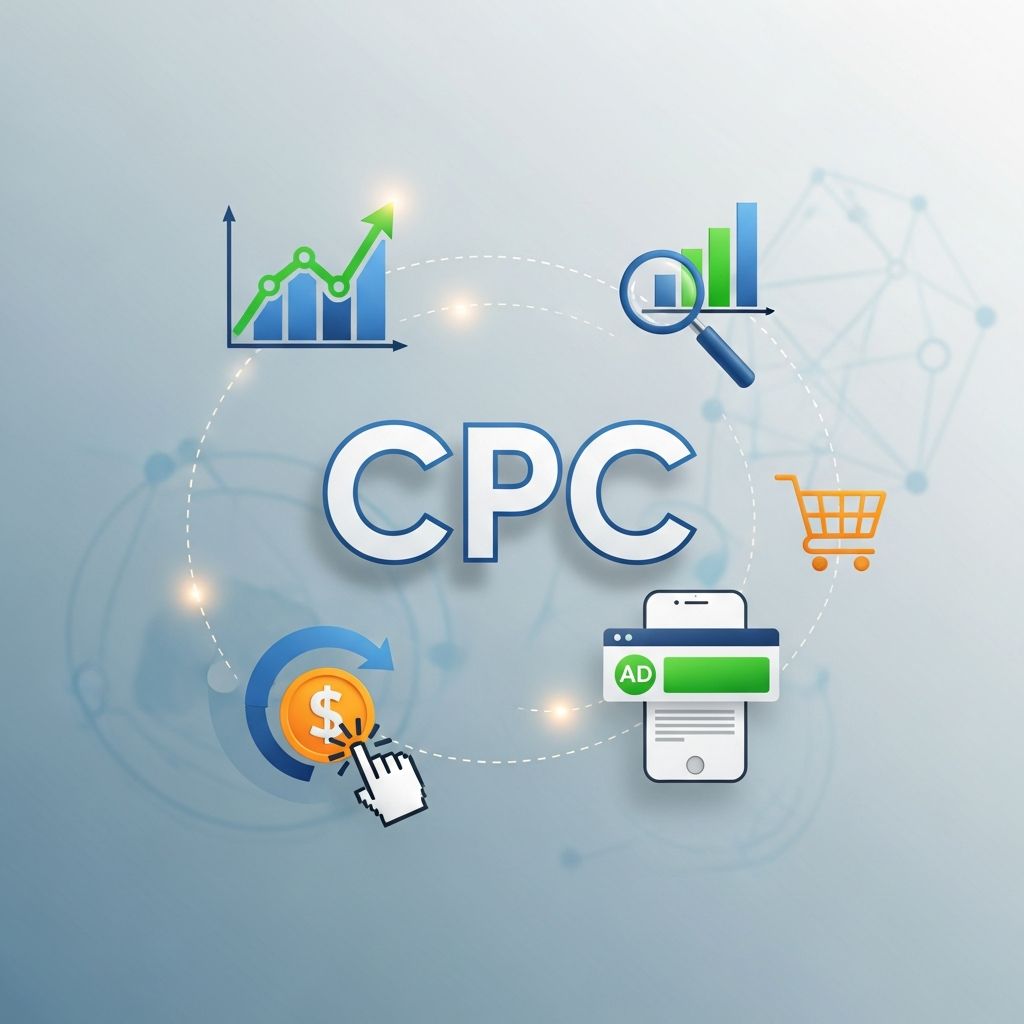
Cost per click (CPC) is a fundamental metric in digital advertising that measures the amount an advertiser pays each time a potential customer clicks on their advertisement. This metric is one of the most critical measurements in online advertising because it directly impacts your return on investment (ROI) and overall campaign profitability. When the cost per click is high for particular keywords or placements, advertisers must achieve proportionally higher conversion rates and customer values to maintain a positive return on their advertising spend.
In today’s competitive digital landscape, understanding CPC is essential for any business running pay-per-click campaigns. Whether you’re advertising on Google Ads, Facebook, Amazon, or other platforms, CPC serves as a key performance indicator that helps you evaluate the efficiency of your advertising efforts and make data-driven decisions about budget allocation.
How Cost Per Click Works
Cost per click marketing operates within the pay-per-click (PPC) advertising model, which is widely adopted by major advertising platforms including Google, Facebook, Amazon, and Bing. Understanding the mechanics of CPC is crucial for advertisers looking to optimize their campaigns.
In a CPC advertising system, advertisers participate in an auction-style bidding process. Here’s how it works:
- You set a maximum bid, which represents the highest amount you’re willing to pay for a single click on your ad
- Your ad competes against other advertisers’ ads in an auction based on your bid amount and ad quality
- The actual cost per click you pay is often lower than your maximum bid
- You only pay when someone actually clicks on your ad—not for impressions or views alone
- The final amount you pay per click depends on several factors including competition, ad quality, and relevance
This pay-for-performance model is attractive to advertisers because it ensures you’re only spending money when there’s genuine user interest in your advertisement. The transparency and control offered by CPC bidding make it an ideal choice for businesses of all sizes looking to drive qualified traffic to their websites.
Factors Affecting Your Cost Per Click
Several key factors influence the actual cost per click you’ll pay for your advertisements:
- Maximum Bid: The highest amount you’re willing to pay per click directly influences your ad’s competitiveness and placement
- Ad Quality and Relevance: High-quality ads with relevant content to the search query or audience typically result in lower CPCs
- Competition Level: Keywords and placements with high demand from multiple advertisers generally have higher CPC rates
- Ad Position: Ads appearing in premium positions typically cost more per click
- Landing Page Experience: The quality and relevance of your landing page affects your Quality Score, which impacts CPC
- Geographic Targeting: Different regions may have varying CPC rates based on local competition and audience value
- Device and Time: Mobile versus desktop and time-of-day targeting can affect bidding dynamics and CPC
Advantages of CPC Advertising
CPC advertising offers several significant advantages for advertisers:
Custom Targeting Capabilities
One of the primary benefits of CPC advertising is the ability to reach precisely the right audience. You can target your ads based on specific keywords, demographics, geographic locations, devices, interests, and behaviors. This granular targeting approach ensures your advertising budget is spent reaching people most likely to be interested in your products or services, thereby improving your chances of conversion and maximizing your return on investment.
Pay Only for Actual Performance
With CPC advertising, you only pay when someone actually clicks on your ad. This performance-based payment model means you’re not wasting budget on impressions that don’t generate interest. You spend money only when there’s a demonstrated interaction with your advertisement, making it a more efficient way to drive potential customers to your website.
Measurable Results and ROI
CPC advertising provides clear, measurable metrics that allow you to track the performance of your campaigns with precision. You can calculate your return on investment, monitor conversion rates, and make data-driven optimizations to improve campaign performance over time.
Disadvantages of CPC Advertising
While CPC advertising offers numerous benefits, there are also challenges to consider:
Highly Competitive Marketplace
In competitive industries or for popular keywords, cost per click can become prohibitively expensive. Large corporations with substantial advertising budgets can drive up CPC rates, making it challenging for small businesses with limited budgets to compete effectively for high-value keywords. This competitive pressure can significantly impact the profitability of campaigns, particularly in saturated markets.
Click Fraud Risk
Another significant concern is click fraud, where malicious bots or competitors deliberately click on your ads with no intention of purchasing. This fraudulent activity depletes your advertising budget without generating legitimate business results. While platforms have implemented fraud detection systems, click fraud remains a persistent challenge that advertisers must monitor and address.
Landing Page Conversion Risk
Simply driving clicks to your website doesn’t guarantee conversions. If your landing page doesn’t effectively convert visitors into customers, you’ll have paid for clicks that don’t generate revenue, making your campaign unprofitable.
CPC vs. CPM: Key Differences
When choosing an advertising model, it’s important to understand the differences between CPC and CPM (cost per thousand impressions):
| Metric | CPC (Cost Per Click) | CPM (Cost Per Thousand Impressions) |
|---|---|---|
| Payment Model | You pay for each click on your ad | You pay for every 1,000 times your ad is displayed |
| Best For | Driving targeted traffic and conversions | Building brand awareness and reaching wide audiences |
| Cost Control | You control costs by managing bids and budgets | Costs are based on ad volume regardless of engagement |
| Risk | Lower risk; you pay only for actual clicks | Higher risk; you pay for impressions that may not result in clicks |
| Audience Targeting | Highly targeted to specific keywords and audiences | Broader audience targeting for brand exposure |
How to Calculate Cost Per Click
Calculating your cost per click is straightforward and essential for understanding your advertising performance:
Cost Per Click = Total Ad Cost ÷ Total Number of Clicks
Example Calculation
If you spent $100 on a pay-per-click campaign and received 500 clicks on your advertisements, your cost per click would be calculated as follows:
$100 ÷ 500 clicks = $0.20 (or 20 cents per click)
This simple calculation provides you with a clear understanding of how much you’re paying for each click on your advertisement. By tracking this metric over time and comparing it across different campaigns, keywords, and ad groups, you can identify which areas of your advertising strategy are performing efficiently and which may need optimization.
Strategies to Lower Your Cost Per Click
Reducing your CPC is one of the most effective ways to improve your advertising ROI. Here are proven strategies to lower your cost per click:
- Improve Quality Score: Focus on creating highly relevant ads with quality landing pages to increase your Quality Score, which directly impacts CPC
- Refine Keyword Strategy: Use long-tail keywords with less competition and higher intent to reduce bidding competition
- Enhance Ad Relevance: Ensure your ad copy directly addresses the searcher’s intent and includes relevant keywords
- Optimize Landing Pages: Improve page load speed, user experience, and conversion funnel to lower your Quality Score penalty
- Implement Negative Keywords: Exclude irrelevant search terms that generate clicks from uninterested users
- Use Ad Scheduling: Bid more aggressively during high-performing time periods and reduce bids during low-performance times
- Test Different Ad Formats: Experiment with responsive ads, expanded text ads, and other formats to find what resonates with your audience
- Monitor and Pause Poor Performers: Continuously review your campaigns and pause ads or keywords that generate clicks without conversions
Understanding Maximum Cost Per Click
Maximum cost per click (Max CPC) represents the highest amount you’re willing to pay per click on your advertisement. You set this bid in your advertising platform’s account settings. When choosing your maximum CPC bid, you should select the highest amount you believe each click is worth to your business based on your conversion rate and average customer value.
It’s important to note that you won’t pay more than your maximum CPC for any individual click. However, a higher maximum bid generally helps your ad achieve a higher position on the page, increasing visibility and click-through rates. In most auction-based systems, you only need to pay the minimum amount necessary to beat the competitor immediately below you, often resulting in actual costs below your maximum bid.
Average vs. Actual Cost Per Click
Average Cost Per Click
Average cost per click is calculated by dividing your total advertising cost by your total number of clicks received. This metric shows the average amount you paid for each click across your entire campaign:
Average CPC = Total Cost of All Clicks ÷ Total Number of Clicks
For example, if your ad generated two clicks—one costing $1 and another costing $3—your total cost would be $4. Dividing $4 by 2 clicks gives you an average CPC of $2 per click.
Actual Cost Per Click
Your actual CPC is the precise amount you’re charged for each individual click. Typically, you’ll pay significantly less than your maximum CPC bid because you only need to pay the minimum required amount to outbid competitors immediately below you in the auction. This pricing mechanism benefits advertisers by reducing costs while maintaining ad visibility.
Enhanced Cost Per Click (ECPC)
Enhanced Cost Per Click (ECPC) is an advanced bidding strategy that combines manual CPC bidding with machine learning optimization. ECPC automatically adjusts your manual bids based on the likelihood that a click will result in a sale or conversion. This hybrid approach uses browser information, geographic location, and time of day data to optimize your bids for the highest probability of conversion at the best possible price.
By implementing ECPC, advertisers can achieve better value for conversions without having to fully automate their bidding strategy. This feature is particularly valuable for businesses that want to maintain some control over their bids while leveraging artificial intelligence to improve performance. ECPC represents a middle ground between purely manual bidding and fully automated Smart Bidding strategies.
Frequently Asked Questions
What is the difference between CPC and PPC?
CPC and PPC are often used interchangeably in advertising terminology. CPC refers specifically to the cost metric per click, while PPC refers to the broader payment model where advertisers pay for each click. PPC is the model, and CPC is the metric used to measure costs within that model.
How can I reduce my cost per click?
You can reduce CPC by improving your Quality Score through better ad relevance, optimizing landing pages, using long-tail keywords, implementing negative keywords, testing ad variations, and continuously monitoring campaign performance to identify and eliminate underperforming keywords and ads.
What is a good average cost per click?
A good average CPC varies significantly depending on your industry, keywords, and advertising platform. Competitive industries typically have higher CPCs, while less competitive niches may have lower costs. You should benchmark your CPC against your conversion rate and customer lifetime value to determine if your costs are acceptable for your business.
Why is my cost per click so high?
High CPC can result from several factors: high competition for your keywords, low Quality Score, bidding on expensive keywords in competitive industries, targeting broad audiences, or poor landing page experience. Analyzing these factors and making targeted optimizations can help reduce your CPC.
Is CPC better than CPM for my business?
CPC is better if your goal is to drive conversions and qualified traffic. CPM is more suitable for brand awareness and reaching large audiences. Choose CPC if you want to pay only for actual user engagement and have clearer ROI tracking; choose CPM for broad brand exposure campaigns.
How often should I review my CPC metrics?
You should review your CPC metrics at least weekly, though daily monitoring is recommended for active campaigns. Regular monitoring allows you to quickly identify trends, underperforming keywords, and optimization opportunities before they significantly impact your budget and ROI.
References
- Cost Per Click: Definition, Why It Matters + How to Measure CPC — Semrush. 2024. https://www.semrush.com/blog/cost-per-click/
- Google Ads Help: About cost-per-click (CPC) bidding — Google Support. https://support.google.com/google-ads/answer/6071
- Understanding Quality Score in Google Ads — Google Ads Help Center. https://support.google.com/google-ads/answer/140351
- Pay-Per-Click (PPC) Advertising Guide — Facebook Business Help. https://www.facebook.com/business/help
- Smart Bidding Strategies in Google Ads — Google Ads Support. https://support.google.com/google-ads/answer/6725
Similar Articles








Read full bio of Sneha Tete