Cost of Transferring $10,000 Credit Card Debt
Uncover the true expenses of moving a $10,000 balance to a new card and strategies to minimize fees while maximizing savings.

Moving a substantial credit card balance like $10,000 to a new card can provide significant interest savings during promotional periods, but it comes with upfront costs that must be carefully calculated. Balance transfers typically involve fees of 3% to 5% of the transferred amount, adding hundreds or thousands to your debt before you even start saving on interest.
Understanding Balance Transfer Fees
The primary expense in any balance transfer is the fee charged by the receiving card issuer. This fee is calculated as a percentage of the amount moved, usually ranging from 3% to 5%, with a minimum charge often set at $5 or $10 per transfer. For a $10,000 balance:
- A 3% fee equals $300, making your new balance $10,300.
- A 5% fee equals $500, resulting in a total of $10,500 to repay.
These fees apply per transfer, so splitting the debt across multiple cards could increase costs if minimums kick in. Many cards offer lower introductory fees (e.g., 3% for the first 60-120 days) that jump to 5% afterward, incentivizing quick action.
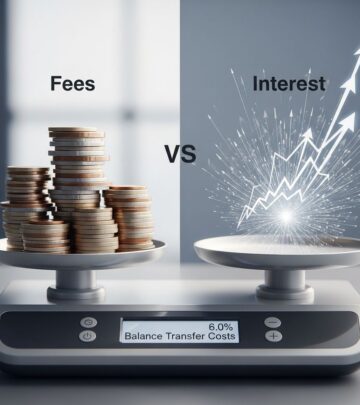
Interest Savings vs. Fee Expenses
Balance transfer cards shine with 0% introductory APR offers lasting 12 to 21 months on transfers made within a set window, often 4 months from account opening. At a typical 21% ongoing APR, paying $10,000 over 18 months without a promo would rack up over $1,100 in interest. A transfer eliminates this during the intro period, potentially saving thousands if paid off in time.
| Scenario | Initial Amount | Monthly Payment | Total Interest | Total Cost |
|---|---|---|---|---|
| 21% APR, 18 months | $10,000 | $670 | $2,060 | $12,060 |
| 0% Intro 18 months + 5% fee | $10,500 | $583 | $0 (if paid off) | $10,500 |
This table illustrates scaled-up real-world examples: the promo path saves over $1,500 compared to standard rates, even after the fee.
Top Balance Transfer Card Options in 2026
Current top cards feature extended 0% periods and manageable fees. Key examples include:
- Card A: 0% intro APR on transfers for 18 months (within 4 months); 3% intro fee ($5 min), then 5%. Post-promo APR: 17.49%-28.24%.
- Card B: 0% intro on transfers for 21 months (within 4 months); same 3%/5% fee structure. Post-promo: 16.49%-27.24%.
- Card C: 0% for 15 months on transfers/purchases; 3% intro fee, then 5%.
No-fee or low-fee cards exist but often have shorter promos or higher post-intro rates, reducing overall value for large balances.
Calculating Total Costs for $10,000 Transfers
To determine if a transfer pays off, factor in the full picture:
- Add the fee: $10,000 + 3-5% = $10,300-$10,500.
- Divide by promo months: For 18 months at 3% fee, pay ~$573/month to clear $10,300.
- Account for deadlines: Transfers must often occur early; late ones face higher fees or no promo.
- Post-promo planning: If unpaid, variable APRs of 16-28% apply, potentially erasing savings.
For $10,000 at 5% fee over 21 months: ~$500/month. Tools from issuers help simulate payments.
Steps to Execute a Successful Transfer
Avoid costly errors with this process:
- Check eligibility: Good credit (670+ FICO) needed for best offers.
- Compare total savings: Use calculators to weigh fees against interest avoided.
- Transfer promptly: Within promo windows to secure low fees.
- Budget rigorously: Automate payments to hit zero before promo ends.
- Freeze the card: Avoid new charges that accrue at regular APR.
Partial transfers can work if limits apply, but fees scale accordingly.
Potential Pitfalls and Hidden Charges
Common traps include:
- Timing misses: Transfers after intro windows incur 5%+ fees or full APR.
- No payoff plan: Leftover balances hit high APRs immediately.
- Other fees: Late payments trigger penalties; some cards charge annual fees post-promo.
- Credit impact: Hard inquiries and utilization spikes temporarily hurt scores.
Always read terms: Some exclude cash advances or have balance transfer minimums.
Alternatives to Balance Transfers
If fees seem too high:
- Debt consolidation loans: Fixed rates 6-12%, no transfer fees, but require good credit.
- 0% purchase cards: For new spending, but shorter terms.
- Negotiate with issuers: Hardship programs or lower APRs on existing cards.
- Personal loans: Often cheaper long-term for large debts.
For $10,000, transfers edge out if you can pay off in 12-21 months.
Real-World Savings Scenarios
Consider a cardholder with $10,000 at 22% APR transferring to an 18-month 0% card with 3% fee:
- Monthly: $573 x 18 = $10,314 total.
- Savings vs. no transfer: ~$2,000 in interest.
Extend to 21 months at 5% fee: $500/month, still major wins if disciplined.
FAQs
What is the average balance transfer fee for $10,000?
Typically 3-5%, or $300-$500, often with a $5-$10 minimum.
How soon must I complete a $10,000 transfer for promo rates?
Usually within 60-120 days of opening; check card specifics.
Can I avoid balance transfer fees entirely?
Rarely; some cards waive for early transfers, but most charge 3-5%.
What if I don’t pay off before the intro period ends?
Regular APR (16-28%) applies to remaining balance, often retroactively on some cards.
Does transferring $10,000 hurt my credit score?
Temporarily yes, due to inquiry and utilization; recovers with on-time payments.
Final Thoughts on Maximizing Value
For $10,000 debts, balance transfers offer a powerful tool if paired with a strict payoff plan. Prioritize cards with long 0% periods and low intro fees to offset the $300-$500 hit and save thousands in interest. Always calculate your monthly commitment upfront to ensure success.
References
- Best Balance Transfer Cards Of March 2026 — Bankrate. 2026-03. https://www.bankrate.com/credit-cards/balance-transfer/best-balance-transfer-cards/
- Best Balance Transfer Cards for March 2026 — Credit Karma. 2026-03. https://www.creditkarma.com/credit-cards/balance-transfer
- 11 Best Balance Transfer Credit Cards of April 2026 — NerdWallet. 2026-04. https://www.nerdwallet.com/credit-cards/best/balance-transfer
- Best Balance Transfer Credit Cards of March 2026 — CreditCards.com. 2026-03. https://www.creditcards.com/balance-transfer/
Similar Articles








Read full bio of medha deb