Cost of Living: 6 Things Your Parents Had Way Cheaper
Discover why today's cost of living hits harder than your parents' era—explore 6 key expenses and smart strategies to cut costs now.

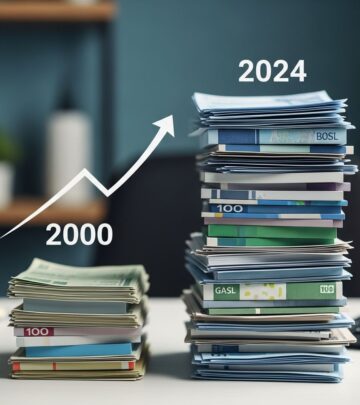
Many millennials and Gen Z adults feel the squeeze of today’s economy, often joking that their baby boomer parents had it easier. But is it just nostalgia, or do the numbers back it up? Adjusted for inflation, several everyday expenses have ballooned far beyond what previous generations faced. This article breaks down
six key cost-of-living categories
where your parents truly paid less: housing, childcare, college tuition, new cars, groceries, and healthcare. We’ll explore the stark differences with data and share practical strategies to help you save money in 2026’s challenging market.Understanding these shifts isn’t about blame—it’s about empowerment. By grasping why costs have risen and applying proven savings hacks, you can build a more resilient budget. Data from government reports and economic analyses reveals trends driven by supply shortages, wage stagnation relative to inflation, and policy changes. Let’s dive in.
Housing: From Affordable Starter Homes to Million-Dollar Bidding Wars
Your parents likely bought their first home for a fraction of today’s prices. In 1970, the median U.S. home price was about $23,000—or roughly $190,000 in today’s dollars according to the U.S. Census Bureau. Fast-forward to 2025, and that median sits at over $420,000, more than double the inflation-adjusted figure. Rent hasn’t fared better: boomers paid around 20% of income on housing in the 1970s, while today’s renters average 30-35% per Bureau of Labor Statistics (BLS) data.
Factors like zoning laws restricting new builds, investor purchases, and post-pandemic demand have fueled this surge. In hot markets like California or New York, entry-level homes now exceed $1 million, pricing out young families.
Ways to Save on Housing Today
- House hack: Buy a multi-unit property and rent out rooms or units to cover your mortgage—popularized by investors like Grant Cardone.
- Relocate strategically: Mid-sized cities in the Midwest or South offer homes 40-60% cheaper than coastal areas with similar job opportunities.
- Downsize or co-buy: Team up with friends or family for shared ownership to split costs.
- Government programs: Explore FHA loans for low down payments or first-time buyer credits via HUD.gov.
These tactics can shave thousands off annual expenses, turning housing from a burden into an asset.
Childcare: A Budget-Breaker That Didn’t Exist for Many Boomers
Childcare stands out as one of the starkest increases. Boomer parents often relied on stay-at-home spouses or affordable neighborhood sitters—formal daycare was rare and cheap. Today, average annual costs exceed $10,000 per child for infants, per the U.S. Department of Health and Human Services (2024 data), consuming 20-25% of median household income. The Penny Hoarder’s 2021 survey found 50% of parents spending 25%+ of income on care, with 93% sacrificing other needs like groceries.
COVID exacerbated shortages, driving center costs up nearly 50% in two years as providers raised wages and limited spots. In 2026, with no widespread relief, families in urban areas pay $1,500+ monthly.
Smart Strategies to Cut Childcare Costs
- Employer benefits: Ask HR about dependent care FSAs—save up to $5,000 pre-tax annually.
- Co-ops and bartering: Form parent rotations or trade services with neighbors.
- Subsidies: Check state programs via ChildCareAware.org; eligibility often extends to middle-income families.
- Alternative care: Au pairs or nannieshares split costs 30-50% lower than solo options.
| Childcare Option | Avg. Annual Cost (2025) | Savings Tip |
|---|---|---|
| Daycare Center | $12,000 | Part-time slots |
| In-Home Daycare | $9,000 | Multiple kids discount |
| Nanny Share | $7,500 | Split with 1 family |
| Parent Co-op | $3,000 | Rotate duties |
College Tuition: From Bargain to Bankrupting
Boomers attended public college for peanuts: average in-state tuition in 1970 was $358 ($3,000 adjusted), covering most degrees without massive debt. Now, it’s $11,000+ annually, with total four-year costs hitting $100,000+ per College Board trends. Private schools? Over $40,000/year. Student debt exceeds $1.7 trillion nationally.
Rising admin costs, state funding cuts, and amenity arms races explain the hike. Parents paid with summer jobs; today, it’s a lifelong anchor.
Affordable Education Hacks
- Community college first: Two years at $4,000 total vs. $50,000 at university.
- Scholarships and aid: Sites like Fastweb list billions unclaimed yearly.
- Trade schools: Electricians earn $60K+ with $10K training—faster ROI.
- Employer tuition assistance: Starbucks, Amazon cover degrees for staff.
New Cars: Luxury Prices for Basic Transport
A 1970 Ford Mustang cost $2,700 ($22,000 adjusted); today’s median new car is $48,000, per Kelley Blue Book 2025. Boomers financed at 8-10% interest but lower principals. Supply chain issues and chip shortages inflated 2021-2025 prices 30%.
Features like tech suites make cars ‘essentials,’ but payments eat 15-20% of income.
Car-Buying Savings
- Buy used: Certified pre-owned saves 20-40% with warranties.
- Negotiate or lease: End-of-month deals; leases cap payments.
- Public transit hybrids: Combine with car-sharing like Zipcar.
- EV incentives: Up to $7,500 federal tax credit via IRS.gov.
Groceries: Stealth Inflation Hits the Dinner Table
Boomers spent 15% of income on food; BLS says 2025’s at 12% but volumes shrink—$450/month for a family of four vs. $300 adjusted from 1980. Supply chain woes, climate events, and labor costs drive 25% real increases since 2020.
Grocery Savings Blueprint
- Meal prep: Bulk buys from Costco slash per-meal costs 40%.
- Apps: Ibotta, Fetch for cashback; 5-10% returns.
- Garden or CSAs: Home veggies cut produce bills 50%.
- Store brands: 20-30% cheaper than name brands.
Healthcare: Premiums and Pills Priced Out of Reach
1970 employer health insurance averaged $300/year ($2,500 adjusted); 2025 family premiums top $24,000, per Kaiser Family Foundation. Out-of-pocket costs rose 150% due to high-deductible plans.
Aging population and drug prices fuel this—insulin jumped 500% since 2000.
Healthcare Cost Cutters
- HSAs: Triple tax-advantaged savings for medical bills.
- Generic meds: 80-85% savings via GoodRx.
- Telehealth: $50 visits vs. $150 in-office.
- Preventive care: Free under ACA to avoid big bills.
Frequently Asked Questions (FAQs)
What caused the biggest cost-of-living jumps since boomer times?
Housing and education lead due to supply limits and policy shifts; childcare surged post-pandemic.
Can I really save 50% on childcare?
Yes, via co-ops or subsidies—many families report halving costs with creative options.
Is college still worth it in 2026?
For high-earning fields yes; trades offer better ROI for many. Weigh opportunity costs.
How do I start house hacking?
Research duplexes under $400K in your area, use FHA for 3.5% down, screen tenants carefully.
Will costs keep rising?
Economists predict moderation in housing/groceries but childcare persists without reforms.
Today’s economy demands savvy—your parents’ playbook won’t cut it, but these strategies will. Start small: pick one tip per category and track savings monthly. Over time, you’ll reclaim control.
References
- Child Care Costs Survey Discussion — WGN News (The Penny Hoarder interview). 2021-10-26. https://www.youtube.com/watch?v=Tc1LLHpCY9I
- U.S. Census Bureau Historical Home Prices — U.S. Census Bureau. 2024. https://www.census.gov/construction/nrs/historical_data/
- Consumer Expenditures Survey — Bureau of Labor Statistics. 2025-09-10. https://www.bls.gov/cex/
- Child Care Costs Report — U.S. Department of Health & Human Services. 2024-01-15. https://www.acf.hhs.gov/occ/research/child-care-desert-report-2024
- Tuition and Fees Trends — College Board. 2025-10-01. https://research.collegeboard.org/trends/college-pricing
Similar Articles








Read full bio of Sneha Tete