Cost of Living: Definition, Calculation & Comparison
Master cost of living: Learn how to calculate, compare, and rank expenses across locations.
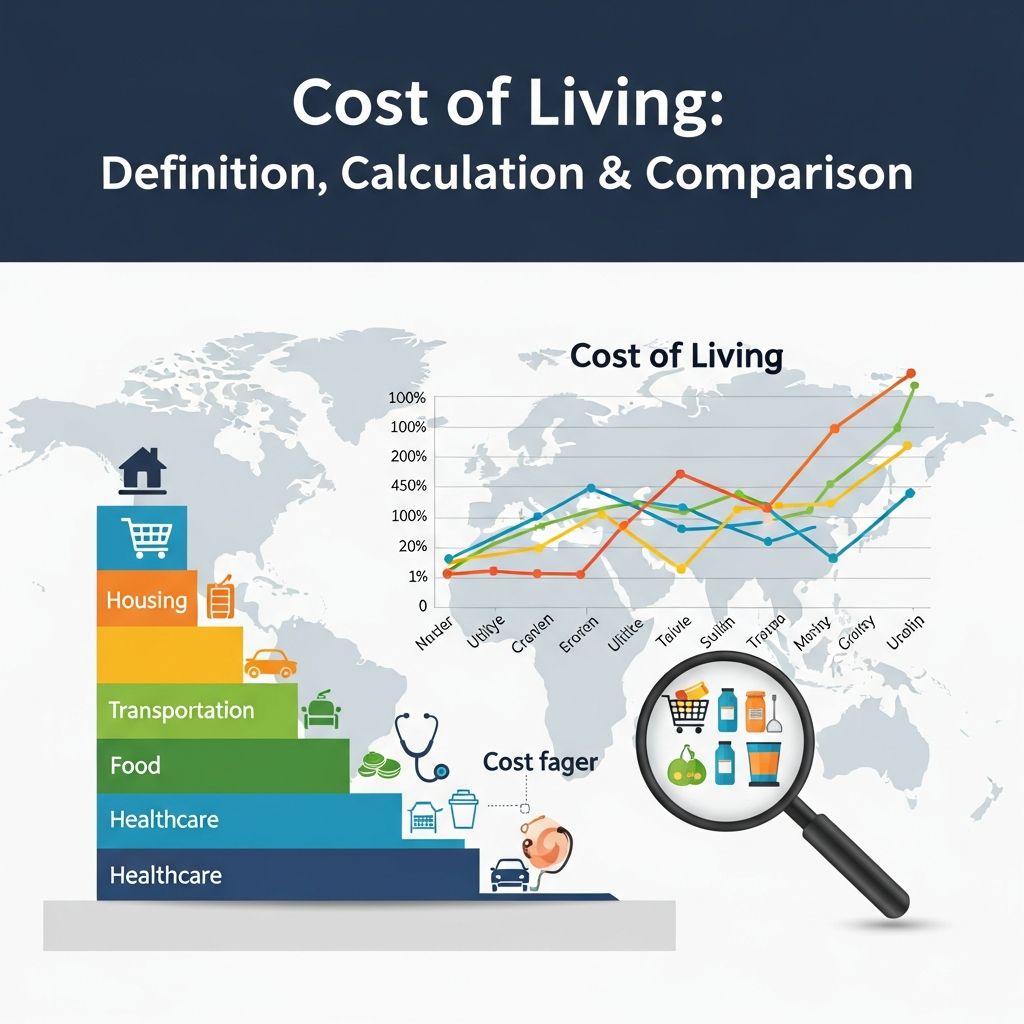
The cost of living is a fundamental financial metric that affects your budgeting decisions, career choices, and lifestyle planning. Whether you’re considering a job offer in a new city, planning for retirement, or simply trying to understand your financial obligations, comprehending the cost of living is essential. This comprehensive guide explores what cost of living means, how to calculate it accurately, and how to use it to compare different geographic areas effectively.
Understanding Cost of Living: Definition and Importance
Cost of living refers to the amount of money required to sustain a reasonable standard of living in a particular geographic location. It encompasses all the essential expenses necessary for daily life, including housing, food, transportation, utilities, healthcare, and taxes. The concept recognizes that the same lifestyle can cost significantly different amounts depending on where you live.
Understanding your cost of living is crucial for several reasons. It helps you evaluate job offers realistically by comparing salary offers across different cities. It enables you to budget more effectively by knowing your actual expenses. Additionally, it assists in making informed decisions about relocation, retirement planning, and long-term financial goals. For many individuals and families, cost of living fluctuations can directly impact their quality of life and purchasing power.
Key Components of Cost of Living
The major components that constitute cost of living calculations typically include:
- Housing Costs: Rent or mortgage payments, property taxes, insurance, and home maintenance represent the largest expense category, typically weighted at 25-40% of total calculations.
- Food Expenses: Groceries, dining out, and other food-related purchases
- Transportation: Vehicle payments, gas, insurance, public transit, and maintenance
- Utilities: Electricity, water, gas, internet, and phone services
- Healthcare: Insurance premiums, copays, medications, and medical services
- Education: Tuition, books, and educational materials
- Taxes: Federal, state, and local tax obligations
- Personal and Miscellaneous: Clothing, entertainment, subscriptions, and discretionary spending
How Cost of Living Is Calculated
Cost of living calculations involve a sophisticated process that aggregates prices of numerous goods and services to provide accurate comparisons. Understanding how this calculation works helps you interpret cost of living data more effectively and apply it to your personal situation.
The Methodology Behind Cost of Living Calculations
Economists and researchers calculate the cost of living by aggregating the prices of a fixed “basket” of goods and services designed to represent typical household expenses. This standardized approach ensures consistency and comparability across different geographic locations and time periods.
The calculation process typically involves several key steps:
- Data Collection: Researchers gather current prices for hundreds of goods and services, from groceries and utilities to entertainment and transportation costs
- Indexing: All costs are normalized against a baseline (often New York City equals 100) to create comparable index numbers
- Weighting: Different expense categories receive different weights based on typical household spending patterns
- Regular Updates: Reliable calculators update their data quarterly or bi-annually to reflect changing economic conditions
Calculating Your Personal Cost of Living
While general cost of living calculations provide valuable benchmarks, your personal cost of living may differ based on your unique lifestyle and circumstances. Here’s a step-by-step approach to calculate your personal cost of living:
Step 1: Gather Your Monthly Expenses
List all your monthly expenses by category:
- Housing: $1,500
- Food: $600 (groceries and dining)
- Transportation: $300 (gas, insurance)
- Utilities: $250 (electricity, water, internet)
- Healthcare: $200 (premiums, copays)
- Personal/Miscellaneous: $400 (clothes, entertainment, etc.)
- Taxes (estimated): $700
Step 2: Sum Your Expenses
Add all categories together:
Monthly Total: $1,500 + $600 + $300 + $250 + $200 + $400 + $700 = $3,950
Step 3: Calculate Your Annual Cost
Multiply your monthly total by 12:
Annual Total: $3,950 × 12 = $47,400
This annual figure represents your total personal cost of living for maintaining your current lifestyle in your geographic location.
Factors to Consider When Calculating Cost of Living
When determining your cost of living, consider these important factors:
- The cost to purchase basic necessities: Focus on essential expenses first
- Your overall budget: Include discretionary spending that maintains your lifestyle
- Your current location: Geographic location significantly impacts expenses
- Your long-term plans: Future goals may require adjusted expense estimates
Understanding the Cost of Living Index
A cost of living index (COLI) is a method of measuring how expensive it is to live in a certain area, as well as how the cost of living changes over time. These indexes provide a quick, standardized way to compare affordability across different locations.
How the Cost of Living Index Works
The cost of living index typically uses a baseline number—usually 100—to represent the national average. This creates an intuitive scale for understanding relative costs:
- A city with an index of 120 is 20% more expensive than the national average
- A city with an index of 90 is 10% less expensive than the national average
- A city with an index of 100 matches the national average
This standardized approach provides a quick and easy way to see how far your money will stretch in different locations.
What the Cost of Living Index Measures
The index compares the prices of a standard basket of goods including housing, food, transportation, and healthcare. While this basket of goods may not be specific to your household’s financial needs, it is intended to provide a general idea of what to expect in various expense categories.
Cost of living calculators use comprehensive data collection and statistical analysis to create meaningful comparisons. They utilize the Consumer Price Index (CPI) and salary differentials of over 300+ US cities to provide accurate cost and salary comparisons.
Practical Applications of Cost of Living Indexes
Cost of living indexes are particularly valuable when:
- Evaluating job offers in different geographic locations
- Planning a relocation and comparing potential cities
- Negotiating salary adjustments for geographic transfers
- Understanding how inflation affects different regions
- Making retirement location decisions
Comparing Cost of Living Across Locations
Comparing cost of living between different areas is essential for making informed decisions about where to live and work. This comparison helps you understand whether a higher salary in one location will actually provide a better standard of living than a lower salary in a more affordable area.
Using Cost of Living Calculators
Online cost of living calculators streamline the comparison process. Here’s how to effectively use them:
Step 1: Select Your Current Location
Enter your current city to establish your baseline expenses and cost of living profile.
Step 2: Enter Your Current Income
Input your gross annual income or monthly salary. Some calculators allow for multiple income sources or household income calculations.
Step 3: Review Expense Categories
Examine how the calculator weights different expense categories. Adjust if your spending patterns differ significantly from typical households.
Step 4: Analyze Results
Review both the overall cost difference and category-by-category breakdowns. Pay special attention to categories that represent large portions of your budget.
Comparison Considerations
When comparing cost of living across locations, consider these important factors:
- Housing Costs: Often the most significant expense difference between locations
- Salary Differentials: How job compensation varies in different markets
- Local Taxes: State and local tax rates can dramatically impact your actual take-home pay
- Transportation Needs: Public transit availability affects transportation costs
- Healthcare Access: Insurance costs and healthcare provider availability vary by region
Ranking and Evaluating Different Locations
When deciding between multiple locations, a systematic approach to ranking helps you make the best decision for your circumstances.
Creating a Comparison Framework
Consider creating a comparison table that evaluates key metrics for each location you’re considering. The Consumer Price Index (CPI), administered by the U.S. Bureau of Labor Statistics, is a type of national COLI that offers a look into how the cost of living in the U.S. changes over time and can inform your rankings.
Beyond the Numbers
While cost of living calculations are crucial, remember to consider additional factors:
- Quality of life and community atmosphere
- Career advancement opportunities
- Proximity to family and friends
- Climate and weather preferences
- Education quality if you have school-age children
- Recreation and entertainment options
Frequently Asked Questions
Q: How often should I recalculate my personal cost of living?
A: It’s recommended to recalculate your cost of living annually or whenever major life changes occur, such as job changes, relocation, or family status changes. Many cost of living calculators update their data quarterly or bi-annually to reflect changing economic conditions.
Q: Is the cost of living index accurate for my specific situation?
A: The cost of living index provides a general benchmark, but your personal cost of living may differ based on your unique lifestyle choices, preferences, and circumstances. Use the index as a starting point, then adjust based on your actual spending patterns.
Q: How do I know if a job offer in a new location is worth accepting?
A: Calculate your personal cost of living in both locations, compare the salary offers, and determine if the new salary will maintain or improve your current standard of living. Also consider non-financial factors like career growth, benefits, and quality of life.
Q: What’s included in healthcare costs for cost of living calculations?
A: Healthcare costs typically include insurance premiums, copays, deductibles, medications, and out-of-pocket expenses. These vary significantly by location and insurance coverage type.
Q: Can I use cost of living calculations for retirement planning?
A: Yes, cost of living information is valuable for retirement planning. You can estimate retirement expenses in your current location or research costs in potential retirement destinations to ensure your savings will be adequate.
References
- What is Cost of Living? — Experian. Retrieved from https://www.experian.com/blogs/ask-experian/what-is-the-cost-of-living/
- What Is Cost of Living and Why It Matters — DailyPay. Retrieved from https://www.dailypay.com/resource-center/blog/what-cost-of-living/
- Cost of Living Calculator: Your Complete Guide to Smart Financial Planning and International Moves — Afriex. Retrieved from https://www.afriex.com/resource-posts/cost-of-living-calculator-your-complete-guide-to-smart-financial-planning-and-international-moves
- Cost of Living — Wikipedia. Retrieved from https://en.wikipedia.org/wiki/Cost_of_living
- Cost of Living: Definition, Index and How It’s Calculated — Indeed Career Advice. Retrieved from https://www.indeed.com/career-advice/career-development/cost-of-living-definition
- Cost of living 2024: How to calculate and compare — Bankrate. Retrieved from https://www.bankrate.com/real-estate/what-is-cost-of-living/
Similar Articles








Read full bio of Sneha Tete