Cost of Living Calculator: Compare Cities & Plan Your Move
Understand cost disparities between metro areas with Bankrate's cost of living comparison tool.

Understanding Cost of Living Calculators
The cost of living represents the total amount of money required to live in a certain area and cover your basic necessities. Whether you’re considering a job opportunity in a new city, planning a relocation, or simply curious about how your income stacks up in different regions, understanding cost of living variations is essential for making informed financial decisions. Expenses typically factored into cost of living calculations include housing, food, and taxes, though the metric may also encompass costs such as transportation, healthcare, entertainment, and education.
Cost-of-living calculators serve as powerful tools for comparing the expenses associated with different cities or regions. Since expenses can vary dramatically from place to place, having access to reliable data helps you understand the disparities between two metro areas. This information can be particularly valuable when determining or negotiating the salary you’ll need to cover your basic needs in a particular city.
What Is a Cost of Living Index?
A cost-of-living index provides a city-to-city comparison of the cost of living in each place, based on a variety of consumer expenses and spending categories. These indexes typically analyze expenses such as food, housing, utilities, transportation, healthcare, and other goods to provide a comprehensive picture of regional economic conditions.
Most indexes use the number 100 to represent the national average cost of living. Each city or region is assigned a number that falls either above or below this baseline, serving as a barometer that consumers can use to gauge how the cost of living in a particular city relates to the national average. For example, a city with an index of 120 would be 20 percent more expensive than the national average, while a city with an index of 85 would be 15 percent less expensive.
Major Cost of Living Indexes Available
Several reputable organizations publish cost of living indexes that you can access online:
- The Council for Community and Economic Research (C2ER) Cost of Living Index
- Economic Policy Institute (EPI) Family Budget Calculator
- Missouri Economic Research and Information Center (MERIC) Cost of Living Index
- U.S. Bureau of Labor Statistics (BLS) Consumer Price Index (CPI)
The U.S. Bureau of Labor Statistics publishes the widely referenced Consumer Price Index, which measures changes in prices for goods and services purchased by urban households. This index includes consumer expenses such as water and sewer service fees and sales and excise taxes. However, the CPI does not include costs associated with income taxes or money consumers spend on investments like stocks, bonds, or life insurance.
Key Components of Cost of Living Comparisons
Understanding what factors are included in cost of living calculations helps you make more accurate comparisons and budget appropriately. Cost of living calculations are based on various key necessities and expenses that impact your monthly and annual budget.
Essential Expense Categories
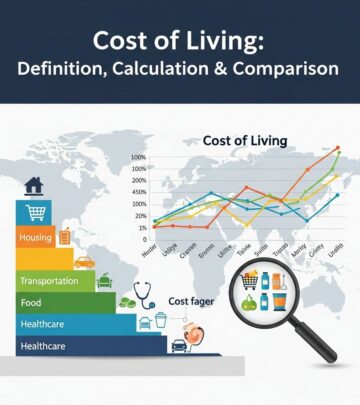
When using a cost of living calculator, you’ll typically encounter several major expense categories. Housing represents one of the largest components, including rent or mortgage payments, property taxes, homeowners insurance, and utilities. Food costs encompass both groceries and dining out, while transportation expenses cover vehicle payments, gas, insurance, and public transit. Healthcare costs include insurance premiums, medical visits, and prescriptions. Additional categories often include childcare, education, entertainment, and various taxes.
It’s important to note that some outputs from cost of living calculators—such as medical visits and food costs—are calculated for an individual person, so you’ll need to adjust the calculations based on the size of your household. A family of four will have significantly different total expenses than a single individual, even in the same geographic location.
How Cost of Living Has Changed in Recent Years
Understanding recent trends in cost of living is crucial for making future financial plans. According to recent data, consumer prices have experienced notable increases across multiple categories. The U.S. Bureau of Labor Statistics reported that consumer prices rose 3.2 percent from February 2023 to February 2024, with the cost of food specifically increasing 2.2 percent.
One of the largest portions of many people’s cost of living is rent, which has also risen significantly over the past year. Zillow’s Observed Rent Index found that asking rents have risen 3.5 percent year-over-year and 29.9 percent since the beginning of the pandemic. This dramatic increase in housing costs has fundamentally altered the financial landscape for renters across the country.
Housing costs, referred to as “shelter” by the BLS, contribute significantly to overall cost of living increases. Shelter has consistently been one of the largest contributors to the CPI’s all-items increases, with shelter inflation rising 5.7 percent in February 2024, outpacing the overall inflation level of 3.2 percent. Experts expect home prices to continue rising, meaning the cost of living will likely continue to increase in the coming years.
How to Calculate and Compare Cost of Living
Calculating cost of living involves a systematic approach to comparing prices across different geographic areas. Typically, cost of living is determined by comparing the prices of a range of goods and services on which consumers spend their money. Costs are broken down and weighted by category, such as healthcare, food, or housing, allowing for meaningful comparisons across regions.
Using a Cost of Living Calculator Effectively
Modern cost of living calculators have made comparing expenses between cities simpler than ever. To use Bankrate’s cost of living calculator, you’ll enter your current home city, the city you’re thinking of moving to, and your income. The calculator will then show you the cost of living difference and how much you would need to make in the new city to maintain your current standard of living.
The calculator breaks down the difference in typical costs between the two locations, including average rent and home prices. You can also use the calculator to view specific costs of goods and services between two geographic areas. For instance, bread might cost $4.27 in the metro Washington, D.C. area but only $3.76 in Indianapolis. This granular level of detail allows you to understand exactly where your money will be spent differently in a new location.
Using a cost of living calculator allows you to view specific costs that matter to you personally. If you have children, for example, costs like baby food, diapers, and childcare might be higher on your radar. Conversely, if you’re a young professional focused on entertainment and dining, you might prioritize comparing restaurant prices and entertainment venues between cities.
Practical Applications for Your Financial Planning
Cost-of-living calculator information can be helpful for making comparisons between two or more cities and determining how much money would be required to make ends meet. This is particularly important if you’re job-searching or considering relocating to a new part of the country.
The information provided by a cost-of-living index can help you get a realistic snapshot of living expenses and create an accurate budget. It can also help you determine whether or not you can afford to live in a particular location, taking the guesswork out of major life decisions. When evaluating a job offer in a different city, use these calculators to assess whether the proposed salary would actually provide a comparable standard of living to your current situation.
For remote workers and companies with distributed teams, cost of living calculators have become especially valuable. While flexible and remote work options remain a priority for many American workers, higher pay is also important. With more people living independently of their physical workplaces, a company’s once-adequate pay rate may no longer line up with the costs of living where employees reside. Cost of living calculators help bridge this gap by providing concrete data for salary negotiations.
Finding Additional Cost of Living Resources
Beyond using a dedicated calculator, you can sometimes find cost of living statistics on state, county, and city government websites. Bankrate’s Best Places to Live series can also help you narrow down cities to compare. Their analysis breaks down the top cities in several states, ranking them by factors such as affordability, job prospects, and safety. This can provide valuable context when making your comparison.
Additionally, if you’re considering purchasing a home in a new location, Bankrate’s How Much House Can I Afford calculator can help you figure out what your monthly housing budget should be. This tool takes into account your income, down payment, interest rates, and debt-to-income ratio to provide personalized guidance on home affordability in different markets.
Frequently Asked Questions About Cost of Living Calculators
Q: What factors have the biggest impact on cost of living differences between cities?
A: Housing costs are one of the biggest drivers of cost of living variations between cities. However, the cost of other essentials also plays a significant role. External factors, like interest rates and consumer confidence, can also influence the prices of all sorts of goods, making them major influences on cost of living as well. For example, lower mortgage interest rates can increase how much home buyers can afford, helping to push up prices, and the impact of those high prices then ripples across the rest of the economy.
Q: How accurate are cost of living calculators?
A: Cost of living calculators provide reliable estimates based on aggregated data from multiple sources and categories. However, they represent averages and may not account for your specific lifestyle choices. For the most accurate personal assessment, adjust the calculator inputs to match your actual spending patterns and household composition.
Q: Can cost of living calculators help with salary negotiations?
A: Yes, absolutely. Cost of living calculators can help you determine or negotiate the salary you’ll need to cover your basic needs in a particular city. By showing concrete data about expense differences between locations, these tools provide compelling evidence for salary discussions with employers, especially when relocating or accepting remote positions in higher-cost areas.
Q: Should I adjust calculator results for household size?
A: Yes, this is crucial. Since some calculator outputs like medical visits and food costs are calculated for an individual person, you’ll need to adjust the calculations depending on the size of your household. A family of four will require significantly different total expenses than a single individual in the same location.
Q: What’s included in a typical cost of living calculation?
A: Typical cost of living calculations include housing, food, transportation, healthcare, utilities, taxes, childcare, education, and entertainment. The specific categories may vary depending on the calculator, but housing, food, and taxes are almost always included as fundamental components.
References
- Cost Of Living Comparison Calculator — Bankrate. 2025. https://www.bankrate.com/real-estate/cost-of-living-calculator/
- Cost of living 2024: How to calculate and compare — Bankrate. 2025. https://www.bankrate.com/real-estate/what-is-cost-of-living/
- Consumer Price Index — U.S. Bureau of Labor Statistics. 2024. https://www.bls.gov/cpi/
- Observed Rent Index — Zillow. 2024. https://www.zillow.com/research/
- Where Should I Live — Bankrate. 2025. https://www.bankrate.com/real-estate/where-should-i-live/
Similar Articles








Read full bio of Sneha Tete