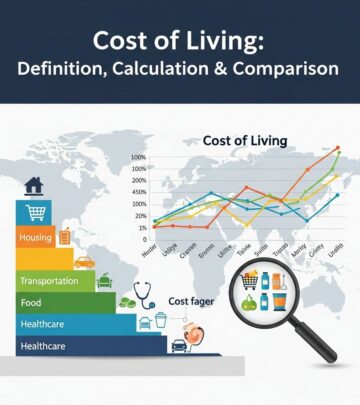
Cost Of Living Adjustment 2026 Guide For Retirees
Discover how COLA protects your income from inflation, from Social Security to workplace raises, with calculation tips and real-world examples.
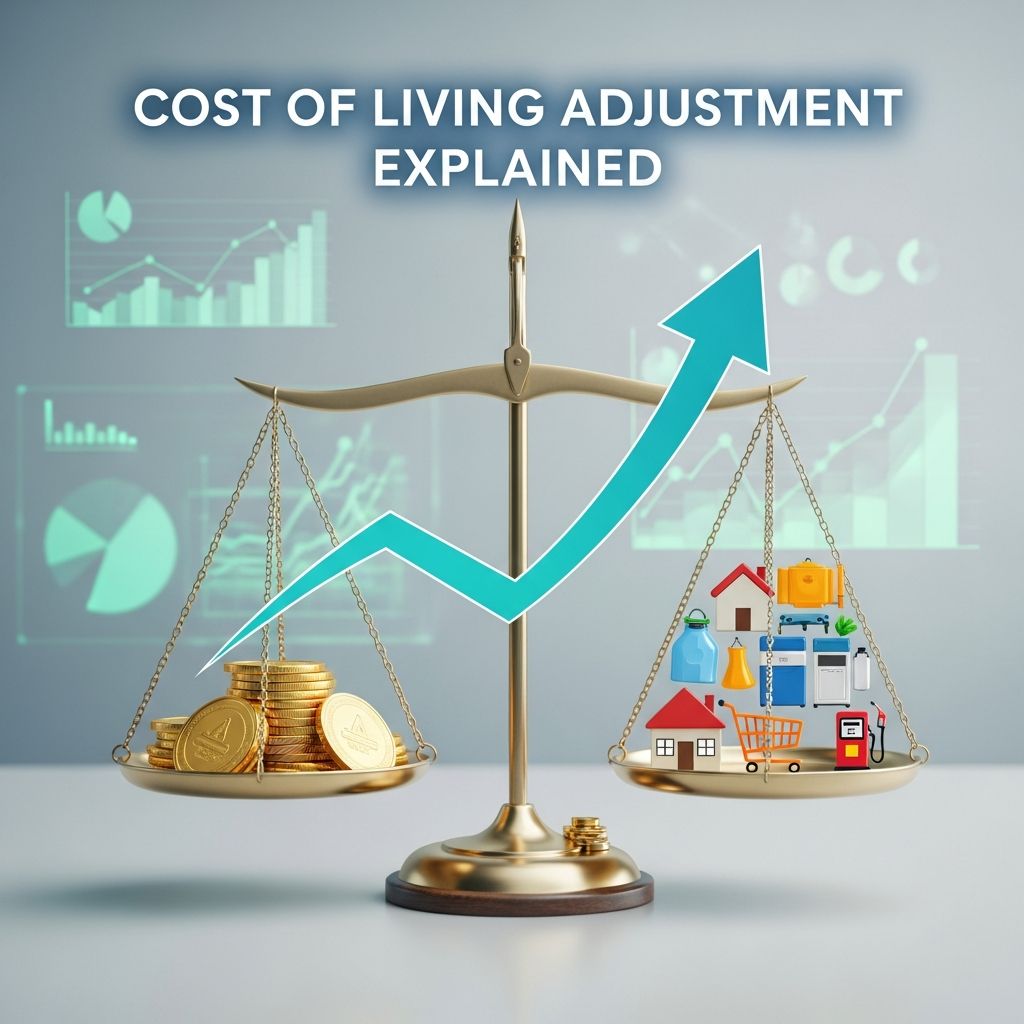
A cost of living adjustment (COLA) serves as a vital mechanism to preserve the real value of income and benefits against the erosive effects of inflation. By increasing payments in line with rising prices for essentials like housing, food, and transportation, COLA ensures that individuals and retirees can sustain their standard of living over time.
Why COLA Matters in an Inflating Economy
Inflation gradually diminishes purchasing power, meaning a fixed income buys fewer goods and services each year. For instance, if prices rise by 3% annually but wages remain static, workers effectively face a pay reduction. COLA addresses this by providing systematic upward adjustments, commonly tied to official inflation metrics.
Governments and employers implement COLA to foster economic stability. Retirees on fixed pensions or Social Security rely on these boosts to cover escalating costs, while active employees benefit from competitive compensation packages that account for regional price variations. Without such mechanisms, income inequality could widen as lower earners struggle disproportionately.
The Core Mechanism: Linking COLA to Inflation Indices
COLA calculations predominantly reference the Consumer Price Index (CPI), a benchmark compiled by the U.S. Bureau of Labor Statistics. This index tracks price changes in a basket of goods and services representing typical urban household expenditures.
Two primary CPI variants guide adjustments:
- CPI-U (All Urban Consumers): Covers about 93% of the U.S. population, ideal for broad employer applications.
- CPI-W (Urban Wage Earners and Clerical Workers): Focuses on 29% of the population in hourly or clerical roles; mandated for Social Security.
These indices monitor around 80,000 items monthly, including groceries, utilities, healthcare, and rent, providing a reliable inflation snapshot.
How Governments Apply COLA: Social Security as the Prime Example
The Social Security Administration (SSA) exemplifies standardized COLA application. Since 1975, benefits have automatically increased annually based on CPI-W changes, except in years of negligible inflation like 2009, 2010, and 2015.
The process unfolds as follows:
- Compute the average CPI-W for the third quarter (July-September) of the current year.
- Compare it to the prior year’s third-quarter average.
- Apply the percentage increase (rounded to the nearest 0.1%) if positive; no decrease occurs during deflation.
For 2026, while exact figures depend on late-2025 data, historical trends show adjustments around 2-4% amid moderate inflation. A retiree receiving $1,500 monthly with a 2.5% COLA would see payments rise to $1,537.50, partially offsetting price hikes in food (up 3.1%) and energy (up 4.1%) as of late 2025.
Private Sector COLA: Employer Strategies and Flexibility
Unlike mandatory government programs, private employers voluntarily offer COLA to attract and retain talent, especially in high-inflation or competitive markets. These adjustments apply universally across staff, distinguishing them from performance-based raises.
| Application Type | Description | Common CPI Used |
|---|---|---|
| Annual Across-the-Board | Uniform raise for all employees to combat inflation | CPI-U or Local CPI |
| Relocation Support | Boost for staff moving to higher-cost areas | Regional Cost Data |
| Market Alignment | Matches competitor offerings | Benchmark Surveys |
Employers might blend CPI data with company performance or local metrics for tailored adjustments, occurring yearly or ad hoc. In tight labor markets, COLA becomes a retention tool, with many firms adopting it post-2020s inflation surges.
Pension Plans and Public Sector Implementations
Public pensions frequently incorporate COLA to safeguard retiree incomes. For example, Washington’s Department of Retirement Systems applies annual adjustments to Plan 2 and 3 members after one year of retirement, countering economic shifts.
Private pensions vary; some guarantee COLA via contracts, others cap increases or tie them to fund performance. These provisions ensure long-term purchasing power, critical as lifespans extend and inflation compounds.
Step-by-Step Guide to Calculating Your COLA
Individuals can estimate personal COLA using public CPI data. The SSA formula is:
COLA = [(Current Q3 Avg CPI-W – Previous Q3 Avg CPI-W) / Previous Q3 Avg CPI-W] × 100, rounded to 0.1%.
Example: If prior Q3 CPI-W averages 300 and current is 309,
COLA = [(309 – 300) / 300] × 100 = 3.0%.
For a $2,000 benefit: New amount = $2,000 × 1.03 = $2,060.
Employers adapt this for CPI-U or custom baskets, often using tools from BLS.gov for precision.
Historical Trends and Future Outlook
Post-1975, Social Security COLA averaged about 3.5% annually, with peaks over 14% in the 1980s amid high inflation. Recent years reflect moderation: 8.7% in 2023, tapering to 2.5% by 2025.
Looking to 2026, persistent supply chain issues and energy costs may sustain 2-3% adjustments. Employers face pressure to match, as surveys indicate 70% now include COLA in total rewards.
Pros and Cons of COLA in Compensation Planning
- Advantages: Maintains equity, boosts morale, simplifies budgeting.
- Challenges: Increases payroll costs; may not fully capture regional disparities or lifestyle inflation.
Organizations mitigate drawbacks by capping COLA at CPI minus a percentage or integrating with merit pay.
Frequently Asked Questions
Is COLA mandatory for private employers?
No, it’s discretionary unless contractually obligated. Many offer it competitively.
Does COLA apply during deflation?
Social Security holds benefits steady; private plans vary.
How does COLA differ from a merit raise?
COLA is inflation-driven and universal; merit is performance-based.
Can I calculate COLA for my salary?
Yes, using BLS CPI calculators for estimates.
What if inflation outpaces COLA?
Recipients may need supplemental income or budgeting adjustments.
Strategies to Maximize COLA Benefits
Negotiate COLA clauses in contracts, track CPI trends, and diversify income. Retirees should review SSA announcements annually, while workers advocate for transparent policies.
References
- What is cost of living adjustment (COLA)? And how it works — OysterHR. 2025. https://www.oysterhr.com/glossary/cost-of-living-adjustment-cola
- What Is a Cost of Living Adjustment (COLA)? — Experian. 2025-10. https://www.experian.com/blogs/ask-experian/what-is-cost-of-living-adjustment/
- What Is an Average Cost of Living Raise? — Indeed. 2025. https://www.indeed.com/career-advice/pay-salary/average-cost-of-living-raise
- What is Cost of Living Adjustment (COLA) — ADP. 2025. https://www.adp.com/resources/articles-and-insights/articles/w/what-is-cost-of-living-adjustment.aspx
- Cost-of-Living Adjustment (COLA) Information — Social Security Administration. 2025. https://www.ssa.gov/cola/
- Cost of Living Adjustment (COLA) — Washington Department of Retirement Systems. 2025. https://www.drs.wa.gov/life/retired/cola/
Similar Articles








Read full bio of medha deb