Cost of Debt: Definition, Calculation, and Financial Impact
Understand how companies calculate cost of debt and its role in WACC.

What Is Cost of Debt?
The cost of debt represents the effective rate of interest that a company pays on its borrowed capital. It is the return that a company must provide to its debt holders and creditors as compensation for the risk they assume when lending money to the organization. Unlike the returns expected by equity investors, the cost of debt is typically more straightforward to calculate because it is based on observable market interest rates and contractual obligations.
When a company borrows money through bonds, loans, or other debt instruments, creditors require compensation for bearing the risk that the company may default on its obligations. This required return forms the basis of the cost of debt calculation. The cost of debt serves as a critical component in determining a company’s overall cost of capital and plays an essential role in investment decisions, capital budgeting, and corporate valuation.
Why Cost of Debt Matters
Understanding and calculating the cost of debt is fundamental to corporate financial management for several reasons:
- It reflects the financial health and creditworthiness of a company
- It influences the company’s Weighted Average Cost of Capital (WACC)
- It affects the decision to finance operations through debt versus equity
- It impacts the valuation of the company and its securities
- It helps investors assess the risk associated with corporate debt
The cost of debt incorporates both the company’s default risk and prevailing market interest rate conditions. Companies with lower credit ratings will face higher costs of debt because lenders demand greater compensation for increased default risk. Conversely, financially stable companies with strong credit ratings can borrow at lower rates.
How Cost of Debt Differs from Cost of Equity
Companies typically have two primary sources of external financing: debt and equity. The cost of debt and cost of equity are distinct concepts that reflect different investor expectations:
Cost of Debt Characteristics: Fixed interest payments are contractually obligated, tax-deductible interest expense reduces taxable income, and creditors have priority claims in bankruptcy proceedings.
Cost of Equity Characteristics: Returns come from dividends and capital appreciation, shareholders have residual claims on earnings and assets, and equity returns are not tax-deductible to the company.
Debt is generally considered cheaper financing because companies receive a tax benefit from interest expense deductions. Since interest payments reduce taxable income, the effective after-tax cost of debt is lower than the stated interest rate. Additionally, debt holders have predetermined payments and priority over equity holders, making debt less risky and thus requiring lower returns.
Methods for Calculating Cost of Debt
Companies can use several approaches to determine their cost of debt, each suited to different circumstances and data availability.
Method 1: Yield to Maturity Approach
The first and most direct method involves examining the current Yield to Maturity (YTM) of a company’s outstanding debt. For public companies with traded bonds in the market, the YTM represents the total return an investor would receive if holding the bond until maturity, accounting for interest payments and any capital gains or losses.
This approach works best when a company has a simple capital structure with a single class of debt or similar debt instruments with comparable interest rates. By observing market prices and calculating YTM, analysts can obtain an accurate market-based cost of debt without complex estimations.
Method 2: Credit Rating Approach
For companies without observable debt trading in public markets, particularly private companies, the credit rating approach provides a practical alternative. Credit rating agencies such as Standard & Poor’s, Moody’s, and Fitch assign ratings based on a company’s financial strength and ability to service debt.
Analysts can determine a yield spread over US Treasury securities based on the company’s credit rating. This spread is then added to the risk-free rate (typically the yield on US Treasuries) to calculate the cost of debt. This method is particularly valuable for private companies that lack publicly traded debt instruments.
Method 3: Estimated Rating Approach
When a company lacks both observable market debt and a formal credit rating, analysts can estimate an implied rating using financial leverage ratios. The interest coverage ratio is especially useful in this analysis, as it measures a company’s ability to service debt obligations from operating earnings.
A higher interest coverage ratio indicates a safer borrower with lower default risk, suggesting a better credit rating and lower cost of debt. Conversely, lower coverage ratios signal higher financial risk and command higher interest rates. By comparing the company’s financial metrics to peer companies with known ratings, analysts can estimate an appropriate yield spread and calculate the cost of debt.
The Cost of Debt Formula
The after-tax cost of debt is expressed through the following formula:
After-Tax Cost of Debt = Interest Rate × (1 – Tax Rate)
Where:
- Interest Rate = the market interest rate on the company’s debt
- Tax Rate = the company’s marginal corporate tax rate
The tax adjustment is critical because interest expenses reduce taxable income. For example, if a company has a 6% cost of debt and faces a 21% corporate tax rate, the after-tax cost of debt would be 6% × (1 – 0.21) = 4.74%. This lower effective rate reflects the tax benefit of deductible interest expenses.
Cost of Debt and WACC
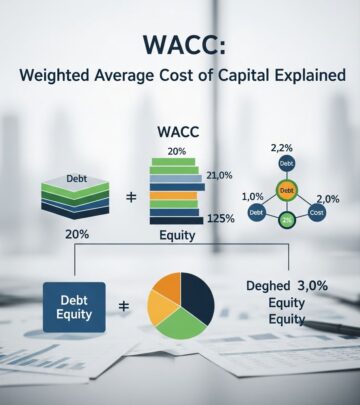
The cost of debt is a crucial component in calculating a company’s Weighted Average Cost of Capital (WACC). The WACC represents the average rate of return a company must pay to finance its assets, weighted by the proportion of debt and equity in its capital structure.
The WACC formula includes the after-tax cost of debt multiplied by the weight of debt in the capital structure. Understanding and accurately calculating the cost of debt directly impacts WACC calculations, which are fundamental to valuation models, capital budgeting decisions, and investment analysis.
Factors Affecting Cost of Debt
Several factors influence a company’s cost of debt:
Credit Quality and Default Risk
A company’s creditworthiness is the primary determinant of its cost of debt. Companies with strong balance sheets, consistent profitability, and reliable cash flows receive better credit ratings and lower borrowing costs. Conversely, companies with financial challenges face higher interest rates reflecting increased default risk.
Market Interest Rate Environment
The broader economic environment and monetary policy significantly impact debt costs. When central banks raise benchmark interest rates, all borrowing becomes more expensive. Economic uncertainty and inflation can also drive up the risk premiums lenders demand.
Debt Maturity and Structure
Longer-term debt typically carries higher interest rates than short-term obligations, reflecting additional uncertainty over extended periods. The complexity of a company’s capital structure, including subordinated debt, senior debt, and convertible instruments, also affects overall cost of debt calculations.
Industry and Economic Conditions
Cyclical industries and those facing structural challenges may have higher costs of debt. Economic downturns can raise borrowing costs across sectors as risk aversion increases among lenders.
Why Debt is Often Cheaper Than Equity
Companies typically prefer debt financing over equity for several reasons related to cost efficiency:
Fixed Payment Obligations: Debt involves contractual interest payments, whereas equity financing requires sharing profits and growth potential indefinitely. Fixed costs provide certainty and potentially lower overall required returns.
Tax Deductibility: Interest expenses reduce taxable income, creating a tax shield that effectively subsidizes borrowing costs. Dividend payments to equity holders are not tax-deductible, making equity more expensive after-tax.
Risk Priority: Debt holders have priority claims on assets and earnings in bankruptcy situations, making debt less risky than equity. Lower risk justifies lower required returns for debt holders compared to equity investors.
Control Considerations: Issuing debt does not dilute existing shareholders’ ownership stakes or voting rights, whereas equity issuance does. This maintains shareholder control and potential upside participation.
Practical Considerations for Different Company Types
Public Companies
Public companies with traded bonds can observe market prices and calculate YTM directly, making cost of debt determination relatively straightforward. Multiple debt instruments often exist, providing redundancy and market validation of calculations.
Private Companies
Private companies without publicly traded debt must rely on credit rating approaches or comparable company analysis. Comparing capital structures with similar peer companies helps ensure reasonable cost of debt estimates.
Startups and High-Growth Companies
Early-stage companies may lack credit ratings or have limited financial history. These companies often use estimated rating approaches or accept premium interest rates reflecting their higher perceived risk.
Common Challenges in Cost of Debt Calculation
Multiple Debt Tranches: Companies with various debt instruments at different interest rates must calculate a weighted average or use alternative approaches rather than simple YTM calculations.
Changing Market Conditions: Cost of debt can fluctuate with interest rate changes and shifts in credit markets, requiring regular updates to valuations and financial analyses.
Rating Bias: Credit rating agencies may be slow to adjust ratings, creating potential discrepancies between implied ratings and formal agency assessments.
Comparable Company Selection: When using comparative analysis for private companies, selecting truly comparable peers is challenging and can affect result accuracy.
Frequently Asked Questions
Q: Why is cost of debt lower than cost of equity?
A: Cost of debt is typically lower because debt holders have priority claims in bankruptcy, interest is tax-deductible, and payments are fixed and contractually obligated. These factors reduce risk compared to equity investments.
Q: How does the tax rate affect cost of debt?
A: Higher corporate tax rates increase the tax benefit of deductible interest expenses, reducing the after-tax cost of debt. The marginal tax rate is used in these calculations to reflect the company’s actual tax situation.
Q: Can cost of debt change over time?
A: Yes, cost of debt fluctuates with market interest rates, changes in credit ratings, and the company’s financial condition. Fixed-rate debt locks in initial rates, but refinancing opportunities occur as market conditions change.
Q: How is cost of debt used in valuation?
A: Cost of debt is used to calculate WACC, which serves as the discount rate in valuation models like Discounted Cash Flow (DCF) analysis. Accurate cost of debt estimates are essential for proper company valuation.
Q: What is a good cost of debt?
A: A “good” cost of debt is relative to the company’s industry, creditworthiness, and prevailing interest rate environment. Strong companies should have costs below their cost of equity, while rates comparable to peer companies indicate market-based pricing.
References
- Cost of Debt — Corporate Finance Institute. 2024. https://corporatefinanceinstitute.com/resources/valuation/cost-of-debt/
- Understanding Corporate Capital Structure — U.S. Securities and Exchange Commission. https://www.sec.gov/
- Corporate Bonds and Yield to Maturity — Financial Industry Regulatory Authority (FINRA). https://www.finra.org/
Similar Articles








Read full bio of Sneha Tete