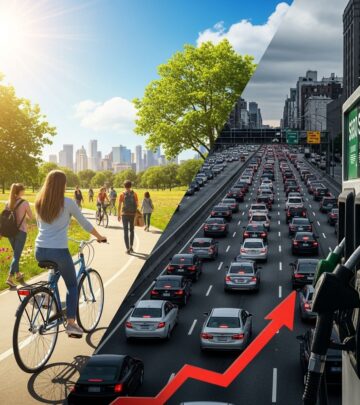
The Cost of Commuting: Comparing Transportation Options
Discover the true cost of commuting and find the most affordable transportation option for your lifestyle.
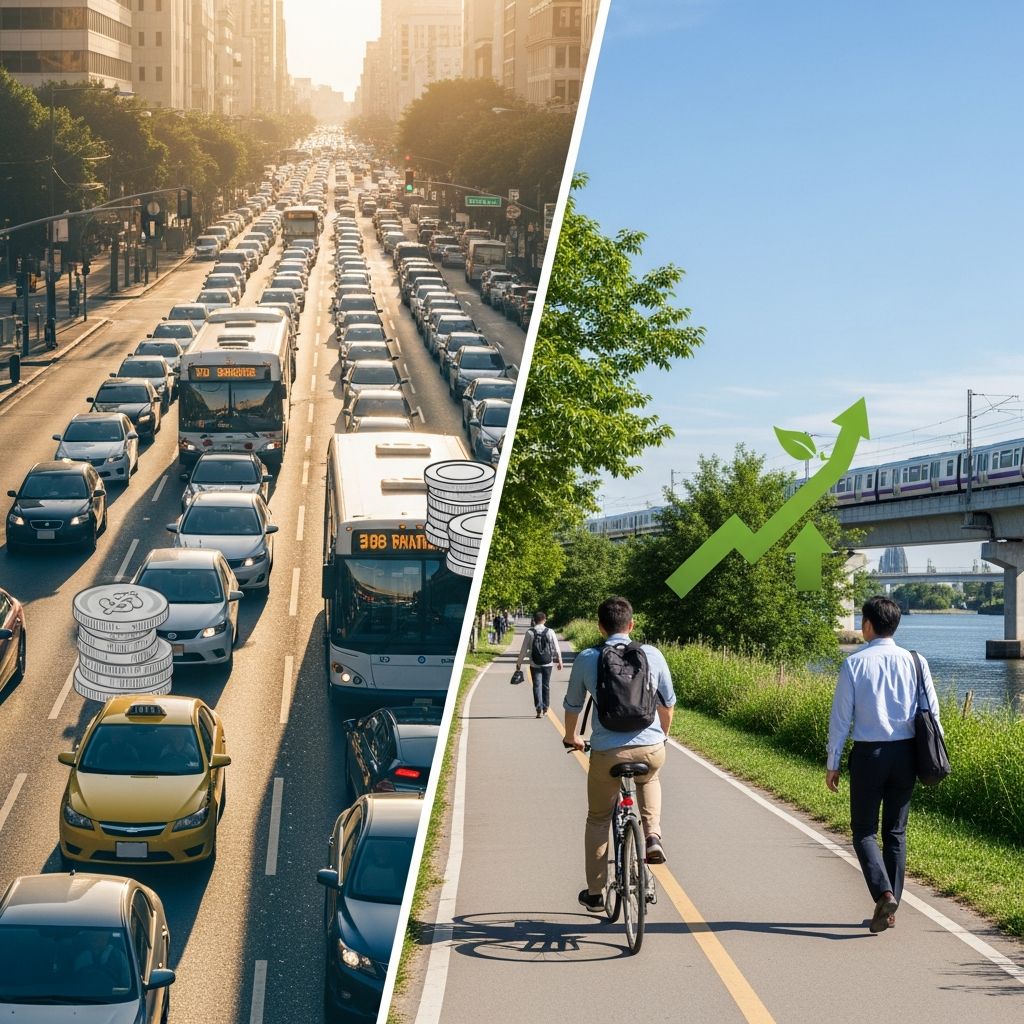
The Cost of Commuting: Understanding Your True Commute Expenses
Every day, millions of Americans make decisions about how to get to work. While the choice may seem simple on the surface, the financial implications of your commute are far more complex than many realize. The cost of commuting extends far beyond the gas you pump into your vehicle or the transit fare you swipe—it encompasses time, opportunity costs, and long-term wealth accumulation. Understanding the true cost of commuting is essential for making informed decisions about where you live and how you get to work.
The primary determinant of commuting costs is your chosen mode of transportation. While distance matters, the method you select has an even greater impact on your overall expenses. Some transportation methods are dramatically more cost-efficient than others, but what you save in dollars often comes at the expense of time. This fundamental trade-off between cost and convenience is at the heart of commuting decisions.
Calculating Your True Commute Cost
Before you can determine which commute option makes financial sense, you need to understand how to calculate your true commuting costs. This calculation goes beyond simple dollar amounts—it factors in the value of your time.
The simplest way to evaluate your commute is to multiply your hourly wage by the total time you spend commuting. This calculation reveals how many working hours you’re essentially dedicating to getting to work. For example, if you earn $25 per hour and spend one hour commuting daily, you’re dedicating $25 of your daily earnings just to transportation. This perspective makes it much easier to compare different commute options and determine which is financially optimal for your situation.
Additionally, when calculating your commute cost, consider the relationship between your location and your workplace. Research shows that each mile you live from work can steal hundreds of dollars annually from your earnings when you factor in both driving costs and time investment.
Driving Yourself: The Most Expensive Option
For most Americans, driving yourself to work remains the default commuting choice. However, it’s also the most expensive option when you calculate all associated costs.
The monthly costs of driving include:
| Cost Category | Average Monthly Cost |
|---|---|
| Gas | $179.90 |
| Insurance | $132.33 |
| Maintenance | $96.80 |
| Tolls | $50.00 |
| Auto Loan | $54.80 |
| Registration | $10.00 |
| Taxes | $40.00 |
| Total | $563.83 |
This totals approximately $564 per month, or roughly $6,766 annually. However, this calculation represents average costs and may vary significantly based on your vehicle type, insurance rates, and local tolls. For individuals driving longer distances or commuting in urban areas with higher tolls, expenses can easily exceed this average.
The economics of driving are particularly striking when you consider the long-term wealth implications. Over a decade of commuting, the combination of direct expenses and time costs can easily result in losing over $125,000 in potential wealth accumulation. This calculation assumes you could have invested the money spent on commuting or used the time saved for more productive endeavors.
In America’s car-centric landscape, where cities and towns have been primarily designed around automobile transportation, driving often remains the fastest option between two points. Public buses might be cheaper but may only get you close to your destination and could take twice or three times as long. This speed advantage, however, comes at a steep financial cost that many commuters don’t fully appreciate.
Public Transportation: An Affordable Alternative
Public transportation represents a significantly cheaper commuting option compared to driving yourself. However, it remains underutilized in America, with only 2.5% of Americans commuting to work via public transit according to census data.
The cost of public transportation varies dramatically based on location. In Denver, for example, the RTD regional pass costs approximately $200 per month—less than half the cost of driving. However, public transportation availability and reliability depend heavily on where you live. Many suburban and rural areas have limited or no public transit options, making this choice impossible for residents in those regions.
For those with access to public transportation, the decision often involves trade-offs beyond cost. Transit systems can be unreliable, routes may not perfectly align with your schedule, and commute times are often longer than driving. However, the financial savings and the ability to use commute time productively (reading, working, or relaxing) make public transportation attractive for many urban dwellers.
When evaluating public transportation, research the specific costs, schedules, and routes available in your area. The actual expense will depend on whether your city offers weekly passes, monthly passes, or pay-per-ride options, and how extensive the network is.
Carpooling: Sharing the Cost Burden
Carpooling represents a middle ground between driving alone and using public transportation, with approximately 8% of Americans choosing this option. By sharing driving responsibilities and vehicle costs, carpoolers can significantly reduce their commuting expenses.
In a typical carpooling arrangement, you can cut your gas, maintenance, and toll costs roughly in half by splitting them with one other person. You retain most other fixed costs like insurance and vehicle loans, but the variable costs drop considerably. If you carpool with two other people, theory suggests you could reduce costs to roughly one-third of solo driving expenses. However, this calculation doesn’t account for the reality that many car ownership costs are largely fixed regardless of how many people share the vehicle.
The most variable and reducible commuting costs are fuel consumption. Therefore, while carpooling provides meaningful savings compared to driving alone, it remains more expensive than many other commuting methods because insurance, registration, and loan payments continue largely unchanged. The real savings primarily come from reduced fuel consumption and slightly lower maintenance costs.
Carpooling offers additional benefits beyond cost savings, including reduced stress, the ability to relax or work during commute time, and environmental advantages through reduced emissions.
Bike Commuting: An Ultra-Affordable Option
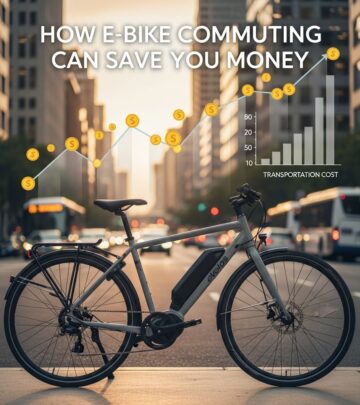
For those who live within a reasonable distance of their workplace, bike commuting offers exceptional cost savings. According to research adjusted for current inflation, biking costs approximately $0.15 per mile—roughly 50 cents cheaper per mile than driving alone.
For someone commuting 40 miles per day by bicycle, the monthly cost would be approximately $150. This represents massive savings compared to driving, and includes the bonus of regular exercise and improved health. However, this scenario is unrealistic for most commuters.
More realistically, bike commuting works best for short distances—typically one to two miles from home or commutes that take 15-20 minutes maximum. Under these ideal conditions, the cost of commuting drops dramatically to approximately $7.50 per month (assuming 4 miles of biking daily and $0.15 per mile in costs). This calculation includes bicycle maintenance, replacement parts, and accessories.
The barrier to widespread bike commuting is often distance and weather, not cost. For those fortunate enough to live close enough to their workplace and in climates that permit year-round cycling, bike commuting delivers unbeatable financial savings alongside significant health and environmental benefits.
Walking: The Virtually Free Commute
Walking to work represents the most affordable commuting option, with costs that are essentially negligible. Unlike driving, walking requires no vehicle registration, insurance, tolls, or fuel. Most direct commuting costs fall away entirely.
The only realistic “cost” of walking is time and opportunity cost based on your hourly wage. There’s no need to factor in health insurance costs as a walking commute expense, nor are there vehicle-specific costs to consider. If you can walk to work, your commuting cost is virtually free from a financial perspective.
Realistically, walking only works for very short distances—typically less than a mile or two—as most people cannot realistically walk more than that daily. For those who can walk to work, however, the financial benefits are substantial, and the health advantages from daily walking are considerable.
The Time vs. Money Trade-Off
One of the most important insights about commuting costs involves the fundamental trade-off between time and money. In America’s car-dependent landscape, the fastest commute is usually driving a personal vehicle. Public transit might be cheaper but often takes significantly longer. Biking costs almost nothing but only works for short distances.
Understanding your personal hourly wage value helps determine which trade-off makes sense for you. If you earn $50 per hour, then spending 30 additional minutes on public transit versus driving might cost you $25 per day in lost time value—potentially more than the fuel savings. For lower-wage workers, public transit becomes more attractive even if it takes longer. The calculation becomes more complex when you consider how you spend commute time—if you can work or learn during transit, that time might have additional value.
Location Matters: How Distance Impacts Your Commute Cost
Where you choose to live relative to your workplace has profound financial implications. Each mile you live from work compounds commuting costs through fuel, maintenance, time, and opportunity costs. Over 30 years of employment, choosing to live 30 miles from work versus living close enough to bike or use transit can cost nearly $1 million in combined direct and opportunity costs.
This calculation suggests that paying more for housing closer to work often represents a sound financial decision. For a dual-income couple, the wealth difference between living 30 miles from both workplaces versus living close to their jobs can exceed $900,000. This mathematical reality explains why savvy financial planners prioritize proximity to work when making housing decisions.
Choosing Your Optimal Commute Strategy
The best commuting option depends on your unique circumstances, including:
- Your hourly wage and how you value your time
- Distance from work to home
- Available transportation options in your area
- Weather and climate conditions
- Your lifestyle preferences and flexibility
- Family or childcare considerations
Rather than defaulting to driving because it seems convenient, take time to calculate the true cost of each option available to you. The financial impact of your commuting choice may be more significant than any other financial decision you make, warranting careful analysis and deliberate selection.
Frequently Asked Questions
Q: How can I calculate the true cost of my commute?
A: Multiply your hourly wage by your total commuting time, then add direct expenses like gas, tolls, and maintenance. This reveals both the time cost and financial cost of your commute.
Q: Is public transportation always cheaper than driving?
A: In terms of direct costs, yes. However, if public transit takes significantly longer, the time cost might exceed the savings. Calculate using your hourly wage to determine the true comparison.
Q: Can carpooling save as much money as biking?
A: No. Carpooling typically saves 30-50% of solo driving costs, while biking costs around $0.15 per mile compared to $0.51 per mile for driving. However, carpooling works for longer distances where biking isn’t feasible.
Q: How much should I be willing to pay for housing closer to work?
A: Financial experts suggest you should be willing to pay approximately $15,900 more for a house one mile closer to work, based on long-term commuting cost savings.
Q: What’s the cost difference between driving alone and carpooling?
A: Carpooling with one other person can cut your fuel, maintenance, and toll costs roughly in half, though fixed costs like insurance remain mostly unchanged.
References
- The Cost of Commuting: We Compare Driving, Public Transportation and More — The Penny Hoarder. 2025. https://www.thepennyhoarder.com/save-money/cost-of-commuting/
- The True Cost of Commuting — Mr. Money Mustache. 2011. https://www.mrmoneymustache.com/2011/10/06/the-true-cost-of-commuting/
- Going to Work Costs Americans $3K Every Year — The Penny Hoarder. 2025. https://www.thepennyhoarder.com/save-money/going-to-work-costs/
- Here’s How Much Bike Commuting Costs and How Much it Saves — The Penny Hoarder. 2025. https://www.thepennyhoarder.com/save-money/bike-commuting/
- This Guy’s Commute to Work Will Help Him Save $2K This Year — The Penny Hoarder. 2025. https://www.thepennyhoarder.com/save-money/commute-to-work-save-money/
Similar Articles








Read full bio of medha deb