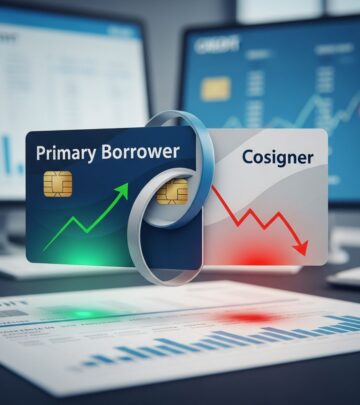
Cosigning Mortgages: Credit Impact Guide
Understand how acting as a mortgage cosigner influences your credit profile, from potential boosts to serious risks involved.

Acting as a cosigner on a mortgage involves significant financial commitment, primarily because it directly ties your credit health to the primary borrower’s payment behavior. While it can help someone qualify for a home loan they might not otherwise get, it exposes you to both opportunities for credit improvement and substantial risks of damage.
Understanding the Cosigner Role in Mortgage Loans
A cosigner provides their creditworthiness to support a primary borrower’s mortgage application, often when the main applicant has insufficient credit history or score. Lenders evaluate both parties’ financial profiles, but the cosigner assumes equal legal responsibility for repayment without necessarily gaining ownership rights. This arrangement appears on your credit report, influencing key metrics like debt-to-income (DTI) ratio and overall debt load.
Unlike co-borrowers who share property title and equity, cosigners typically do not live in the home or claim ownership benefits. Their role is supportive, aimed at reassuring lenders of repayment reliability. For primary borrowers with irregular income or self-employment gaps, a strong cosigner can unlock better interest rates or approval odds.
How Cosigning Influences Your Credit Profile
Cosigning itself triggers a hard credit inquiry, which may cause a minor, temporary dip in your score, especially if multiple inquiries occur close together. Beyond that, the loan integrates into your credit file, affecting utilization and mix factors in scoring models like FICO or VantageScore.
| Credit Factor | Potential Positive Effect | Potential Negative Effect |
|---|---|---|
| Payment History (35% of FICO) | On-time payments build positive history. | Late payments (30+ days) reported on your report. |
| Credit Utilization (30%) | Diversifies mix with installment debt. | Increases total debt, raising utilization if revolving debt exists. |
| Amounts Owed (DTI) | N/A | Lowers borrowing power for your own loans. |
| New Credit (10%) | May improve mix. | Hard inquiry dings score short-term. |
Payment history dominates credit scores, so consistent on-time payments by the primary borrower can enhance your profile over time. Conversely, defaults lead to derogatory marks lasting up to seven years.
Positive Scenarios: When Cosigning Boosts Credit
- Timely Payments Strengthen History: Regular payments contribute positively to your record, the largest scoring factor.
- Improved Credit Mix: Adding an installment loan like a mortgage to a profile heavy in revolving credit (e.g., cards) signals responsible management.
- Responsible Payoff: Full repayment demonstrates reliability, appealing to future lenders.
If you lack installment debt, cosigning a well-handled mortgage can diversify your portfolio beneficially. Primary borrowers with cosigners may secure loans that build their history too, indirectly supporting long-term relationships.
Major Risks and Downsides for Cosigners
The dangers outweigh rewards for many, as you’re legally liable for the full debt if the borrower falters. Lenders can pursue collections, wage garnishment, or lawsuits against you first.
- Missed payments appear on your report, dropping scores significantly.
- Foreclosure or repossession (if applicable) creates long-term damage.
- DTI rises, hindering your own mortgage or loan approvals.
- Strained personal relationships if payments lag.
Even perfect payments count the mortgage as your debt, potentially inflating utilization and limiting credit access. Divorce or life changes don’t sever your obligation.
Lender Expectations for Cosigners
Cosigners need strong profiles: conventional loans often require 620+ scores, jumbo loans 680+. Lenders verify income stability, as cosigners must cover payments if needed. Self-employed primary borrowers benefit most from cosigners with steady histories.
Shop lenders, as requirements vary. Some demand cosigners match or exceed primary borrower’s qualifications.
Protecting Yourself Before Committing
- Review Borrower’s Finances: Examine income, spending, savings, and history.
- Check Your Own Standing: Ensure low DTI and high score; monitor via free tools.
- Discuss Contingencies: Agree on payment plans, autopay, and what-if scenarios.
- Consider Alternatives: Gifts, secured cards, or primary improvements over cosigning.
- Get It in Writing: Outline responsibilities beyond the loan contract.
Monitor the account monthly. Request removal post-refinance if possible, though rare for mortgages.
Real-World Examples of Credit Outcomes
Scenario 1: Borrower pays on time for 2 years – cosigner’s score rises 20-50 points from mix and history. Scenario 2: One late payment – 100+ point drop, DTI spikes. Scenario 3: Default – foreclosure tanks score 150-300 points for 7 years.
Alternatives to Traditional Cosigning
- Co-Borrower Status: Shares equity but equal ownership risks.
- Help Build Credit First: Authorized user or small loans for primary.
- Gift Down Payment: Boosts equity without debt tie.
- Non-Occupant Co-Client: Similar but emphasizes income support.
Frequently Asked Questions
Does cosigning a mortgage immediately lower my score?
No, but the hard inquiry might cause a small dip. Ongoing impact depends on payments.
Can I remove myself as cosigner later?
Possible via refinance excluding you, but lender approval needed.
Will cosigning help the primary borrower’s credit if I have better score?
Indirectly yes, via approval and on-time payments adding to their history.
What if the borrower declares bankruptcy?
You remain liable; it harms your credit too.
Is cosigning worth it for family?
Weigh risks carefully; clear communication essential.
Final Thoughts on Smart Cosigning
Cosigning mortgages demands caution, balancing help for others with personal financial security. Prioritize thorough vetting and monitoring to minimize downsides while maximizing upsides.
References
- Co-signing a mortgage loan: What both parties need to know — Rocket Mortgage. 2023. https://www.rocketmortgage.com/learn/cosign-mortgage-loan
- 7 Things to Know Before Cosigning for a Mortgage — AP Mortgage. 2024. https://www.apmortgage.com/blog/what-you-need-to-know-about-cosigning-for-a-mortgage
- Does Being a Cosigner Show Up on Your Credit Report? — SoFi. 2024. https://www.sofi.com/learn/content/does-being-a-cosigner-show-up-on-your-credit-report/
- Co-signer vs. Co-borrower: How Each Affect Your Mortgage — The Federal Savings Bank. 2023. https://www.thefederalsavingsbank.com/Blog/co-signer-vs-co-borrower-how-each-affect-your-mortgage/
- How Does Cosigning Affect Your Credit? — Experian. 2024-01-15. https://www.experian.com/blogs/ask-experian/how-does-cosigning-affect-your-credit/
- Co-Signing a Loan: Pros and Cons — Credit Karma. 2024. https://www.creditkarma.com/debt/i/cosigning-loan-pros-cons
- Cosigning a Loan FAQs — FTC Consumer Advice. 2023. https://consumer.ftc.gov/articles/cosigning-loan-faqs
Similar Articles








Read full bio of Sneha Tete