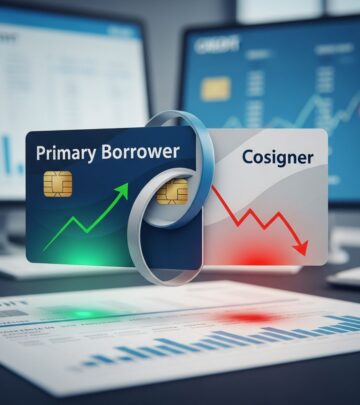
Cosigning Loans: Credit Risks and Rewards
Explore how cosigning impacts your credit scores, debt ratios, and financial future—know the full risks before signing.

Cosigning a loan places you in a position of shared financial accountability, where your credit health becomes intertwined with the primary borrower’s payment habits. This arrangement can either bolster your credit profile through positive payment history or severely damage it via delinquencies and increased debt burdens.
Understanding the Cosigner Role
When you agree to cosign, you step into a legally binding role as a secondary payer. Lenders view you as equally responsible for the full loan amount, including principal, interest, and any associated fees. This is common for individuals with limited or poor credit histories seeking auto loans, student debt, or credit cards.
The primary borrower typically drives the account activity, but your credit report lists the obligation fully. A hard inquiry occurs during application, temporarily lowering scores, and the account integrates into your credit file upon approval.
Positive Effects on Your Credit
Timely payments by the primary borrower can enhance your credit in several ways. Payment history, comprising 35% of FICO scores, benefits from consistent on-time remittances reported to bureaus.
- Strengthened Payment Record: On-time payments build a robust history, potentially raising scores over time.
- Credit Mix Improvement: Adding installment loans to revolving credit diversifies your profile, a minor but positive factor (10% of scores).
- Account Age Benefits: Long-term positive management ages the account, supporting the 15% length-of-history component.
For parents cosigning student loans, success can yield long-term gains if the borrower thrives post-graduation, sometimes with release options after good behavior.
Critical Risks to Your Credit Health
The downsides often outweigh upsides due to the primary borrower’s control. Any misstep reflects directly on you.
| Risk Factor | Impact on Credit | Duration |
|---|---|---|
| Late Payments (30+ days) | Score drop of 60-110+ points | Up to 7 years |
| Repossession/Default | Severe negative mark | 7 years |
| Collections | Major score reduction | 7 years |
| Hard Inquiry | Minor dip (5-10 points) | 2 years |
Late payments trigger bureau reports, harming scores profoundly. Repossessions or collections amplify damage, visible for seven years. Even unaware delinquencies affect you.
Debt-to-Income Ratio Challenges
Cosigned debts count toward your debt-to-income (DTI) ratio, calculated as monthly debt payments divided by gross income. Lenders cap desirable DTI at 36-43% for approvals.
- Increased minimum payments raise DTI, hindering personal borrowing like mortgages.
- Revolving accounts (e.g., cards) factor in utilization, spiking ‘amounts owed’ (30% of scores).
High DTI post-cosign can block your financing needs, even with strong scores.
Legal and Financial Liabilities
Beyond credit, cosigning imposes full repayment duty if the borrower defaults. Creditors pursue you first, potentially via lawsuits, wage garnishment, or bank levies.
You cover collection costs and fees. For rentals or autos, repossessions tarnish records irrespective of usage.
When Cosigning Makes Sense
Not all scenarios warrant avoidance. Consider if:
- The borrower has stable income and proven reliability.
- You can afford the payments without strain.
- It’s for a close family member with a clear repayment plan, like education loans with release clauses.
Monitor accounts via shared access or alerts to preempt issues.
Strategies to Mitigate Risks
Protect yourself proactively:
- Review Borrower Finances: Analyze income, spending, and credit before committing.
- Set Payment Automation: Ensure direct debits to avoid lapses.
- Maintain Communication: Regular check-ins prevent surprises.
- Seek Release Options: Confirm cosigner release after 12-48 months of good payments.
- Limit Exposure: Cosign only what you can pay from savings.
Regular credit monitoring via AnnualCreditReport.com or services spots issues early.
Alternatives to Cosigning
Avoid direct liability with these options:
- Secured Cards/Loans: Help build credit without your involvement.
- Gift Funds: Provide cash for down payments instead.
- Become Authorized User: Less risk, as you’re not legally liable (though payments affect you).
- Lender Programs: Some offer no-cosigner options for students or autos.
Real-World Impacts: Case Studies
Consider a cosigner for a $20,000 auto loan at 7% interest over 60 months ($396/month). On-time payments boost scores; one 60-day late drops FICO by 100+ points, raising future rates 2-3%.
For student loans, a $50,000 cosign sees DTI jump 20% for moderate earners, delaying homebuyers’ mortgages.
Relationship Considerations
Financial disputes strain bonds. Defaults breed resentment; unpaid debts may end friendships or family ties. Discuss expectations upfront, including contingency plans.
Frequently Asked Questions
Does cosigning build my credit if payments are on time?
Yes, positive history and mix improvements can elevate scores.
Can I remove myself as cosigner?
Some loans allow release after milestones; refinance to primary borrower’s name otherwise.
Does a rejected cosign application hurt credit?
Only via hard inquiry; no account added.
Are credit cards different from loans when cosigning?
Similar risks, but utilization spikes hurt revolving debt factors more.
What if the borrower dies?
Estate or you remain liable unless insured.
Final Guidance for Potential Cosigners
Only cosign if fully prepared for ownership of the debt. It demands trust, financial cushion, and vigilance. Prioritize your stability; alternatives often suffice.
References
- Does Cosigning Affect Your Credit? Understand the Risks — American Express. 2023. https://www.americanexpress.com/en-us/credit-cards/credit-intel/does-being-a-cosigner-affect-your-credit/
- How Does Co-signing Affect Your Credit Score? — Chase. 2024. https://www.chase.com/personal/credit-cards/education/credit-score/how-does-cosigning-credit-cards-affect-credit-score
- How Does Cosigning Affect Your Credit? — Experian. 2025-03-15. https://www.experian.com/blogs/ask-experian/how-does-cosigning-affect-your-credit/
- What is a Co-Signer? — Equifax. 2024. https://www.equifax.com/personal/education/loans/articles/-/learn/co-signer-pros-and-cons/
- Cosigning a Loan: Risks and Benefits — Maryland People’s Law Library (.gov). 2023-06-01. https://www.peoples-law.org/cosigning-loan-risks-and-benefits
- Should I agree to co-sign someone else’s car loan? — Consumer Financial Protection Bureau (.gov). 2024. https://www.consumerfinance.gov/ask-cfpb/should-i-agree-to-co-sign-someone-elses-car-loan-en-813/
Similar Articles








Read full bio of Sneha Tete